
Ribosomes are the components of cells that read RNA and build proteins. Without the ribosome, the chemistry of life would still be catalyzed by raw RNA. And yet the origin of the ribosome remains a mystery.
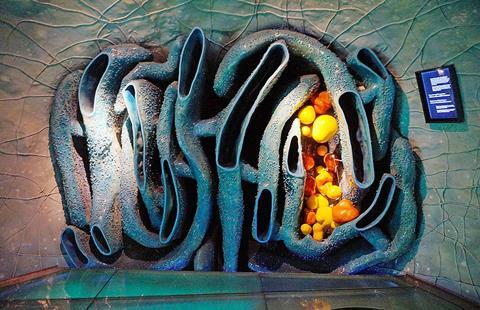
In a Perspective published in PNAS Nexus, Michael Lynch and Andrew Ellington note that the ribosome, which creates all cellular proteins, is itself composed of multiple proteins. How, then, did the ribosome first come to be?
The authors propose a proto-ribosome that began by assembling small molecules into useful products, such as short peptides. This proto-ribosome, the authors argue, was likely a viral parasite, which began by taking advantage of proto-cells, and ended up being incorporated into cells, at some time before the last universal common ancestor.
As soon as the host became dependent on any of the proteins produced by the proto-ribosome and as soon as the proto-ribosome lost its capacity for independent reproduction, their fates became intertwined and the further refinement of the ribosome’s transcription and translation systems benefitted them both.
READ MORE: Multicellular organisms require significantly more energy than single-celled ones
READ MORE: Daff-derived Alzheimer’s drug fermented with help from AI and bacteria moves closer to reality
If the ribosome was once a parasite, it joins the spliceosome and potentially the mitochondria, suggesting that some of the core features of biological life, which evolved nearly at the beginning, emerged from initially antagonistic interactions.




No comments yet