Researchers at the Wake Forest Institute for Regenerative Medicine (WFIRM) have made an important discovery that could help doctors tell Ebola apart from other infections more quickly. The findings were published in Frontiers in Genetics.

When someone is infected with Ebola, the body mounts a strong immune response, as it does in response to many pathogens.

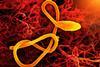
Ebola_Virus_(52466947587)

Source: NIAID

Creative artwork featuring a scanning electron micrograph of a single filamentous Ebola virus particle (colorized yellow and orange) in the foreground, and a second scanning electron micrograph of filamentous Ebola virus particles (red) budding from a chronically infected VERO E6 cells in the background.

“Many infections trigger very similar immune responses in the body, making it difficult to distinguish one disease from another based on gene expression alone,” said Mostafa Rezapour, Ph.D., lead author and researcher at WFIRM. “Our approach goes beyond traditional analysis by systematically removing these shared signals, allowing us to identify what is truly specific to Ebola virus infection.”

The overlap of response by Ebola and other pathogens has made it difficult to find markers that are truly unique to Ebola.

Pinpointing specific genes

The team compared blood samples from Ebola-infected animals and people with samples from patients with other illnesses such as mpox, influenza, COVID-19, bacterial pneumonia, and HIV. By removing genes that were shared across these infections, they were able to pinpoint 281 genes that appear to be specific to Ebola.

They then identified a top-50 gene set and one “genetic fingerprint” specific to Ebola that correctly identified Ebola cases 95% of the time. This discovery could help scientists develop better diagnostic tests, especially in outbreak settings where quick and accurate detection saves lives.

“These findings demonstrate how advanced computational genomics can uncover disease‑specific biological signals that traditional approaches often miss,” said Anthony Atala, M.D., director of WFIRM and senior author of the study. “This work strengthens our ability to distinguish highly dangerous pathogens using host responses and advances the development of more precise diagnostic strategies.”

The study was conducted using previously collected data and was funded by a grant from the State of North Carolina.