
All Viruses articles – Page 6
-
 News
NewsThe amino acid arginine helps the body fight tumors and viral infections
Scientists have discovered that an arginine-deficient diet impacts the immune system by stalling the production of the MHC-1 protein, which alerts the immune system to dangers such as a mutating cell or an invading virus.
-
 News
NewsScientists bring Florida high school students to the front lines of pandemic preparedness
Thirty outstanding high school students from 18 communities across Florida arrived in Tampa last week for the Global Virus Network (GVN) Global Guardians for Pandemic Preparedness Program, curious about viruses and considering careers in science.
-
 News
NewsHighly reliable LFIA based on selenium nanoparticle reveals long-term real-world dynamics of neutralizing antibodies against SARS-CoV-2
SDS modified selenium nanoparticles enable reliable lateral flow immunoassay, showing that neurological and hematological patients lose vaccine induced immunity much faster.
-
 News
NewsHepatitis B virus infection or reactivation and HBV-related liver dysfunction in patients with inflammatory bowel disease receiving infliximab
A real-world study examines HBV infection and reactivation rates in a large cohort of Chinese IBD patients treated with infliximab.
-
 News
NewsHow bats tolerate viruses: study sheds light on one of nature’s biggest immune mysteries
Researchers have found that the world’s largest family of bats has two distinct copies of the genes that produce antibodies, the specialized proteins that help the immune system recognize and fight infections. Every other known mammal has only one such set.
-
 News
NewsResearch study investigates how maternal viral infections shape lifelong immune health in offspring
A $2.4 million grant will support research that aims to uncover how viral infections during pregnancy reprogram the developing immune system of the fetus, influencing susceptibility to infectious diseases throughout life.
-
 News
NewsThe hepatitis E virus cannot infect mice - and here’s why
It has long been known that the hepatitis E virus cannot establish an infection in mice, but the reasons were unknown. Scientists have therefore systematically examined the replication cycle of the virus in liver cell cultures of mice.
-
 News
NewsResearchers propose PIEM concept to reshape microbiome research
A new review introduces a new concept—Persistent Intracellular Extraintestinal Microbes (PIEMs)—that extends microbiome research from body surfaces into internal tissues.
-
 News
NewsNIH grants $2.8M to develop tools for study of mosquito-microbe interactions
Researchers will use the funding to develop new tools to investigate the genetics underpinning the relationships between mosquitoes and various microbes.
-
 News
NewsElephant vaccine shows first signs of protection against deadly virus
Scientists have published the first peer-reviewed evidence that an experimental mRNA vaccine may help protect young Asian elephants from elephant endotheliotropic herpesvirus, one of the deadliest diseases facing the species.
-
 News
NewsTissue-resident immune cells defend human lungs from viral, bacterial, and fungal infections
A study shows that human lung tissue serves as a “reservoir” for a large number of tissue-resident memory T cells.. These cells stand ready to combat a surprising range of viruses, bacteria, and even deadly fungal pathogens.
-
 News
NewsStudy shows targeted school closures can improve pandemic response
New research shows that school closures during a pandemic outbreak are most effective when they are carefully targeted. The study demonstrates that the right strategy depends on which age groups are driving transmission at different stages of an outbreak.
-
 News
NewsRemdesivir for COVID-19 linked to better outcomes for adult kidney transplant recipients
Adults with kidney transplants who were treated for COVID-19 with the antiviral remdesivir within a week of diagnosis were less likely than kidney transplant recipients who did not receive the antiviral to experience cardiovascular or kidney problems up to a year later.
-
 News
NewsDespite progress towards eliminating hepatitis in Europe, gaps in prevention measures keep 2030 targets out of reach
Viral hepatitis remains a significant public health challenge across Europe but childhood vaccination against hepatitis B and provision of harm reduction services show results.
-
 News
NewsStudy reveals dengue virus can infect immune cells meant to fight disease
Researchers have discovered that dengue virus can infect and replicate inside memory B cells, immune cells traditionally understood to help protect the body from infection. It’s a previously unrecognized way the virus may evade immune defenses.
-
 News
NewsNew drug could contribute to stopping measles outbreaks
A new oral antiviral drug candidate administered either before or after direct contact or airborne exposure to canine distemper virus, which causes measles-like disease in ferrets, blocks transmission of the virus and reduces clinical symptoms.
-
 News
NewsThe Great Barrier Reef has a microbiome too
A study documents over 800,000 microbial genomes, identifying over 500 new bacterial species and over 300,000 distinct viruses in the waters of the Great Barrier Reef.
-
 News
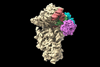
NewsHow the encephalomyocarditis virus hijacks host protein machinery
Researchers have used cryo-electron microscopy (cryo-EM) to decode how the encephalomyocarditis virus (EMCV) IRES hijacks the host’s protein synthesis machinery.
-
 News
NewsIs the licensed Zaire ebolavirus vaccine suitable to combat the current Bundibugyo ebolavirus outbreak?
Researchers provide evidence of possible cross-protection through an already licensed Zaire ebolavirus vaccine.
-
 News
NewsNew open-access database maps pathogens and antibiotic resistance risks in coastal waters
A new global database brings together information on disease-causing microorganisms, antibiotic resistance genes, and virulence factors in coastal waters, offering a practical tool for assessing biological risks in estuaries and other nearshore environments.