
All Algae articles – Page 2
-
 News
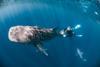
NewsMicrobial research captured among winning science images
Microbial research features among some of the winning images in Nature’s 2026 Scientist at Work photography competition. Microbiome sampling of whale sharks, algal blooms, and a coral probiotics village feature among five spectacular images showcasing the diversity and challenges of scientific research.
-
 News
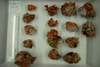
NewsScientists just found 4 new species of underwater ‘living pink rocks’ that help to store carbon
Rhodoliths may look like small rocks on the seafloor, but they’re actually living algae that create habitats for marine life and contribute to long-term carbon storage. The deeper ‘low-light’ waters off Japan’s Tanegashima Island harbor a surprisingly distinct and diverse community, including four species completely new to science.
-
 News
NewsBiologist dives beneath Antarctica sea ice to study the impact of climate change
One biologist is studying the genetic diversity of red algae to see how this vital part of Antarctica’s underwater ecosystem is affected by climate change. Answering that question is becoming increasingly important as Earth’s warming climate causes Antarctica’s sea ice to recede farther with every passing year.
-
 News
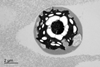
NewsNew study provides insights into the control of photosynthesis
Scientists have discovered a previously unknown regulatory mechanism in plant photosynthesis in the unicellular green alga Chlamydomonas reinhardtii. It helps plants adapt to changes in light conditions. A crucial protein interaction at the interface between the two photosystems I and II controls the photosynthetic machinery.
-
 News
NewsNew climate-based tool predicts coral bleaching months in advance
Researchers found that coral bleaching on a Caribbean island occurs when three major climate patterns in the Pacific and Atlantic Oceans align in specific ways that intensify ocean warming. They created a new, early-warning tool called the Bleaching Event Early Predictor (BEEP).
-
 News
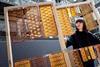
News‘Baked’, printed, ready – premiere of architecture made from yeast
Researchers have developed a new, entirely bio-based material from a somewhat unexpected ingredient: yeast. The material is 3D printed and customised for use in architectural and interior design elements that are currently made from non-renewable or fossil-based materials, such as plaster, plastic or synthetic textiles.
-
 News
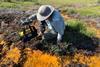
NewsNew study uncovers why the Arctic’s rivers are rusting
Scientists have identified the two biggest reasons that once-pristine rivers across the Arctic are growing cloudy with toxic orange iron particles that smother insects and suffocate fish. As the climate warms, a layer of Arctic soil that had been frozen for millennia has begun to thaw.
-
 News
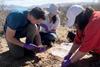
NewsSoil scientist awarded $1.6 million NSF grant to study ‘living skin’ of arid ecosystems
A soil scientist has received a $1.6 million, five-year grant from the U.S. National Science Foundation (NSF) to fund her team’s study of how increasing temperature fluctuations impact the biocrust microbiome — the complex, thin-layer microbe community that stabilizes soil, fixes nitrogen and drives nutrient cycling in drylands.
-
 News
NewsScientists turn microalgae waste into high-performance membranes for cleaner municipal wastewater
A new study reports a sustainable membrane technology that converts microalgae-derived biochar into an advanced material for municipal wastewater treatment, offering a promising route to cleaner water and waste valorization.
-
 News
NewsArctic Ocean food chain disrupted as key tipping point passed
An irreversible shift in the chemical make-up of the Arctic Ocean driven by climate change is disrupting the region’s food chain, a study suggests. Widespread loss of Arctic sea ice has led to a sharp fall in levels of a key nutrient, affecting populations of plankton, fish, seabirds and marine mammals.
-
 News
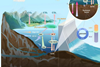
News The hidden carbon sponges: Karst reservoirs proven to be powerful climate allies
A new study provides a mechanistic explanation for why reservoirs in karst landscapes are exceptionally effective carbon sinks. The research demonstrates that these unique ecosystems not only capture vast amounts of carbon but also lock it away in a highly stable, long-lasting form.
-
 News
NewsInternational award honors microbiology researchers for diatom research
Two microbiology researchers from the University of Tennessee, Knoxville, are being honored with an international award that recognizes their insights into aquatic microbes that are vital to Earth’s ecosystems.
-
 News
NewsThe ocean’s pharmacy: scientists chart a new path for marine peptide drug discovery
A review surveys how new extraction, chromatography, and bioinformatics tools are accelerating the discovery of bioactive peptides from the sea. Researchers provide an integrated overview of how marine bioactive peptides are produced, purified, and evaluated, and how bioinformatics is reshaping the discovery pipeline.
-
 News
NewsThe impact of microplastics on ocean carbon uptake
Scientists who collected phytoplankton data from various climate zones around the world determined the extent to which growth is limited by microplastics. They have then used this data to calculate the average impact that a certain concentration of microplastics will have on algae in different regions or climate zones, as well as on a global scale.
-
 News
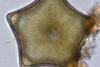
NewsRevealing the invisible: a new baseline for Salish sea diatoms answers a global call
Diatoms are powerful in driving roughly 20% of global photosynthesis and forming the very base of marine food webs. Scientists have published a new checklist of 924 diatom taxa alongside a curated dataset of 11,469 records, providing a long-needed foundation for environmental monitoring across the Salish Sea bioregion.
-
 News
NewsAs day turns to night, blue-green algae undergo a molecular rewiring
Traditionally, biotechnology researchers have modified genes when engineering microbes. But researchers are using predictive phenomics to uncover additional layers of biological control, tracking how environmental changes reshape molecular activity inside a cell and how those shifts translate to function.
-
 News
NewsClimate warming causes bleaching in key Arctic lichen, study finds
Long-term climate warming is causing a bleaching effect in a key Arctic lichen species, according to new research. Prolonged warming caused significant bleaching in the dominant lichen species Cetrariella delisei, reducing its ability to photosynthesise and grow.
-
 News
NewsStudy reveals hidden diversity of algae in farmland
Researchers discovered unexpectedly strong seasonal variation in algae in the surface soils of farmland. Xanthophyceae were the most abundant when it was colder, at the time points in spring and autumn; whereas Cyanobacteria and green algae were prevalent shortly before crop harvest in summer.
-
 News
NewsStudy provides detailed assessment of shifts in toxin producing phytoplankton abundance
Researchers in the UK have shown how the distributions of two phytoplankton groups – known to produce natural toxins that can halt shellfish harvesting – have changed in the North East Atlantic over the last six decades.
-
 News
NewsMicrofossils interpreted as animal traces were actually algae and bactéria
A reexamination of microfossils found in Brazil shows that the marks previously interpreted as traces of worms or other small oceanic animals are actually communities of fossilized microscopic bacteria and algae.