
All Algae articles – Page 5
-
 News
NewsBreakthrough AI speeds up discovery of life-supporting microbes
Scientists have developed a powerful new artificial intelligence tool called LA⁴SR that can rapidly identify previously overlooked proteins in microalgae - tiny organisms that produce much of the Earth’s oxygen and support entire aquatic ecosystems.
-
 News
NewsScientists discover fungus that kills toxic algae threatening human health
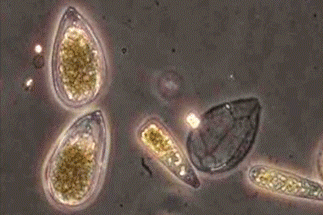
A team of researchers have discovered a previously unknown species of marine fungus that can kill harmful, bloom-forming algae. The new species, Algophthora mediterranea, is a form of microscopic chytrid fungus that can occupy a broad range of hosts.
-
 News
NewsPreviously unrecognized pathway in plants and phytoplankton offers mercury-detox powers
Primary producers—including phytoplankton—possess a previously overlooked ability to internally break down and detoxify methylmercury. The demethylation pathway rapidly converts methylmercury into less toxic inorganic mercury, which is subsequently reduced to gaseous Hg⁰.
-
 News
NewsAlgae show how to make two proteins from one messenger RNA
Scientists have uncovered a hidden feature of protein translation in green algae, offering a new perspective on the basic rules of gene expression.
-
 News
NewsMicroalgae could play key role in bio-based circular economy
With food systems under pressure from climate change, geopolitical instability, and supply chain vulnerabilities, the EU is driving innovation toward more sustainable, resilient, and local production models. Microalgae have emerged as a promising resource for producing ingredients across food, feed, and other consumer goods. Source: Hannah ...
-
 News
NewsIsland-wide field surveys illuminate land-sea connections in Mo‘orea
A multi-year scientific expedition determined that land use on tropical islands can shape water quality in lagoons and rainfall can be an important mediator for connections between land and lagoon waters.
-
 News
NewsTeam discovers cyanobacteria activate different genes by day and by night
By analyzing gene expression in the cyanobacterium Nostoc punctiforme, scientists discovered that during daylight, the cells focus on metabolism. But under cover of darkness, they turn to the control of genome repair and activate various genetic elements.
-
 News
NewsThe leading causes of mass mortality events in sea urchins are pathogens, storms, and extreme temperatures
Researchers have identified the primary drivers of sea urchin mass mortality events over recent decades: pathogens, storms, and extreme temperatures. The team have developed an innovative method for genetic sampling in marine environments - using a swab similar to a COVID-19 test, to enable rapid and non-invasive monitoring of marine animals and underwater disease outbreaks.
-
 News
NewsPredicting the development of biological communities in different kinds of ecosystems
Researchers tested a mechanistic consumer-resource model and confirmed its high predictive capacity. Using the model, the researchers refined current rules on the coexistence of species, too. Their findings can be applied to any situation in which communities of organisms compete for resources.
-
 News
NewsTiny diatoms, big climate impact: How microscopic skeletons rapidly shape ocean chemistry
Researchers have found that diatoms’ intricate, silica-based skeletons transform into clay minerals in as little as 40 days. Until the 1990s, scientists believed that this enigmatic process took hundreds to thousands of years.
-
 News
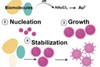
NewsScientists harness algae for a greener way to create functional gold nanoparticles
Researchers have pioneered a novel, sustainable method for synthesizing functionalized gold nanoparticles (AuNPs) using microalgae. This approach not only avoids the harsh chemicals used in conventional methods but also produces AuNPs that are more stable and less toxic to healthy cells.
-
 News
NewsMystery toxic algae regime change in Salem’s drinking water source
A long-term analysis shows that a major Oregon reservoir abruptly swapped one type of toxic algae for another midway through the 12-year study period, absent any obvious cause.
-
 News
NewsScientists reveal how cyanobacteria use ’sunscreen’ to adapt to climate
Using single particle spectroscopy, researchers revealed insights into how different types of photosynthetic bacteria can use a shared mechanism to protect themselves from too much sunlight.
-
 News
NewsMicroalgal-bacterial sludge offers sustainable solution for removing hormonal pollutants from wastewater
A team of researchers have revealed how microalgal-bacterial granular sludge (MBGS) can adapt and efficiently degrade estriol, a common endocrine-disrupting compound (EDC), under environmentally relevant conditions.
-
 News
NewsUpwelling promotes N-fixing symbiont of Sargassum algae - giving it an edge
An international research team has uncovered the main mechanism behind the algae blooms of the Great Atlantic Sargassum Belt. Identification of the climatic conditions that facilitate this phenomenon allows them to predict future stranding events of Sargassum.
-
 News
NewsCAROSEL offers new ‘spin’ on monitoring water quality in real time - and tracking harmful algal blooms
Researchers can continuously track the exchanges of different forms of nitrogen between bottom sediments and the overlying water. Their novel approach enables measuring how much ammonium (NH₄⁺) is released from sediments in real time, multiple times a day, over an extended period.
-
 News
NewsTiles, leaves and cotton strips offer practical, affordable method for measuring river health
With the aim of standardising methods for assessing river health and providing a simple, accessible guide for environmental management bodies, researchers analysed the performance of different materials that enable the decomposition processes and organic matter production to be measured.
-
 News
NewsHow algae help corals bounce back after bleaching
A $1.1 million project will uncover how reefs regain life-giving algae after suffering from heat stress. The three-year project will use advanced imaging and living experimental systems to learn what’s happening on a cellular level when algae return to bleached reefs.
-
 News
NewsLichens and drones reveal dinosaur bones
Scientists have found that certain lichen species preferentially colonise exposed dinosaur bones, creating distinctive spectral signatures that can be detected from 30 metres above ground using drones.
-
 News
NewsGroundbreaking new projects launched to lower the cost of monoclonal antibody production
LifeArc and the Gates Foundation have awarded more than $5m to seven projects aimed at developing cheaper and more efficient ways to produce monoclonal antibody (mAb) treatments. The innovative approaches include using filamentous fungus to produce mAbs.