
All Antimicrobials articles – Page 7
-
 News
NewsCloves and miswak: Antimicrobial effects of Syzygium aromaticum and Salvadora persica against common pathogens in vitro
Clove essential oil (CEO) derived from Syzygium aromaticum and miswak (Salvadora persica) contains bioactive compounds with antimicrobial properties. This study aimed to evaluate the in vitro antimicrobial efficacy of CEO, miswak, and their combination against key peri-implantitis pathogens.
-
 News
NewsSocial lives of viruses affect antiviral resistance
Interactions among viruses can help them succeed inside their hosts or impart vulnerabilities that make them easier to treat. Scientists are learning the ways viruses mingle inside the cells they infect, as well as the consequences of their socializing.
-
 News
NewsPresurgical vaccine may prevent orthopedic device infections
Researchers have developed a novel presurgical vaccine strategy that may prevent dangerous infections in patients receiving hip, knee, and other joint replacements, creating an injectable scaffold designed to stimulate the immune system.
-
 News
NewsAnts signal deadly infection in altruistic self-sacrifice
Researchers have discovered that terminally ill ant brood, like infected cells, release an odor signaling their impending death and the risk they pose. This sophisticated early warning system facilitates rapid detection and removal of pathogenic infections.
-
 News
NewsNobel Prize-awarded material that punctures and kills bacteria
Bacteria that multiply on surfaces are a major headache in healthcare. Researchers have found a new weapon to fight these hotbeds of bacterial growth – metal-organic frameworks. These materials can physically impale, puncture and kill bacteria before they have time to attach to the surface.
-
 News
NewsResearchers develop novel sensor-integrated wrapper for food quality monitoring and preservation
A research team has developed a two-in-one nanostructured SERS sensor integrated into a stretchable and antimicrobial wrapper (NSSAW) that not only monitors food directly on the surface but also actively preserves it.
-
 News
NewsCuring hepatitis C can rebalance immunity in Indonesians living with HIV
A new study provides the first longitudinal immunological data on HIV/HCV-coinfected individuals in Southeast Asia, underscoring the importance of early hepatitis C treatment to prevent long-term immune and liver complications.
-
 News
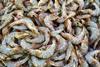
News‘Smart wrap that breathes and warns’ - cellulose film cuts oxygen 99% and changes color when shrimp goes bad
Researchers have revealed how one-step dual-engineering turns plant nanofibers into a transparent cellulose that keeps food fresh and tells consumers when it is not.
-
 News
NewsFive new phages discovered in university’s Botanical Gardens
Five new bacteriophages have recently been discovered in the ponds of Lund University’s Botanical Gardens. Phages thrive wherever bacteria are found, which often means ponds and watercourses that are rich in organic material.
-
 News
NewsRebalancing lung repair with immune damage is key to surviving severe influenza
Recovery from deadly influenza infection may hinge on helping the lungs heal in addition to stopping the virus, according to a new study in mice, which shows that pairing modest antiviral therapies with immune modulation can restore damaged tissues and lung function, even after severe infection has taken hold.
-
 News
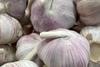
NewsHear us out: scientists say garlic shows promise as a mouthwash alternative
Garlic extract demonstrates antimicrobial efficacy comparable to other widely used antiseptics and disinfectants, such as chlorhexidine, according to scientists. While garlic-based mouthwash may cause more discomfort than chlorhexidine, it offers longer-lasting residual effects.
-
 News
NewsNew nanogel technology destroys drug-resistant bacteria in hours
A novel technology shows over 99.9% effectiveness against Pseudomonas aeruginosa (P. aeruginosa). It centres on a heteromultivalent nanogel: a flexible particle made by crosslinking polymers and adding sugar residues (galactose and fucose) alongside antimicrobial peptides.
-
 Opinion
The politics behind the global divide in bacteriophage therapy
The therapeutic potential of bacteriophages (or ‘phages’) has been widely dismissed for decades in the West, despite being regularly used to treat patients worldwide in the early and mid-20th century. In an age rife with disinformation, can the true potential of clinical phage technology be communicated to a public already uneasy about scientific intervention?
-
 News
NewsSugar transporter discovery offers promising avenue for improving antibiotic efficacy
Scientists have recently demonstrated that aminoglycosides enter bacteria by using sugar transporters. They have also successfully doubled the number of transporters, even in the most resistant Escherichia coli strains, thus improving antibiotics’ penetration rate and efficacy.
-
 News
NewsSingle-dose malaria treatment combining four existing drugs as effective as more onerous multi-day, multi-dose regimen
Hundreds of malaria patients participating in a clinical trial in Gabon in West Africa were cured via a single dose of a treatment that utilizes four widely available malaria drugs, according to a new study.
-
 News
NewsResearchers discover novel phage DNA modifications that offer new hope against antibiotic-resistant superbugs
A groundbreaking discovery reveals a unique way phages modify their DNA with arabinose sugars to protect themselves from bacterial defence systems. Natural DNA phage modifications occur at a higher rate than previously predicted, the study revealed.
-
 Careers
Summer studentship: Taiwo uncovers native strains for mycotoxin control in stored nuts
Taiwo Boluwatife Omowunmi reports back on her AMI-sponsored summer studentship which assessed native microbial strains for mycotoxin biocontrol in stored nuts.
-
 News
NewsPlasma strategy boosts antibacterial efficacy of silica-based materials
Scientists have developed a novel two-step plasma strategy to modify mesoporous silica-supported silver nanoparticles, enabling them to achieve strong antibacterial activity and accelerated wound healing.
-
 News
News‘Rotten egg’ gas could be the answer to treating nail infections, say scientists
Hydrogen sulphide, the volcanic gas that smells of rotten eggs, could be used in a new treatment for tricky nail infections that acts faster but with fewer side effects, according to scientists.
-
 News
NewsBreathing new life Into TB treatment with inhalable nanomedicine
Scientists are developing an inhalable nanosystem to transport TB medicines directly into the lungs, the very place where the bacterium that causes TB hides and thrives. The nanocarrier can hold all four standard TB drugs in a single formulation and release them precisely at the infection site.