
All Applied Microbiology International articles – Page 20
-
 News
NewsSpaceflight could alter behaviour of human microbiome, bobtail squid study suggests
Microgravity changes how effectively symbiotic bacteria colonise the light organ of the bobtail squid, according to a new study which has implications for how the human microbiome may respond to spaceflight. Source: Joseph Emhof Bobtail squid just after hatching The research by a University of Florida team, ...
-
 Careers
Q&A: Laura Elena Cota Ortega on her AMI-sponsored summer placement in Spain
Laura Elena Cota Ortega travelled from Mexico to Spain for her Applied Microbiology International sponsored summer placement investigating the intricate mechanisms of virulence and antimicrobial resistance.
-
 News
NewsFermented food bacterium could rival E coli as model bacterium of choice
Scientists in Germany have identified the bacterium Lactiplantibacillus plantarum as having potential to become a model bacterium that could eventually rival E coli.
-
 News
NewsMarine bacteria take a bite at plastic pollution
A bacterium found in the sea can degrade a plastic that otherwise resists microbial breakdown in marine environments.
-
 News
NewsShortlist for Applied Microbiology International Awards 2023 announced
The shortlist for the Applied Microbiology International Awards 2023 has now been announced.
-
 News
NewsHave your say on AMI’s Diversity and Inclusion Strategy
Applied Microbiology International is calling on members to have their say after launching its first official Diversity & Inclusion strategy.
-
 News
NewsFood professionals team up for inaugural ProfSET event
More than 10,000 food & drink professionals from 10 UK professional membership organisations and learned societies have teamed up to provide a single voice to influence and support government food initiatives, the media and inform the public.
-
 Careers
Adam probes biofilm formation by Bacillus subtilis in his Summer Placement
Adam Bryson (21), from Dunblane, reveals what happened during his Applied Microbiology International-sponsored Summer Placement at the University of Dundee investigating biofilm formation by soil bacterium Bacillus subtilis.
-
 News
NewsFinalists in Applied Microbiology International Product of the Year Award 2023 announced
The finalists in the Applied Microbiology International Product of the Year Award 2023 have been announced. The awards promote the research, groups, projects, products and individuals who are shaping the future of applied microbiology.
-
 Careers
In search of the perfect seaweed probiotic: Helen opens up on her Summer Placement
Helen Kehoe (22) has made some intriguing findings during her AMI-supported summer placement investigating the potential for bacteria to become biocontrol agents for seaweed aquaculture.
-
 News
NewsRecombinant hydrophobic protein acts as toxin-free fire retardant on textiles
Researchers have discovered that recombinant hydrophobic protein can act as a fire retardant when applied to textiles, eliminating the need for toxic chemicals.
-
 Careers
Toxins, E. coli and soil nematodes - Megan reports on her AMI Summer Placement
Megan Cameron (27) undertook an Applied Microbiology International-sponsored Summer Placement examining the effects of feeding different strains of E. coli to the free living wild type nematode, Caenorhabditis elegans.
-
 News
NewsPGPR strain from farmland in India boosts crops in chilly conditions
A bacterial strain isolated from agricultural soil in India can help crops to thrive in chilly conditions by promoting seed germination and growth, a new study shows.
-
 Opinion
Much ado about microbes
A group of leading scientists has recently reviewed the benefits and risks of Gain of Function research and issued new consensus recommendations - Simon Wain-Hobson examines the report exclusively for The Microbiologist.
-
 Careers
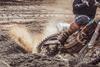
Edie uncovers how microbes can shine light on dirt bike vandalism
For her AMI-sponsored Summer Placement, forensic science student Edie Holmes joined a team investigating whether microbial profiling could be used to link dirt bikes to vandalised sites of special scientific interest (SSSIs). Here’s what happened.
-
 News
NewsBacteria resistant to antibiotics found in hospital wastewater system
A unique new study led by researchers at University of Limerick in Ireland has found that bacteria that may lead to hospital acquired infection is present in a hospital’s wastewater system.
-
 Careers
The lure of microbes: Getting to know some of the new junior editors at Letters in Applied Microbiology
Applied Microbiology International has just appointed 14 junior editors to its flagship journal Letters in Applied Microbiology (LAM) - so we got to know some of the new crew.
-
 News
News‘Regular testing needed’ following massive blue green algal bloom in UK’s largest lake
Water in the UK’s largest freshwater lake needs to undergo routine testing for cyanobacteria species in the future, following a devastating bloom, scientists have warned. Parts of Lough Neagh, which supplies around 40% of Northern Ireland’s drinking water, have been mired in thick green sludge following a massive bloom over ...
-
 News
NewsCustom extracellular membrane vesicles deliver crop growth payload, without downsides of PGPRs
Custom-built extracellular membrane vesicles (MVs) can be deployed as a microbe-free way of boosting crop growth without the downsides of plant-growth promoting rhizobacteria (PGPR), a new study reveals.
-
 News
NewsApplied Microbiology International welcomes UK return to Horizon Europe
Applied Microbiology International has welcomed the UK’s return to Horizon Europe under a new agreement with the EU.