
All biochar articles – Page 3
-
 News
NewsBiochar and beneficial fungi team up to detoxify toxic red mud and restore soil health
A new study has revealed a promising nature-based strategy to clean up red mud, one of the world’s most hazardous industrial wastes, by combining biochar with beneficial soil fungi to target specific pollutants and revive damaged soils.
-
 News
NewsLong-term field study shows biochar delivers dual benefits for soil health and climate mitigation
A 14-year field study has provided compelling evidence that biochar can simultaneously reduce heavy metal risks in agricultural soils while enhancing carbon storage, offering a powerful strategy for sustainable farming and climate mitigation.
-
 News
NewsEngineered biochar and beneficial bacteria team up to boost crop growth
Researchers have developed a specially engineered biochar made from sewage sludge that, when combined with beneficial bacteria, significantly enhances plant growth by improving how crops absorb nitrogen.
-
 News
NewsBiochar’s climate promise depends on soil type: Cuts N₂O in dry fields but boosts it in rice paddies
By tracing the exact microbial pathways responsible for N₂O production, the scientists reveal why the same soil amendment produces opposite climate outcomes under different land uses.
-
 News
NewsBiochar particle size found to shape disease control in crops
Researchers have discovered that the particle size of biochar determines how effectively and how long it can suppress soil-borne pathogens, offering new insights for sustainable agriculture.
-
 News
NewsBiochar’s climate benefits may reverse over time in acidic soils, new study finds
A study reveals that biochar can both decrease and increase emissions of nitrous oxide, a potent greenhouse gas, depending on how long it has been in the soil. The findings highlight the importance of considering long-term impacts when evaluating climate solutions.
-
 News
NewsLong-term biochar use reshapes soil carbon storage through microbial pathways
A new long-term study reveals that biochar, a carbon-rich material derived from crop residues, can significantly enhance soil carbon storage, but its effectiveness depends strongly on land use and soil type.
-
 News
NewsTurning agricultural waste into smarter livestock nutrition tools - and an alternative to antibiotics
A new study has found that biochar made from agricultural waste such as chestnut shells and vine prunings could help deliver beneficial compounds more effectively in animal feed, offering a promising alternative to antibiotics in livestock production.
-
 News
NewsScientists design metal-enhanced biochar to boost clean hydrogen production from agricultural waste
A new study reports that specially engineered biochar made from agricultural waste could significantly increase biohydrogen production by improving the way microbes transfer electrons during fermentation.
-
 News
NewsMachine learning reveals when biochar helps or harms soil life
Researchers have shown that biochar can either help or harm soil organisms depending on how it is produced and applied. The research analyzed results from dozens of previous experiments to better understand how biochar affects plants, microbes, and soil animals.
-
 News
NewsModified biochar helps compost retain nitrogen and build richer soil organic matter
A new study reports that specially engineered biochar can significantly improve compost quality by reducing nitrogen loss and accelerating the formation of stable humic substances. The findings offer a promising strategy for transforming organic waste into more effective fertilizers while lowering environmental emissions. Composting plays a critical ...
-
 News
NewsScientists uncover how engineered biochar and microbes work together to boost plant-based cleanup of cadmium-polluted soils
A new study reveals how specially modified biochar can significantly improve the ability of willow trees to remove toxic cadmium from contaminated soils, offering a promising strategy for restoring polluted land in a sustainable way.
-
 News
NewsSeashells and coconut char: A coastal recipe for super-compost
Researchers have developed a calcium-modified biochar that speeds up waste recycling and creates nutrient-rich soil, boosting specialized microbial communities that break down tough materials like lignin and convert them into stable humus.
-
 News
NewsMachine learning reveals how to maximize biochar yield from algae
Researchers have developed a powerful machine learning framework that can accurately predict and optimize biochar production from algae, offering a faster and more sustainable path toward carbon rich materials for climate mitigation, soil improvement, and environmental applications.
-
 News
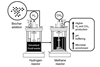
NewsBiochar boosts hydrogen and methane yield in next-generation food-waste-to-energy systems
A research team has demonstrated that adding biochar to two-phase anaerobic digestion systems can significantly increase hydrogen and methane production from food waste, while maintaining system stability under high organic loading rates.
-
 News
NewsBiochar boosts clean energy output from food waste in novel two-stage digestion system
A new study from researchers at the University of Western Australia and Universitas Brawijaya has found that adding biochar to advanced food waste recycling systems can significantly increase the clean energy yields of hydrogen and methane. This breakthrough offers promising strategies for municipalities and industries aiming to turn food scraps ...
-
 News
NewsBiochar mediated microbial synergy in partial nitrification–anammox systems
A study investigates the role of biochar in enhancing nitrogen removal efficiency (NRE) and stability in partial nitrification–anammox (PN/A) systems, focusing on its selective promotion of partial denitrification and maintaining the dynamic balance between AnAOB and denitrifying bacteria (DNB).
-
 News
NewsBiochar and hydrochar show contrasting climate effects in boreal grasslands
Researchers tested how biochar and hydrochar, combined with nitrogen fertilizer, affected greenhouse gas emissions, soil carbon pools, and crop yield in a typical boreal legume grassland. They found that biochar and hydrochar influenced soil processes in opposite ways.
-
 News
NewsBiochar and wetter soils offer breakthrough path to slash farm emissions without cutting crop yields
Raising groundwater levels and adding biochar to agricultural peat soils could dramatically cut greenhouse gas emissions while maintaining healthy crop production, according to a new study from Bangor University. The study, published in Biochar (2025), tested how water table management and biochar, a charcoal-like soil additive made ...
-
 News
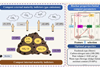
NewsGlobal analysis reveals how biochar supercharges composting and cuts greenhouse gases
By analyzing data from 125 studies across the world, researchers showed that adding biochar to composting systems significantly boosts compost quality while slashing harmful greenhouse gas emissions.
- Previous Page
- Page1
- Page2
- Page3
- Page4
- Next Page