
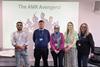
University of East Anglia PhD student Vito Latorre shares his experiences of representing Applied Microbiology International at the Parliamentary Links Day in Westminster earlier this summer.
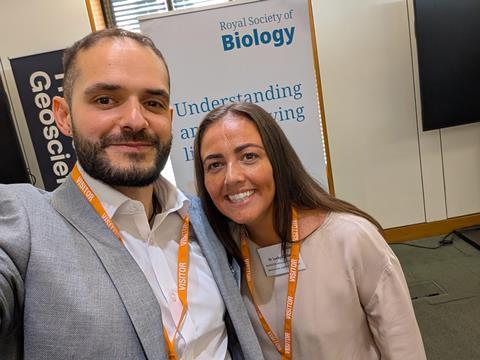
Representing the Applied Microbiology International (AMI) at Parliamentary Links Day in Westminster on one of the hottest days of the year was a truly valuable experience.
As a second-year PhD student working on biogeochemical carbon cycle in extreme environments, my daily work is usually far from policy discussions. In general, my research focuses on how microbial communities in volcanic habitats, such as those found on Mount Etna (Italy), exploit trace toxic gases like carbon monoxide as energy sources. These environments are chemically harsh, but still biologically prolific.
By studying them, I am trying to understand how life persists under energy limitation places on Earth, that mimic other planetary bodies. My interest, therefore, sits at the intersection of many disciplines that fall within what we call astrobiology.
Despite the broad topic, I want to understand how microbes adapt to extreme conditions by changing the surrounding environments, and what does this tell us about the limits of life? Understanding these processes has implications not only about microbial resilience but also about their role in Earth’s biogeochemical cycles.
Getting involved
I became involved with AMI through my engagement in scientific outreach alongside my doctoral research, but also, for its importance in the environmental biotechnology network that allows early careers, and not, to gather every year in conferences across the UK. Over the past few years, I have taken part in activities with SpaceCareers.UK and public engagement events such as Pint of Science, where I have spoken about microbiology, extreme environments, and scientific careers.
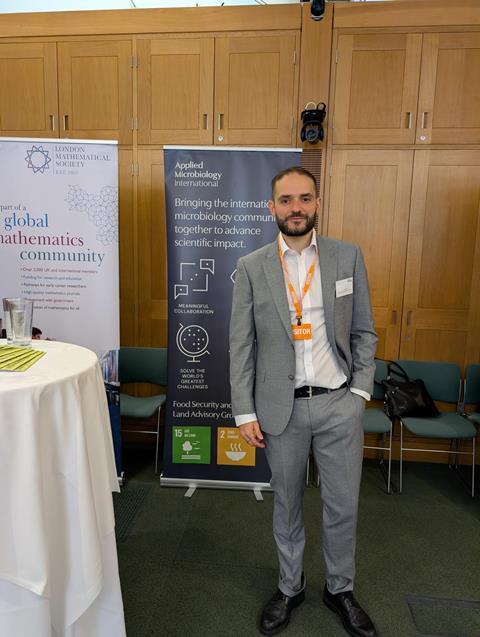
These experiences have made me realise that communicating science outside academia is not simply an extra activity, but it is a necessary component of how research maintains its relevance and its connection to the society. When I saw the opportunity to attend the event, I applied because I wanted to better understand how science is represented at the level of the decision-makers. I, therefore, had the opportunity to assist AMI at the event in Westminster, on the 16th of June 2026.
MICROBIOLOGY NEWS: Register with The Microbiologist for more free articles
The occasion had a drop-in networking format, bringing together members of Parliament (MPs), scientific societies, and researchers. It was opened by Stephen Metcalfe MP, Chair of the Parliamentary and Scientific Committee, and included a keynote presentation by Hannah Russell FRSB, Chief Executive of the British Science Association. Her talk focused on findings from a national survey of public attitudes towards science.
Public perception of science
A central message of the presentation was that public perception of science in the UK remains broadly positive, with around 82% of respondents recognising science as contributing to economic and communal progress. However, this overall support coexists with more conditional attitude among some groups. In particular, younger people (aged 16–24) and women were identified as groups showing higher levels of ambivalence.
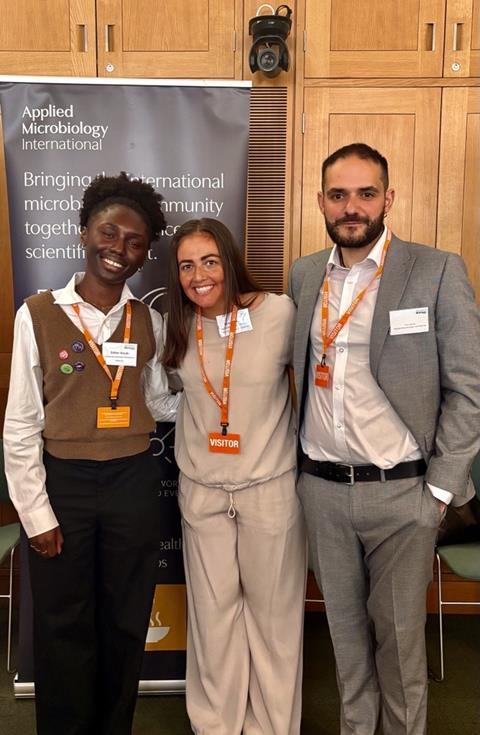
One of the most striking aspects of the discussion was the role of the modern media. Social media and digital communication channels have fundamentally changed how scientific information is accessed, interpreted, and trusted. With the advent of AI, this has increased exposure to science for many people, but it has also introduced new challenges in maintaining clarity, trust, and engagement.
What I found particularly interesting was that people’s perception of the value of science appears to be closely connected to how much they trust it. Indeed, the survey made me think how easily public support can change, if people do not feel connected, and well-represented by the role of science affecting their daily lives. For me, this reinforced the importance of communicating research clearly, rather than assuming its recognition from the community.
Discussion and networking
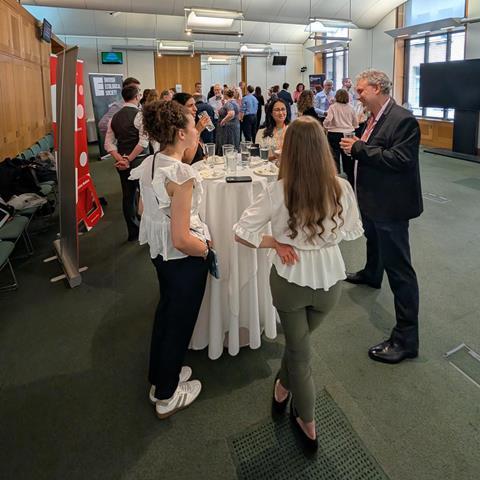
Besides the speaking sessions, the most valuable part of the event was the informal discussion and networking. Speaking with policymakers and representatives of scientific organisations gave me a clear idea of the seeking of continued dialogue between both parties, researchers and decision-makers. As someone working in fundamental microbial ecology, it is easy to assume that the importance of the research is clear. However, the discussions in Westminster reminded me that this is not necessarily the case. Researchers also need to explain why their work matters and where it could have a wider impact.
Finally, the event made me reflect on my own role as an early career researcher, starting to see outreach and engagement activities as part of being a scientist - particularly in terms of public and political support.
While I do not yet see myself moving directly into a policy role, I have become more aware of the importance of researchers contributing to these conversations, particularly at early career stages. Parliamentary Links Day also showed me that these opportunities for dialogue already exist, but they only work if researchers are willing to take part and engage with policymakers.





No comments yet