
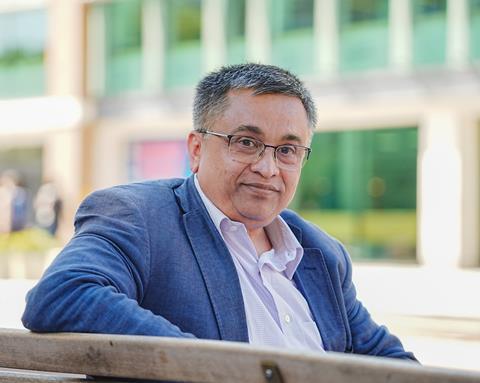
The Microbiologist gets to know our Global Ambassador for the UK, Professor Sanjib Bhakta who is Professor of Molecular Microbiology and Biochemistry at Birkbeck, University of London.

Professor Sanjib Bhakta is Professor of Molecular Microbiology and Biochemistry at Birkbeck, University of London, and a leading researcher in tuberculosis and antimicrobial resistance. His work focuses on discovering new treatments for TB and related infections. He is also Chief Editor of Frontiers in Antibiotics and an award-winning science communicator.
What first sparked your love of microbiology?
My grandmother, whom I loved dearly, had leprosy and lived with us throughout my childhood. Three generations shared the same home, and I witnessed not only the unimaginable physical pain she endured, but also the social stigma and isolation that too often accompanied the disease. Those experiences left a lasting impression on me.
I vividly remember seeing the wounds caused by a disease that I later learned was due to one of the world’s most remarkable microorganisms, Mycobacterium leprae. I became fascinated by how something invisible to the naked eye could have such a devastating impact on a person’s life. That childhood curiosity grew into a lifelong passion for microbes. It ultimately inspired me to pursue a career in microbiology.
What’s the microbe that most fascinates you and why?
Without question, mycobacteria. They are unlike any other bacteria. Their unique cell envelope, slow yet remarkably adaptable growth, extraordinary metabolic flexibility, and remarkable ability to persist within the host make them one of the most fascinating groups of microorganisms. The more we discover about them, the more they challenge our understanding of microbial biology. Their complexity continues to surprise, inspire and motivate my research every day.
What’s the best career advice you’ve ever been given?
A PhD gives you far more than scientific expertise. It teaches resilience, creativity, leadership, communication and problem-solving, skills that extend well beyond the laboratory.
Too often, researchers believe there is only one career path. I encourage people to understand their strengths, acknowledge where they can grow, and pursue work that genuinely excites them. When you enjoy what you do, curiosity, purpose and motivation naturally follow.

Above all, never fear failure. Every setback teaches you something and prepares you for future success. I live by the Sanskrit word “Charaiveti”. Whatever challenges life presents, always look onwards and upwards.
What real-world problem would you eventually love to solve with microbiology?
Microbiology lies at the heart of life on Earth. The relationships between microbes, humans, animals and the environment shape the health of our planet and underpin the One Health approach. Antimicrobial resistance (AMR) is one of the greatest global health, economic and societal challenges of our time. Together with my interdisciplinary research group and industry partners, I am working to develop effective, affordable and commercially viable treatments for tuberculosis, leprosy and non-tuberculous mycobacterial infections.
MICROBIOLOGY NEWS: Register with The Microbiologist for more free articles
Through our current internationally funded UKRI–MOHE research programme, we are accelerating the development of innovative drug combinations and advanced drug-delivery strategies that more effectively target the primary site of infection. Ultimately, I hope our research will improve patient outcomes, slow the emergence of antimicrobial resistance, and help preserve the effectiveness of antibiotics for future generations.
What keeps you awake at night?
Sleep is essential, so I do my best to get a good night’s rest. Rather than lying awake at night, I usually wake very early with new ideas and enthusiasm for the day ahead.
What motivates me most is my students. I am constantly thinking about how I can create an inclusive, supportive and inspiring environment where research and education come together.
There is nothing more rewarding than seeing students discover their potential, develop confidence and become not only excellent scientists, but compassionate leaders and responsible global citizens who will make a lasting contribution to society.
What do you do to relax in your spare time?
From an early age, I had the privilege of learning Indian classical music from exceptional maestros, particularly the tabla, which I still enjoy playing today. Music brings me a deep sense of peace, balance and perspective. I am also a passionate gardener. My wife and I enjoy growing vegetables, herbs, fruit and flowers together. There is something immensely satisfying about nurturing a garden and watching it flourish through the seasons. It reminds me that, with patience, care and the right environment, both plants and people can thrive.
Why did you apply to become a Global Ambassador and what would you like to do in your new role?
I believe microbiology has the power to transform lives far beyond the laboratory. It can improve public health, drive innovation, inform policy and strengthen interdisciplinary collaboration. Throughout my career, I have sought to bridge scientific discovery with real-world impact through research leadership, mentoring, public engagement, and local and global partnerships.
As an Applied Microbiology International (AMI) Global Ambassador, I would be honoured to champion AMI’s mission by raising awareness of antimicrobial resistance, promoting responsible antimicrobial stewardship, and advocating evidence-based approaches that protect both human and environmental health. I am particularly passionate about bringing together researchers, clinicians, industry, policymakers and educators to tackle shared global challenges.
I would also like to support early career researchers through mentoring, networking and leadership development, contribute to scientific meetings and public engagement activities, and help build stronger international collaborations that accelerate innovation and knowledge exchange.
Most importantly, I want to inspire the next generation of microbiologists and demonstrate how applied microbiology can deliver practical, sustainable solutions to some of the world’s most pressing health and environmental challenges. Together, we can help ensure that microbiology continues to improve lives, protect our planet and shape a healthier future for all.
We are looking for Global Ambassadors from a variety of regions! To find out more, click HERE.




No comments yet