
All Editorial articles – Page 20
-
 News
NewsResearchers develop automated system to accelerate outbreak detection and disease surveillance
Biomedical engineers have developed a fully automated workflow that simplifies and accelerates the preparation of bacterial samples for genetic sequencing. The method streamlines a critical bottleneck in the genetic sequencing process.
-
 News
NewsGut microbial interactions drive uric acid degradation via a novel mechanism
Scientists have systematically elucidated the complete mechanism through which the fructooligosaccharide-induced “Ligilactobacillus murinus-Anaerotruncus colihominis” axis reduces uric acid (UA) levels and protects the kidneys.
-
 Careers
Q&A: Meet Letters in Applied Microbiology Junior Reviewer Rabiath Féichokpè Raïssa Adigoun
We caught up with Dr. Rabiath Féichokpè Raïssa Adigoun, a postdoctoral researcher at the University of Abomey-Calavi in Benin who is one of the newest Junior Reviewers with Letters in Applied Microbiology.
-
 News
NewsWeather and human activity impact lake extremophiles
Researchers found that extreme changes, both due to weather and human activity, are reshaping microbial communities in the Great Salt Lake that form the base for a large food web.
-
 News
NewsMove over quokkas: Rottnest’s salt lake bacteria could be the island’s next big claim to fame
Scientists have read the full genetic code of bacteria from the salt lakes of Wadjemup (Rottnest Island), giving them their clearest picture yet of how these tiny organisms could be used to make biodegradable plastic.
-
 News
NewsRoasted and browned: how gut bacteria break down heated foods
Heating food generates new dietary compounds. A study shows that an enzyme in gut bacteria can expand its functional repertoire to process them.
-
 News
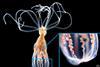
NewsEven invertebrates can specifically distinguish between bacteria
Researchers have found that the immune system of a sea anemone is capable of selectively distinguishing between different microorganisms and thus protecting beneficial over harmful bacteria – an ability that has only been attributed to vertebrates to date.
-
 News
NewsUnique symbiosis bestows magnetic sense to single-celled organism
An international team has discovered a previously unknown magnetotactic ciliate that pursues an unusual strategy: partnership with two other organisms inside its cell.
-
 News
NewsScientists map how the flu virus rewires the human cell from the inside
Researchers have gained new insights into how the influenza A virus reprograms cellular machinery by tracking molecular interactions directly inside infected cells.
-
 News
NewsEvo 2 brings artificial intelligence closer to reading and writing the language of life
A new artificial intelligence model called Evo 2 can analyze and generate DNA sequences across bacteria, archaea, plants, animals, and other forms of life, marking a major step toward a unified AI system for biology.
-
 News
NewsScientists gather lessons from the wild
The wild plants tucked into yards, sidewalk cracks, ditches and fields offer a treasure trove of biological data. Studying wild plants allows for insights into possible adaptations to disease that no human-designed systems could provide.
-
 News
NewsLast-line antibiotics at risk as children’s resistance rises
Antimicrobial resistance in children is rising globally and will worsen over the next decade, threatening the effectiveness of life‑saving antibiotics, according to a world-first monitoring platform.
-
 News
NewsSelf-powered system turns wastewater into water and fertilizer
A new study reports a self-powered platform that links electrically assisted forward osmosis (eFO) with a microbial desalination cell (MDC), allowing electricity produced by wastewater-fed microbes to drive nutrient and water recovery.
-
 News
NewsWhen it comes to brain health, is microbiome science missing much of the world?
For more than two decades, scientists have uncovered remarkable links between the trillions of microbes living in our gut and the health of our brains. What if much of this science is based on studying only a narrow slice of global diversity?
-
 News
NewsMethane-eating bacteria in rivers won’t save us from climate change
A comparative study in Belgium and Africa on the microbial oxidation of methane in rivers reveals that this biological filter, which is more active in African rivers, remains insufficient to offset the rise in methane emissions expected because of global warming and nitrate pollution.
-
 News
NewsCOVID-19 vaccines remain effective despite helminth-induced immune modulation
In a preclinical study, researchers have found that mRNA- and protein-based SARS-CoV-2 vaccines effectively protected Schistosoma-infected mice against the virus, despite the mice’s distinct immune response profiles.
-
 News
NewsNew Piem concept proposed: Reshaping human microbiome research and opening a new chapter in precision medicine
Researchers systematically proposed the novel concept of “Persistent Intracellular Extraintestinal Microbes” (PIEM). This expands the scope of microbiome research from external surfaces to the body’s interior.
-
 News
NewsBacterial cellulose offers a sustainable path for high-performance energy storage
Researchers review the structural, electrochemical, and mechanical aspects of bacterial cellulose-derived carbon electrodes for next-generation supercapacitors.
-
 News
NewsFrog protein could become first antidote to deadly red tide toxin
Red tide algal blooms produce one of the most potent neurotoxins known: saxitoxin, or STX. Researchers have found that a protein called saxiphilin can neutralize saxitoxin in mice, preventing and even reversing otherwise lethal poisoning.
-
 News
NewsHow is climate change affecting waterborne diseases?
Researchers find bacteria, viruses and parasites respond differently to climate change, highlighting the need for pathogen-specific public health strategies.