
All Editorial articles – Page 17
-
 News
NewsHow bats tolerate viruses: study sheds light on one of nature’s biggest immune mysteries
Researchers have found that the world’s largest family of bats has two distinct copies of the genes that produce antibodies, the specialized proteins that help the immune system recognize and fight infections. Every other known mammal has only one such set.
-
 News
NewsBloomNet turns lake data into early algal bloom warnings
A research team has developed BloomNet, an interpretable deep-learning framework that forecasts harmful algal blooms at hourly resolution up to 72 hours ahead while also showing how risk changes over time.
-
 News
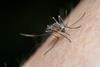
NewsClimate change is redrawing the malaria map in Africa, study finds
A study quantifying climate change’s historical and future impact in sub-Saharan Africa’s children finds that climate change has slightly increased malaria overall. Rising temperatures could increase the malaria risk in southern and East Africa while reducing it where it is most rampant today.
-
 News
NewsResearch study investigates how maternal viral infections shape lifelong immune health in offspring
A $2.4 million grant will support research that aims to uncover how viral infections during pregnancy reprogram the developing immune system of the fetus, influencing susceptibility to infectious diseases throughout life.
-
 News
NewsBiofilm clue opens route to anti-infection treatments of the future
A multidisciplinary study has uncovered a critical component in the formation of biofilms, the complex structures used by bacteria to colonise surfaces. The research may have implications for future infection treatments, including for people with cystic fibrosis.
-
 News
NewsThe hepatitis E virus cannot infect mice - and here’s why
It has long been known that the hepatitis E virus cannot establish an infection in mice, but the reasons were unknown. Scientists have therefore systematically examined the replication cycle of the virus in liver cell cultures of mice.
-
 News
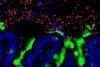
NewsResearchers propose PIEM concept to reshape microbiome research
A new review introduces a new concept—Persistent Intracellular Extraintestinal Microbes (PIEMs)—that extends microbiome research from body surfaces into internal tissues.
-
 News
NewsNIH grants $2.8M to develop tools for study of mosquito-microbe interactions
Researchers will use the funding to develop new tools to investigate the genetics underpinning the relationships between mosquitoes and various microbes.
-
 News
NewsDeadly superbug CR-hvKP: new framework says ‘watch virulence, not just resistance genes’
Carbapenem-resistant hypervirulent Klebsiella pneumoniae (CR-hvKP) represents one of the most alarming evolutionary developments in modern infectious diseases—a “superbug” that combines high-level antibiotic resistance with enhanced virulence.
-
 News
NewsLorMe: a unified framework for standardized microbiome analysis
An open-source R framework is designed to provide a unified approach for standardized microbiome analysis. The analytical platform enables the transition from raw microbiome data processing to publication-ready visualization through a streamlined workflow.
-
 News
NewsNew antimicrobials could help tackle deadly drug-resistant infections
Scientists have developed a promising new way to create safer and more effective treatments for life-threatening fungal infections. Using genome mining, they identified bacterial species capable of producing new, undiscovered antifungals.
-
 News
NewsElephant vaccine shows first signs of protection against deadly virus
Scientists have published the first peer-reviewed evidence that an experimental mRNA vaccine may help protect young Asian elephants from elephant endotheliotropic herpesvirus, one of the deadliest diseases facing the species.
-
 News
NewsTire microplastics may accelerate the spread of antibiotic resistance in cities
A new perspective article suggests that tire microplastics could create environmental hotspots that help antibiotic resistance genes persist, move between bacteria, and spread through cities.
-
 News
NewsYour gut can get jet lag too
Researchers say post-travel symptoms such as fatigue, sleep disturbances, low energy levels, and digestive issues may be caused by more than just classic jet lag. Evidence suggests that time zone changes also affect the trillions of bacteria living in our intestines.
-
 News
NewsMycelium from wild mushrooms and agro-waste turned into sustainable alternatives to synthetic packaging materials
A research team has developed innovative mycelium-based composites (MBCs) using locally sourced fungal strains and lignocellulosic waste materials.
-
 News
NewsStudy shows targeted school closures can improve pandemic response
New research shows that school closures during a pandemic outbreak are most effective when they are carefully targeted. The study demonstrates that the right strategy depends on which age groups are driving transmission at different stages of an outbreak.
-
 News
NewsNew discoveries on genes involved in lysine biosynthesis and fungal virulence in Cryptococcus neoformans
A new study suggests that disrupting the lysine biosynthesis pathway represents a promising avenue for drug development against Cryptococcus neoformans, a fatal fungal meningitis pathogen.
-
 News
NewsNanotube connections between social amoebae
Scientists studying the social amoeba Dictyostelium discoideum found that, in addition to signaling molecules drifting from cell to cell freely or inside membrane vesicles, the amoebae also create tunneling nanotubes that physically connect the membranes of cells.
-
 News
NewsRemdesivir for COVID-19 linked to better outcomes for adult kidney transplant recipients
Adults with kidney transplants who were treated for COVID-19 with the antiviral remdesivir within a week of diagnosis were less likely than kidney transplant recipients who did not receive the antiviral to experience cardiovascular or kidney problems up to a year later.
-
 News
NewsNew blood test for tuberculosis could reduce the spread of this top global infectious-disease killer
A new study found that a simple blood test could accurately identify tuberculosis (TB) — a leading cause of death worldwide — among patients with varying degrees of exposure to the disease.