
All Escherichia coli articles – Page 5
-
 News
NewsResearchers develop novel sensor-integrated wrapper for food quality monitoring and preservation
A research team has developed a two-in-one nanostructured SERS sensor integrated into a stretchable and antimicrobial wrapper (NSSAW) that not only monitors food directly on the surface but also actively preserves it.
-
 News
News‘Smart wrap that breathes and warns’ - cellulose film cuts oxygen 99% and changes color when shrimp goes bad
Researchers have revealed how one-step dual-engineering turns plant nanofibers into a transparent cellulose that keeps food fresh and tells consumers when it is not.
-
 News
NewsGut microbiome connects obesity to cancer, impacting public health
A new review highlights growing scientific evidence that imbalances in gut bacteria can influence metabolism, trigger inflammation, and increase cancer risk. These insights offer new possibilities for disease prevention, early detection, and personalized health care.
-
 News
NewsFive new phages discovered in university’s Botanical Gardens
Five new bacteriophages have recently been discovered in the ponds of Lund University’s Botanical Gardens. Phages thrive wherever bacteria are found, which often means ponds and watercourses that are rich in organic material.
-
 News
NewsScientists develop world’s first modular co-culture platform for the one-pot production of rainbow-colored bacterial cellulose
The team engineered Komagataeibacter xylinus for bacterial cellulose synthesis and Escherichia coli for natural colorant overproduction. A co-culture of these engineered strains enabled the in situ coloration of bacterial cellulose.
-
 News
NewsDrinking water people believe to be safe and clean often contain potentially dangerous bacteria
A study in Guatemala found the sources of drinking water people believe to be safe and clean often contain potentially dangerous bacteria. Bottled water sold in large refillable jugs was the most frequently contaminated with coliform bacteria – an indicator of fecal contamination.
-
 News
NewsNew nanogel technology destroys drug-resistant bacteria in hours
A novel technology shows over 99.9% effectiveness against Pseudomonas aeruginosa (P. aeruginosa). It centres on a heteromultivalent nanogel: a flexible particle made by crosslinking polymers and adding sugar residues (galactose and fucose) alongside antimicrobial peptides.
-
 News
NewsScientist who harnesses bacteria to deliver green solutions is winner in 2025 Tata Transformation Prize
A scientist who harnesses bacteria to deliver green solutions has been named as one of the winners of the 2025 Tata Transformation Prize. Balasubramanian Gopal, PhD, Indian Institute of Science, has been named Sustainability Winner in the awards.
-
 News
NewsWastewater from most countries favours non-resistant bacteria
Municipal wastewater contains a large range of excreted antibiotics and has therefore long been suspected to be a spawning ground for antibiotic-resistant bacteria. By testing the potential of untreated municipal wastewater from 47 countries to select for resistant E. coli, researchers show that while some samples indeed do so, most instead suppress them.
-
 Careers
Summer studentship: Jonas investigates how metals influence bacterial ecosystems
Jonas Flohr from Portsmouth reports back on his AMI-sponsored summer studentship at Durham University investigating how metals influence bacterial ecosystems.
-
 News
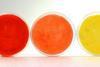
NewsBacteria spin and dye rainbow-colored, sustainable textiles
Researchers demonstrate that bacteria can both create fabric and dye it in every color of the rainbow—all in one pot. The approach offers a sustainable alternative to the chemical-heavy practices used in today’s textile industry.
-
 News
NewsHow life first got moving: nature’s motor from billions of years ago
Research has cast light on the evolutionary origins of one of nature’s first motors, which developed 3.5 billion to 4 billion years ago to propel bacteria. Scientists have created the most comprehensive picture yet of the evolution of bacterial stators.
-
 News
NewsNew drug target identified in fight against resistant infections
Researchers have identified new drug targets within a special repair system possessed by certain bacteria, known as Rtc, which enables them to counteract the effects of these antibiotics.
-
 News
NewsSecrets of microbial motion: How bacteria swash, glide and shift gears to survive
Two new studies reveal surprising ways microbes move, with implications for human health and disease. The first shows that salmonella and E. coli can ’swash’ across moist surfaces even when their flagella are disabled, while the second probes the T9SS gearbox in flavobacteria.
-
 News
NewsPlasma strategy boosts antibacterial efficacy of silica-based materials
Scientists have developed a novel two-step plasma strategy to modify mesoporous silica-supported silver nanoparticles, enabling them to achieve strong antibacterial activity and accelerated wound healing.
-
 News
NewsAdvanced disease modelling shows some gut bacteria can spread as rapidly as viruses
Escherichia coli (E. coli), a type of bacteria commonly found in the human gut, could spread as quickly as swine flu, new research suggests. For the first time, researchers are able to predict the rate at which one person could transmit gut bacteria to those around them.
-
 News
NewsScientists develop an efficient method of producing proteins from E. coli
Proteins sourced from microorganisms are attracting attention for their potential in biomanufacturing a variety of products, including pharmaceuticals, industrial enzymes, and diagnostic antibodies. These proteins can also be used for converting resources into biofuels and bioplastics, which could serve as viable alternatives to petroleum-based fuels and products. Therefore, efficiently producing ...
-
 News
NewsReview explores roles, mechanisms and applications of intra-tumoral microbiota in cancers
A recent review provides an overview of the hallmarks, roles, molecular mechanisms, and clinical applications of intra-tumoral microbiota in multiple human cancers.
-
 News
NewsNearly 1 in 5 urinary tract infections linked to contaminated meat
A new study estimates that nearly one in five urinary tract infections in Southern California may be caused by E. coli strains transmitted through contaminated meat – and people living in low-income neighborhoods are at the greatest risk.
-
 News
NewsDangerous E. coli strain blocks gut’s defense mechanism to spread infection
When harmful bacteria invade through the digestive tract, gut cells usually fight back by pushing infected cells out of the body to stop the infection from spreading. Scientists have discovered that a dangerous strain of E. coli can block gut this defense, allowing the bacteria to spread more easily.