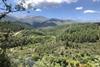
After years of living and working across four continents, Faiza Hajji and her family fell in love with La Vera, a fertile corner of Extremadura, western Spain. Settling in Villanueva de la Vera - a village where ancient stone terraces, chestnut groves, and natural pools still shape daily life - she met Óscar, one of the last remaining herders of the endangered Verata goat breed.

Óscar’s goats produce nutrient-rich milk and play a vital ecological role in regenerating soils and reducing wildfire risks. Yet his livelihood had become unsustainable due to rising feed costs and low milk prices. These local realities mirrored global challenges: industrial food systems degrading ecosystems and disconnecting people from the land.

A serendipitous discovery of cowpea - a drought-resistant legume - became the metaphorical seed of an idea: a system that could regenerate land, livelihoods, and health by combining ancestral knowledge and microbiome science.

This journey gave rise to SanaTerra One Health & Microbiome Living Lab, founded in 2024: a platform where scientists, farmers, educators, and communities co-create innovations rooted in microbiome health, regenerative agriculture, and planetary wellbeing.

2

Óscar, one of the last remaining herders of the endangered Verata goat breed. Photo taken by Faiza Hajji

Microbiomes: the connective tissue of life

The microbiome - the vast, largely invisible communities of microorganisms and their collective genomes - has become one of the clearest biological interfaces linking human, animal, and environmental health. Advances in multi-omics technologies reveal that microbial diversity and functional balance (eubiosis) are essential for resilience, whether in the gut, soils, or broader ecosystems. Conversely, loss of diversity and functional imbalance (dysbiosis) are increasingly associated with a range of non-communicable diseases (NCDs), including inflammatory bowel disease, obesity, and metabolic dysfunction, as highlighted by Lloyd-Price et al. (2019) in Nature and Singh et al. (2017) in Journal of Translational Medicine.

Together, these studies reinforce a unifying message: microbial networks form the connective tissue of life, sustaining nutrient flow, immunity, and resilience across species and environments.

Parallel crises of microbial depletion - in human guts and in agricultural soils - are now recognised across health and environmental sciences. The Food and Agriculture Organization (FAO)’s State of Knowledge of Soil Biodiversity (2020) warns that more than 60 % of European soils show signs of degradation, with intensive input use and monocultures among the pressures reducing biological quality, including microbial diversity. In humans, industrial diets low in fibre and high in emulsifiers and additives mirror this erosion of diversity. As described in a 2019 Nature Reviews Microbiology perspective by Erica and Justin Sonnenburg, the “disappearing microbiota” is linked to systemic inflammation and immune dysregulation.

The industrialised food system, dominated by intensive crop and livestock production, is among the leading global drivers of biodiversity loss and accounts for roughly one-third of greenhouse-gas emissions.

By concentrating animals in high-density facilities and expanding the wildlife–livestock–human interface, it also increases the risk of zoonotic disease emergence, as seen in repeated outbreaks of influenza and other spillover infections. Heavy antibiotic use in livestock - which still consumes a majority of the world’s medically important antibiotics - further fuels the rise of antimicrobial resistance, selecting resistant microbes that move through animals, soils, and waterways.

Meanwhile, intensive fertiliser and pesticide use contribute to declining soil microbial diversity, and the foods produced in such systems tend to be ultra-processed, low-fibre and low-diversity, mirroring ecological simplification on our plates.

Diet is one of the most powerful levers shaping the human microbiome. Most of our body’s microbes live in the gut (95%), where they rely on dietary fibres and phytochemicals as fuel. Comparative studies between industrialised and traditional populations show higher microbial richness and metabolic flexibility in the latter, suggesting that modern diets have thinned the diversity of the gut ecosystem. In soils, monocultures and chemical inputs simplify plant–microbe interactions and disrupt natural nutrient cycles. Moving toward regenerative, microbiome-friendly agriculture - integrating legumes, cover crops, and organic amendments - could help restore microbial diversity across systems, supporting healthier diets while enhancing climate resilience.

“When both gut and soil microbiomes are impoverished, we enter a vicious cycle where ecosystem damage feeds human disease, and vice versa - the “None Health” vs the One Health system.” [Faiza Hajji, 2023]

3

Source: “None Health vs One Health” (© 2025 Faiza Hajji). All rights reserved.

From “None Health” to “One Health”: Microbiomes as the Foundation of Food System Resilience. The infographic illustrates the microbiological contrast between an intensive food system (left) and a sustainable One Health food system (right). In intensive systems, the use of synthetic fertilizers, pesticides, and antibiotics disrupts microbial diversity across soils, animals, and humans—leading to dysbiosis, nutrient loss, and increased zoonotic and antimicrobial resistance risks. In contrast, regenerative and microbiome-informed systems enhance microbial diversity through crop diversification, biofertilizer use, and probiotic applications, resulting in eubiosis, greater disease resistance, improved nutrient cycling, and healthier ecosystems. This highlights the potential of applied microbiology to connect planetary, animal, and human health within sustainable food systems.

The one health paradigm

The World Health Organization (WHO), the FAO, the World Organisation for Animal Health (WOAH), and the United Nations Environment Programme (UNEP) define One Health as “an integrated, unifying approach that aims to sustainably balance and optimise the health of people, animals and ecosystems.”

At SanaTerra, this idea is taken a step further: microbes are not passive bystanders but active mediators of health between these systems. From nutrient cycling in soils to immune modulation in humans, microbial communities are the unseen web that connects food, environment, and physiology. Their diversity and balance are now considered core indicators of ecosystem integrity.

A living lab for regenerative food innovation

Our mission: To bridge science, tradition, and community in order to regenerate ecosystems and health through microbiome-centered innovation.

SanaTerra operates as a Living Lab - a real-world environment for co-creation, experimentation, and learning. Located in Extremadura, the lab unites microbiome science, agroecology, and community empowerment.

Key features include:

  • A micro-dairy producing fermented goat milk foods
  • A nutrition and microbiome learning hub
  • Collaborative research on soil and gut health
  • Rural retreats and wellness experiences rooted in ecological health

Through these initiatives - and a transdisciplinary approach that bridges cutting-edge science with ancestral traditions - SanaTerra transforms scientific knowledge into tangible tools for regenerative living. It serves as both a demonstration site and an educational ecosystem, translating the One Health and microbiome paradigms into daily practice.

Functional foods from heritage systems

SanaTerra’s food innovation arm, La Verabat S.L., creates “One Health Foods” that support both gut and environmental health. Its flagship brand, YorGut®, is a fermented goat milk product developed from Verata goats - a heritage breed with rich milk and ecological value. Unlike industrial dairy, these systems enhance biodiversity and rural resilience.

4

YorGut®, a fermented goat milk product developed from Verata goats. Photo taken by Maya Lina Wozniak

Targeted microbial strains - including Lacticaseibacillus rhamnosus GG (LGG), Bifidobacterium lactis BB-12, and Lactobacillus casei L5, are incorporated for their clinically validated benefits, including support of intestinal barrier integrity, modulation of immune response, improvement of gut microbiota balance and digestive comfort, support of immune function, and anti-inflammatory activity.

A plant-based version of YorGut®, based on fermented cowpea, is under development. Cowpea not only provides a high-protein substrate for fermentation but also serves as a soil-enriching legume, naturally fixing nitrogen and improving fertility. Integrated into a closed-loop agroecosystem, this model links soil, plants, and animals in a regenerative cycle:

  • Soil nourishes plants
  • Plants feed goats
  • Goats produce functional milk
  • Manure composted to enrich the soil again

This integrated model links precision nutrition, microbial health and regenerative farming, designing foods and farming systems that nourish both people and the ecosystems that sustain them.

It also aligns with the 2025 EAT–Lancet Commission’s revised Planetary Health Diet, which emphasises diverse, minimally processed, and culturally grounded foods produced within planetary boundaries.

Many of these principles, including the value of traditional fermentation and biodiversity-based diets, are reflected in SanaTerra’s approach, where microbial stewardship serves as the bridge between nutrition and ecological renewal.

Translating science for practitioners and the public

To extend its scientific work, SanaTerra co-founded Mibiotico®, an educational and innovation platform that develops microbiome-informed prebiotic formulations and trains health professionals. Its formulations are guided by evidence from clinical and in vitro studies linking specific prebiotics - such as galacto-oligosaccharides (GOS) - to the selective growth of Bifidobacterium and Lactobacillus species.

It also explores the use of plant polyphenols, compounds widely shown to modulate gut microbial composition and short-chain-fatty-acid production

Through podcasts, webinars, and professional training programmes, Mibiotico® aims to translate cutting-edge microbiome research into practical knowledge for clinicians, product developers and the wider public, thus bridging clinical nutrition, sustainable agriculture and microbial ecology in accessible, evidence-based ways.

One health retreat: a space for regeneration

The One Health Retreat in Villanueva de la Vera offers a regenerative, science-grounded wellness experience that connects participants with the living systems sustaining human and planetary health. Through hands-on workshops in fermentation, soil and food microbiology, and regenerative nutrition, participants explore how microbial and ecological diversity underpin wellbeing.

The retreat encourages guests to slow down and attune to the rhythms of nature, not as an escape from daily life, but as a practice of reconnection. Its nature-integrated design, built with local materials and open to light, soil, and air, reflects a closed-loop philosophy where architecture, food, and community mirror the self-sustaining cycles of microbial ecosystems.

In this immersive setting, science meets sensorial experience, demonstrating that the principles of One Health can be lived as much as learned.

5-1

A glimpse of the SanaTerra One Health Retreat, featuring cozy spaces built from natural materials and harmoniously integrated with the surrounding landscape. Photo taken by Faiza Hajji

The social heart: ADF and community regeneration

The non-profit arm of SanaTerra, the Association du Docteur Fatiha (ADF), anchors the project’s social mission. Founded in France in 2008 and established in Spain in 2023, ADF promotes ecological transition and food sovereignty through science-based, community-driven education.

In Villanueva de la Vera (Extremadura, Spain), ADF has launched programs that weave One Health literacy into daily life, from workshops on the gut–brain axis and fermented foods, to regenerative cooking in schools and farmer collaborations strengthening local food systems.

Flagship events such as “Biodiversidad y Salud” (Biodiversity and health) and “El Reto del Agua” (the water challenge) gathered citizens, scientists, farmers, and artists to explore the links between microbiome, biodiversity, and community resilience. These participatory encounters illustrate how One Health principles can become a living culture of regeneration where education, creativity, and ecology converge to build healthier territories.

Click the links to watch ADF-Event highlights in 2023 and 2024 in Villanueva de la Vera (Spain).

Conclusion: toward a regenerative one health future

SanaTerra envisions a world where human, animal, and environmental health are restored through regenerative, microbiome-friendly systems. It demonstrates that One Health is more than a framework; it is a living practice.

By bridging science and tradition, microbes and markets, rural communities and research networks, SanaTerra models how food systems themselves can become instruments of healing.

Protecting microbiomes - from soil to gut - underpins nutrient cycling, immune balance, and climate resilience, making microbial diversity not only a marker of health but a foundation of survival.

In 2025, SanaTerra was included among Spain Up Nation’s 101 emerging innovation initiatives and received technical recognition from the FAO for its contributions to Sustainable Livestock Transformation and One Health Reference Centres.

Building on its Extremadura Living Lab, SanaTerra is establishing a second site in Cap de l’Eau, Morocco, extending its One Health ecosystem across the Mediterranean. This new Living Lab will unite traditional agroecological knowledge with microbiome science to regenerate dryland soils, coastal ecosystems, and local food cultures. The initiative is now entering its fundraising and partnership phase, inviting collaborators to help scale a truly regenerative vision for human and planetary wellbeing.

Join us

SanaTerra is more than a project - it’s a movement for regeneration. Whether you are a researcher, farmer, health practitioner, policymaker, or simply a curious citizen, there is a place for you in this ecosystem of change.

Let’s reconnect science and tradition, people and planet, one microbe at a time.

Get in touch: contact@sanaterra.es

LinkedIn: https://www.linkedin.com/company/sanaterraonehealth