
All articles by Linda Stewart – Page 28
-
 News
NewsNew study provides insights into the control of photosynthesis
Scientists have discovered a previously unknown regulatory mechanism in plant photosynthesis in the unicellular green alga Chlamydomonas reinhardtii. It helps plants adapt to changes in light conditions. A crucial protein interaction at the interface between the two photosystems I and II controls the photosynthetic machinery.
-
 News
NewsDrug-resistant bacteria found in homes from sewage overflow
A new study shows that sewage overflows in homes can expose people to bacteria that can make them sick, including antibiotic-resistant and multidrug resistant bacteria which can make infections difficult to treat.
-
 News
NewsGene swapping helped build the planet’s decomposers
Researchers have reconstructed the deep history of osmotrophic specialization in eukaryotes. Their findings suggest that four groups of eukaryotes which have specialized in osmotrophy first arose between 720 million and 1 billion years ago and that they share a toolkit of genes involved in osmotrophic functions.
-
 News
NewsInfections are major ‘health hazard’ for people with diabetes
Infections should be considered a “health hazard” in people living with diabetes, with experts warning that current clinical guidelines fail to reflect a substantial but under-recognised burden of illness, hospitalisation and death. People living with type 1 diabetes, type 2 diabetes and prediabetes face higher risks of infection compared to those without diabetes.
-
 News
NewsIndigenous mushroom transforms agricultural waste into food
An edible, seasonal mushroom in Eastern Nigeria has nutritional and therapeutic potential but is poorly researched. New research suggests that domestication of Lentinus squarrosulus using waste materials, specifically sawdust, could boost food production and provide employment opportunities for farmers and small businesses.
-
 News
NewsMethane emissions maximised by global warming
A new study explains how increases in natural methane emissions will be maximised under future climate warming. It showed that while methane consuming microbes do work harder under warmer conditions, they cannot fully check the extra methane being produced with warming.
-
 News
NewsNew tool quickly sequences hantavirus genome
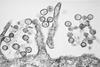
The genetic diversity of hantavirus and the low levels of virus typically found in patient samples make sequencing its genome particularly challenging. Researchers have developed a new, effective, and low-cost way to carry out whole genome sequencing for hantaviruses.
-
 News
NewsDentistry researchers testing oral bacteria transplants to cure bad breath
To rebalance the oral microbiome and cure chronic halitosis, researchers are embarking on a first-of-its-kind experiment. These clinical trials transplant bacteria and other microbes from healthy donors into patients with halitosis. If successful, the healthy microbiota will crowd out the bad and patients’ bad breath will improve.
-
 News
NewsProfessor Kaneko’s sake and wine earn honors at French Japanese Sake Competition for second consecutive year
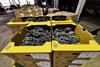
At “Kura Master,” a Japanese sake competition held in France for French consumers since 2017, “Aldebaran,” a wine produced from grapes grown in the city of Ibara, in Okayama Prefecture, and supervised by Professor Akihiro Kaneko, won a Gold Award in the Muscat Bailey A category.
-
 News
NewsBiochar can reshape how soils respond to warming, but the effect depends on the soil
A new study shows that biochar can change how strongly soil nitrous oxide emissions respond to rising temperatures. But the effect is not one-size-fits-all. The study found that nitrous oxide emissions increased with warming in both agricultural soil and forest soil, but forest soil was more temperature-sensitive than agricultural soil.
-
 News
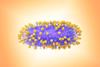
NewsMaternal RSV vaccine cuts infant hospitalizations by 70%
A study has found that vaccination against respiratory syncytial virus (RSV) during pregnancy reduced the risk of hospitalization in young infants by nearly 70%. It provides early real-world evidence from U.S. clinical care, showing that administering one dose of the maternal RSV vaccine (RSVpreF vaccine) reduces hospitalization related to RSV in young infants.
-
 News
NewsFlu drugs show promise against cognitive decline
A class of flu drugs may reduce cognitive decline and premature aging in people living with chronic viral infection. Scientists identified a new biological culprit: the degradation of protective sugar molecules in our bodies, known as glycans, that normally help keep inflammation in check.
-
 News
NewsData from patients hospitalised with COVID-19 made available to the scientific community
The DIVINE study database has been published. The cohort includes clinical information from 5,813 patients hospitalised with COVID-19 during four waves of the pandemic, between March 2020 and August 2021, across five hospitals in the southern metropolitan area of Barcelona.
-
 News
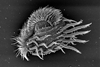
NewsResearcher discovers single-celled organism that transforms into cannibalistic supergiant
Researchers have discovered a microscopic organism that can transform into a cannibalistic ’supergiant’ that drastically changes size, shape, and behavior, and abandons filter-feeding to hunt and consume their genetically identical relatives.
-
 News
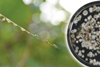
NewsFrom spider silk to science: a new way to access hidden fungal diversity
A new study suggests that spider webs - particularly those incorporating environmental debris - can serve as natural, non-destructive collectors of fungal material in agricultural ecosystems. The findings show that viable fungi can be recovered from these structures, including lineages that may represent previously undocumented diversity.
-
 News
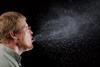
NewsFever and chills can make respiratory diseases more contagious
A new study reveals that when the difference between body temperature and the ambient temperature is greater, the clouds of particles generated by coughing or sneezing disperse more and maintain a higher concentration.
-
 News
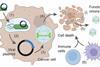
NewsResearchers combine bacteria and viruses to demonstrate a new way to fight cancer
Researchers have designed non-toxic Salmonella bacteria to deliver viruses that are safe to humans but potent against liver and pancreatic cancer tumors. Animal models treated with this combination of bacteria and viruses saw almost all their tumors eliminated and lived significantly longer.
-
 News
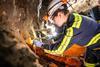
NewsOrganized microbial ‘workforces’ keep Earth’s underground biosphere running
By studying life deep inside a former gold mine, scientists uncovered evidence that Earth’s hidden biosphere operates less like a random collection of microbes and more like an organized workforce. From site to site, the ecosystems were incredibly different from one another but largely stable through time.
-
 News
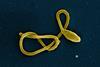
NewsNew model could help track deadly viruses back to their source
A new predictive model could help scientists more efficiently identify the reservoirs of emerging zoonotic viruses and dangerous pathogens like Ebola that can spill over from animals into humans. It relies on detailed information collected on suspected reservoir species to identify key windows.
-
 News
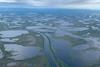
NewsArctic river deltas at risk from mounting pressures
Researchers have performed a detailed calculation of the amount of carbon stored in permafrost in Arctic river deltas. In a new study, they point out the risks endangering the storage function of these highly sensitive landscapes due to rapid climate change.