
All articles by Linda Stewart – Page 27
-
 News
NewsResearchers test two treatments to protect against deadly cattle disease
As cases of a deadly cattle disease rise in Arkansas, researchers are testing two treatments they hope will help ranchers protect their herds. The disease is bovine theileriosis and is caused by the parasite Theileria orientalis Ikeda, carried primarily by the invasive Asian longhorned tick.
-
 News
NewsResearcher efforts to reproduce corals shared with TV cameras
Scientists at Nova Southeastern University are sharing a rare look at a marine mission that aims to pump life back into coral reefs. Researchers waiting for coral-spawning hope the project will be a game-changer in the South Florida ecosystem.
-
 News
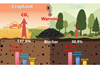
NewsWarming may weaken biochar’s climate benefits in cropland soils, global study finds
Researchers found that warming significantly increased carbon dioxide emissions from soils treated with biochar by an average of 77%. The effect was especially strong in croplands, where emissions increased by 117.5%, compared with 30.9% in forest soils.
-
 News
NewsQ&A: Meet Letters in Applied Microbiology Junior Reviewer Md. Ekramul Karim
We caught up with Md Ekramul Karim, a Ph.D. candidate at the University of Houston, who is one of the newest Junior Reviewers with Letters in Applied Microbiology.
-
 News
NewsFirst-in-human clinical trial shows promising results for new Lassa fever vaccine
Researchers have reported encouraging results from an early clinical trial that tested a new dual vaccine against Lassa fever and rabies. The study found that the vaccine was safe and induced immune responses against both viruses. There are currently no vaccines against Lassa fever on the market.
-
 News
NewsPlants could be used to grow medicines in space, study shows
Astronauts on long space missions may one day use plants to produce fresh stocks of medicines on demand. Researchers developed a simple method to grow and repeatedly harvest plant virus-based pharmaceuticals from plants under space-like conditions, without destroying the plants or generating large amounts of waste.
-
 News
NewsWhat dental calculus can tell us about the oral microbiomes of ancient Japan
Microbe DNA from ancient dental calculus offers insights into the past oral microbiomes of the Japanese people, including the phylogeny of the periodontal disease-associated archaeon, Methanobrevibacter oralis.
-
 News
NewsAntibiotics drive resistance in waterways - even after they break down
Antibiotics continue to drive resistance to bacteria, even after they are broken down in wastewater treatment plants and discharged into rivers and seas, new research published on World Oceans Day has shown for the first time.
-
 News
NewsDigital model guides cleaner biohydrogen production
A research team has developed an enzyme-aware digital model that explains why hydrogen-producing microbes often struggle to grow fast and generate hydrogen efficiently at the same time. The study reveals how limited enzyme resources shape the balance between cell growth, by-product formation, and hydrogen generation.
-
 News
NewsTesting AI against public health’s existing tools
A new study found that AI chatbots made vaccine-hesitant parents more likely to say they would vaccinate their children against HPV, but did not outperform materials from government health agencies, whose effects also lasted longer.
-
 News
NewsAll-new lab in Kenya fills critical gap in wildlife health
Conservation stakeholders gathered to celebrate the official opening of the Laboratory in Northern Kenya (LiNK), an all-new veterinary diagnostic lab designed to fill a critical need for accessible diagnostic infrastructure in the remote region.
-
 News
NewsAccelerating chikungunya vaccine development in Africa: Launch of the ACT-CHIK Project
Funded by the Global Health EDCTP3 Joint Undertaking, a new €15.3 million project coordinated by Institut Pasteur brings together seven partners across four continents to advance clinical trials and prepare for the manufacturing of a chikungunya vaccine in Africa.
-
 News
NewsEurope’s crops under threat: €6 million project launches to tackle rising plant pest crisis
The University of Warwick leads a European consortium to build the first platform capable of coordinating Europe’s response to devastating agricultural and forest pest invasions. The project will give plant health authorities the ability to model and optimise pest control strategies across the entire agri-value chain.
-
 News
NewsResearch team awarded NIH grant to study early immune determinants of human tuberculosis infection
A research team was awarded a 5-year, $3.8 million grant to study early immune responses in the lung and how they influence tuberculosis infection outcomes. The program focuses on how lung immune cells called macrophages influence the earliest stages of tuberculosis infection.
-
 News
NewsTime for an AI checkup: Flaw found in machine learning for sepsis treatment
Researchers found a flaw in many peer-reviewed studies using the AI method known as reinforcement learning as a theoretical guide for the treatment of sepsis. If these flawed systems for sepsis treatment were deployed in a healthcare setting, they would recommend either overtreatment or undertreatment in nearly half of patient states.
-
 News
NewsMost cases of HIV persistence in blood following treatment explained by defective copies of the virus
A study based on blood samples strongly suggests that most persistent cases of viral detection, despite ideal HIV drug therapy, are not due to virus transmission or a rebound of active disease.
-
 News
NewsScientists probe links between green space exposure, mental health and the nasal microbiome
Researchers recently studied associations among green space exposure, mental well-being, and the nasal microbiome—the microbes in a person’s nose. The analysis showed correlations among microbial signatures, time spent outdoors and positive mental well-being.
-
 News
NewsFood insecurity linked to gut microbiome changes in children
A new study shows that food insecurity may leave a measurable impact on the gut microbiome of children. Children in food-insecure households had different gut microbiome profiles, including higher levels of Sutterella, which has been linked to poor dietary quality and intestinal inflammation.
-
 News
NewsHow are chloroplasts communicating with the nucleus? Bacterial enzymes show the way
By utilizing bacterial enzymes that cleave heme molecules at different sites, researchers have developed a method to dissect phytochrome-dependent light and heme retrograde signaling pathways in plants, which have previously been difficult to discuss separately.
-
 News
NewsNew study highlights maternal-fetal TORCH infection risk
Researchers have assessed long-term trends in TORCH infections in India, a region where reliable data have been lacking. TORCH includes pathogens that cause toxoplasmosis, rubella, cytomegalovirus (CMV), herpes simplex virus and other infections.