
More News – Page 30
-
 News
NewsScientists take crucial step in developing world’s first measles treatment
Scientists have characterized human antibodies capable of neutralizing measles virus. These antibodies bind to key sites on measles virus and prevent the virus from entering host cells.
-
 News
NewsHappy 100th birthday! Eight inspiring quotes from Sir David Attenborough
Happy centenary! As Sir David Attenborough celebrates his 100th birthday today, we dig up some of his most famous quotes that celebrate the vital role that microbes and their ecosystems play on planet Earth.
-
 News
NewsHow bacteria ‘chat’ their way to carbon-neutral water treatment
Global climate goals demand that wastewater treatment plants transform their operations. A new review reveals that quorum sensing (QS), the chemical communication system bacteria use to coordinate behavior, could be the key.
-
 News
NewsGlobal outbreaks may fuel violence against women — but most cases go unmeasured
Violence against women and girls may increase during infectious disease outbreaks — as economic strain, isolation and disrupted services reshape daily life — yet those impacts remain largely unmeasured, according to a new study.
-
 News
NewsScientists discover how gut bacteria toxin invades colon cells to trigger cancer
A common gut bacterium, Bacteroides fragilis, drives colon tumor formation, potentially leading to colorectal cancer, by secreting a toxin that damages the lining of the colon. Researchers have now shown that the B. fragilis toxin BFT must first bind host receptor claudin-4 before it can cause damage.
-
 News
NewsBoyce Thompson Institute names Dr. Natalie Hoffmann inaugural Jane Silverthorne Postdoctoral Fellow
How do beneficial fungi grow into and through plant cells without destroying them in the process? That question sits at the center of Dr. Natalie Hoffmann’s research – and it’s what earned her the inaugural Jane Silverthorne Postdoctoral Fellowship at the Boyce Thompson Institute (BTI).
-
 News
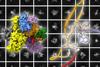
News‘Atomic snapshots’ of proofreading enzyme could lead to better COVID-19 drugs
A research team used images generated by a cryogenic electron microscope (cryo-EM) to observe the interplay between SARS-CoV-2 proofreading enzyme exoribonuclease (ExoN) and RNA incorporated with antivirals such as remdesivir, sofosbuvir and bemnifosbuvir.
-
 News
NewsNeedle-free flu vaccine aims to boost children’s immunity
A new study will explore the effects of a nasal spray flu vaccine on children’s immune systems, aiming to boost future protection and lower vaccine hesitancy rates.
-
 News
NewsSeasonal COVID-19 vaccination in 2025/26 reduced risk of illness by half in Canada
An interim analysis estimates that the COVID-19 vaccine for the 2025/26 season reduced the risk of illness in Canada by about half at about 9 weeks after vaccination, offering protection beyond the vaccine’s target strain.
-
 News
NewsTuberculosis risk: promising approaches for screening and prediction
It is currently difficult to detect TB in its early stages, or predict who will go on to have TB, and therefore preventive treatment is not widely used. Researchers assessed whether a blood-based 3-gene host-response test can detect active tuberculosis and help predict future disease.
-
 News
NewsLong-term dynamic virological response patterns and clinical outcomes in hepatitis B virus-related cirrhosis
The long-term clinical outcomes of patients with hepatitis B virus (HBV)-related cirrhosis receiving nucleos(t)ide analog (NA) therapy according to virological response patterns remain inadequately defined. A new study aimed to investigate the association between virological response patterns and clinical outcomes.
-
 News
NewsResearchers find diagnostic delays are common for US pediatric patients with malaria
Researchers found that more than one in four pediatric patients treated for malaria in the United States had a delay in their initial diagnosis, increasing the risk of more severe infection.
-
 News
NewsThe Nexus of Food Systems, Ecosystems and Human Health: Sign up for our fascinating free webinar!
What if health is not produced by humans alone, but co-created with the ecosystems, organisms, and food systems we depend on? A fascinating free webinar will explore how microbes connect people to food systems and the ecosystems that undergird food production.
-
 News
NewsLight without electricity? Glowing algae could make it possible
Researchers successfully turned on the “light switch” in algae and kept them lit up using simple chemical solutions. The finding opens the door for future technologies such as autonomous robots that can operate in dark environments and living sensors for water quality.
-
 News
NewsHead impacts associated with altered gut microbiome in football players
Non-concussive head impacts—hits to the head that don’t cause clinically detectable symptoms—are correlated with subsequent changes to the gut microbiome in a small sample of US collegiate football players, according to a new study.
-
 News
News Researchers unveil new AI-driven system set to transform coral reef restoration
Researchers have developed a first-of-its-kind bespoke AI system designed to assess coral health and detect early stress. BlueBiome is reimagining coral reef care by applying the same principles of preventive, precision health commonly used in human gut health.
-
 News
NewsMembrane complex aids rock-eating microbes in converting carbon dioxide to biomass
So-called rock-eating microorganisms obtain their energy to convert carbon dioxide (CO2) from inorganic sources. Using electron microscopy and infrared spectroscopy, researchers investigated the structure of DAB2 in the sulfur bacterium Halothiobacillus neapolitanus.
-
 News
NewsScientists use ultrasound to destroy influenza A and COVID-19 viruses without damaging human cells
Researchers have discovered that high-frequency ultrasound waves similar to those used in medical exams can eliminate viruses such as SARS-CoV-2 and H1N1 without damaging human cells. Acoustic resonance causes structural changes in viral particles until they rupture and become inactivated.
-
 News
News‘Not just hot water’: marine heatwaves can create toxic relationship between seagrasses and microbes
Heat stress from marine heatwaves can create a toxic relationship between seagrasses and a hidden ecosystem of bacteria, transforming a previously beneficial co-existence between marine plants and microbes into a harmful one, a study has found.
-
 News
NewsNew kind of CRISPR could treat viral infection and cancer by shredding sick cells’ DNA
A new technology uses a relative of the CRISPR-Cas9 gene editing system to kill target cells. When activated by a specific, programmable genetic target, the Cas12a2 protein rips a cell’s genome apart. Researchers programmed Cas12a2 to kill virus-infected cells or cancer cells while leaving healthy cells untouched.