
More News – Page 37
-
 News
NewsCosmetics from waste? New microbial discovery could enable more sustainable production of high-value chemical products
Researchers have made a key discovery about how certain bacterial strains produce a set of economically valuable chemicals — opening the door to new, more sustainable production methods. A family of molecules could be made via bacterial fermentation instead of from palm oil, as they are today.
-
 News
NewsHow scientists are breeding spinach to better withstand Pythium
Breeding efforts to improve spinach tolerance to a pathogen called Pythium will help both indoor and outdoor growers of the popular leafy green.
-
 News
NewsMicrobes contribute a surprisingly large array of proteins in fermented foods
A study examining the proteins found in fermented foods like yogurt, cheese and bread found that a surprisingly large number, and percentage, of microbial proteins contribute to their overall protein content.
-
 News
NewsNew insights into how bacteria manage DNA
New analytical methods have enabled researchers to uncover how the sequence, physical shape and flexibility of bacterial DNA guide the activity of an enzyme called DNA gyrase, which previously got all the credit for managing DNA.
-
 News
NewsMalaria shaped distribution of early human populations
Scientists investigated whether Plasmodium falciparum induced malaria shaped human habitat choice between 74,000 and 5,000 years ago, finding that malaria influenced habitat choice by pushing human groups away from high-risk environments and separating populations across the landscape.
-
 News
NewsCOVID antiviral speeds recovery but doesn’t reduce hospitalization in vaccinated patients, trials find
Paxlovid (nirmatrelvir-ritonavir) does not reduce hospital admissions or deaths in vaccinated adults at higher risk of severe COVID-19, despite helping them recover faster, according to results from two national trials.
-
 News
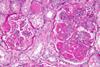
NewsHigh levels of gut bacterial toxin trigger lupus nephritis
Research suggests that using antibiotics to target the Ruminococcus gnavus lipoglycan, or the protein it activates on immune cell surfaces to amplify damaging inflammation, could serve as an alternative to current lupus nephritis therapies that suppress the immune system.
-
 News
NewsSecret to a healthy liver found in a young microbiome
Restoring the gut microbiome to its youthful state may hold the key to slowing aging and preventing liver cancer, one of the fastest-growing cancers worldwide, according to a study.
-
 News
NewsScientists find a new way coronaviruses can get into human cells
An international team of researchers has identified an East African bat coronavirus capable of entering human cells. Whilst the virus can bind to a cell receptor found in the human lung, preliminary testing in Kenya suggests it has not spilled over into the local human population.
-
 News
NewsResearchers fight oral cancer with bioengineered chewing gum
Research shows that antiviral and antibacterial chewing gums reduce the levels of three microbes linked to worse outcomes in oral cancers, paving the way for more effective and affordable therapies.
-
 News
NewsScientists catch a fungal enzyme open for business
A new study shows that caspofungin, a widely used antifungal drug, works only when its target enzyme is active, pointing the way toward designing better treatments.
-
 News
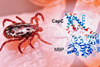
NewsResearch on tick-transmitted disease reveals potential weakness, opening paths to new treatments
Tularemia is a rare but highly infectious disease caused by Francisella tularensis, a bacterium that can evade immune defenses. Scientists have isolated and studied a set of proteins that play a central role in infection, revealing a potential weakness.
-
 News
NewsNew clues to hepatitis B species restriction could help build a novel model for studying infection and testing therapies
For decades, it was thought that the barrier to creating a workable mouse model for hepatitis B is an inability for the virus to gain a genetic foothold in the mouse due to its unique type of DNA. Now researchers have discovered that the problem is something different altogether—likely a misstep in the entry process.
-
 News
NewsWHO certifies the Bahamas for eliminating mother-to-child transmission of HIV
In a landmark achievement for Caribbean public health, the World Health Organization (WHO) congratulates The Bahamas for becoming the latest Caribbean nation to be certified as having eliminated the mother-to-child transmission of HIV.
-
 News
NewsNasal spray could transform treatment of deadly cerebral malaria
Master’s student Taznita Kista is exploring whether a nano-enabled nasal spray could change how cerebral malaria is treated. Her work focuses on a nose-to-brain drug delivery system using niosomes.
-
 News
NewsFlu vaccine no longer required for U.S. military
The U.S. military is ending its long-standing requirement that service members receive the annual flu shot, a decision announced by Defense Secretary Pete Hegseth.
-
 News
NewsPioneering virologist Bernard Roizman dies at 96
Bernard Roizman, ScD, world-leading expert on herpes simplex virus (HSV) and Joseph Regenstein Distinguished Service Professor Emeritus of Microbiology and Molecular Genetics and Cell Biology at The University of Chicago, died on April 13, 2026, at the age of 96.
-
 News
NewsIBS treatment response predicted by gut microbiome in new study
Researchers investigating irritable bowel syndrome with diarrhea observed distinct characteristics of patients’ gut microbiomes that predicted whether they responded to the low FODMAP diet or rifaximin — or did not respond to treatment.
-
 News
NewsNew research reveals mechanisms behind coffee’s positive effects on the gut-brain axis
First of its kind research shows the potential role of coffee as a further intervention to promote positive gut health and its effects on the gut-brain axis. Coffee was found to positively affect perceived mood and stress levels in individuals taking part in this study.
-
 News
NewsE. coli and ‘good’ bacteria balanced by breastmilk in baby gut microbiomes
Sugars contained exclusively in breast milk are helping to feed an important balance of bacteria in babies’ developing gut microbiomes, according to a study that describes how babies who are breastfed maintain a mutually beneficial co-existence of E. coli and Bifidobacterium.