
More News – Page 88
-
 News
NewsClostridioides difficile: A suspected pro-carcinogenic bacterium for gastrointestinal tumors
A new review proposes that C. difficile infection (CDI) may be a previously underappreciated pro-carcinogenic factor in CRC and possibly other gastrointestinal cancers, offering a fresh angle for research and prevention strategies.
-
 News
NewsBlack carbon from straw burning curbs antibiotic resistance spread in plastic-mulched farmland
By tracking ARG movement from soil into soybeans, a new study shows that black carbon not only counteracts the ARG-amplifying effects of plastic residues but also limits the transfer of resistance genes into plant tissues and seeds.
-
 News
NewsGlobal study to evaluate whether dengue outbreaks can be anticipated earlier
Thousands of dengue forecasting models have been published, but few have been tested in real public-health settings. E-Dengue is a new open-source, user-friendly software system tailored for district-level decision-making.
-
 News
News4 million euros for study with personalized phage therapy
UMC Utrecht has received a grant of 4 million euros for the first clinical study in the Netherlands involving a customized therapy with bacteriophages for patients with recurrent urinary tract infections.
-
 News
NewsNew machine-learning models capture the rapid evolution of antimicrobial resistance
A tool developed to study bacterial evolution over billions of years has been successfully adapted to quickly and reliably identify resistant strains of Staphylococcus aureus.
-
 News
NewsNew antimalarial drug candidate shows potential for fighting resistance and reducing malaria transmission
Researchers have developed a new antimalarial drug candidate designed to address the growing challenge of drug resistance and potentially reduce malaria transmission.
-
 News
NewsThe gut bacteria that put the brakes on weight gain in mice
Research has identified a specific type of gut bacteria, called Turicibacter, that improves metabolic health and reduces weight gain in mice on a high-fat diet. People with obesity tend to have less Turicibacter, suggesting that the microbe may promote healthy weight in humans as well.
-
 News
NewsStrengthening asphalt roads with a unique green ingredient: Algae
Researchers propose a figurative and literal green solution to improve the durability of roads and sidewalks: an algae-derived asphalt binder. For temperatures below freezing, results indicated that the algae binder reduced asphalt cracks when compared to a conventional, petroleum-based binder.
-
 News
NewsHarnessing the positive health benefits of microbes
A new article introduces the ‘Database of Salutogenic Potential’, a world-first prototype open-access repository that catalogues microbes and natural compounds linked to positive health outcomes.
-
 News
NewsRising heat reshapes how microbes break down microplastics, new review finds
A new review examines how high and extreme temperatures influence the ability of microorganisms to degrade microplastics. The authors show that heat can both accelerate and suppress microbial breakdown of plastic particles, depending on conditions and the organisms involved.
-
 News
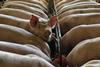
NewsA ‘one-pot’ assay of or rapid portable identification of genotypes I and II African swine fever viruses
Researchers in search of an African swine fever virus genotyping method developed an isothermal ‘one-pot’ CRISPR-Cas12i3/Cas13d-based assay, designated OBServe.v2, to detect two amplified targets from multiplex recombinase polymerase amplification (RPA) in a single tube.
-
 News
NewsA new study reveals the microbial biodiversity of dehesa soil
A study reveals the underground interactions between fungi and oomycetes in twenty Andalusian dehesas, wooded pasturelands typical of the Iberian Peninsula, making it possible to identify the role of water as the main driver of microorganism diversity and to shed new light on the pathogen responsible for la seca.
-
 News
NewsBreakthrough AI speeds up discovery of life-supporting microbes
Scientists have developed a powerful new artificial intelligence tool called LA⁴SR that can rapidly identify previously overlooked proteins in microalgae - tiny organisms that produce much of the Earth’s oxygen and support entire aquatic ecosystems.
-
 News
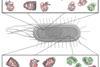
NewsFor certain life-essential proteins in E. coli, repair is more likely
A new study shows that E. coli proteins containing a specific structure are more likely to misfold and, if they are required the bacteria’s survival, more likely to be repaired.
-
 News
NewsStudy reveals high stakes of early immune development—and a potential probiotic fix
Scientists find that certain gut bacteria are essential for building immune defenses during infancy, pointing to new strategies for protecting children’s health. They have identified a way to preserve healthy immune development even when infants need antibiotic treatment.
-
 News
NewsCan an electronic nose detect indoor mold?
Researchers have developed an electronic nose that can reliably sense and identify mold, which causes various health issues for humans and animals, as well as damage to homes and other buildings and structures.
-
 News
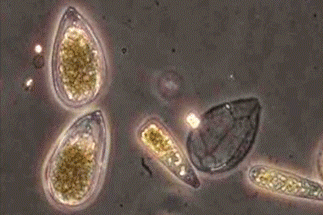
NewsScientists discover fungus that kills toxic algae threatening human health
A team of researchers have discovered a previously unknown species of marine fungus that can kill harmful, bloom-forming algae. The new species, Algophthora mediterranea, is a form of microscopic chytrid fungus that can occupy a broad range of hosts.
-
 News
NewsCancer-fighting bacterial product ‘cocktails’ may offer personalized treatment
Bacteria may be the next frontier in cancer treatment, according to researchers who devised a new approach of creating bacteria-derived mixtures — or cocktails — to help fight bladder cancer. They found that the cocktails significantly boost the immune system’s ability to fight cancer.
-
 News
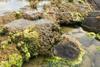
NewsStudy showcases resilience and rapid growth of ‘living rocks’
South Africa is home to some of the oldest evidence of life on Earth, contained in rocky, often layered outcroppings called microbialites. Like coral reefs, these complex “living rocks” are built up by microbes absorbing and precipitating dissolved minerals into solid formations. Source: Rachel Sipler, Bigelow Laboratory for ...
-
 News
NewsCOVID-19 leaves a lasting mark on the human brain
COVID-19 does not just affect the respiratory system, but also significantly alters the brain in people who have fully recovered from the infectious disease, highlighting the long-term neurological impact of the virus.