Talaromyces marneffei is a significant pathogenic fungus in humans. Primarily causing fatal talaromycosis in HIV/AIDS patients, increasing cases have been reported among non-HIV-infected populations.

Low-Res_原图

Source: Mycology-An International Journal on Fungal Biology

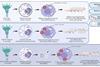
TmNV1/TmNV1-TmPV1 infection results in the attenuated stress response and fungal virulence in Talaromyces marneffei.

To reveal its pathogenic mechanisms, a previous study identified the mycovirus TmPV1 from T. marneffei. Mycoviruses are viruses that infect fungi and TmPV1 was demonstrated to enhance the virulence of the fungal host, potentially facilitating host adaptation in humans. However, compared to other human-pathogenic fungi such as Aspergillus fumigatus, T. marneffei exhibits extremely limited mycoviral diversity.

To further explore mycoviral diversity in T. marneffei, a research collaboration directed by Professor Cunwei Cao (The First Affiliated Hospital of Guangxi Medical University) and Professor Xiao Liu (Institute of Microbiology, Chinese Academy of Sciences) identified and characterized two mycoviruses from a clinical isolate (strain 34D): a previously known partitivirus (TmPV1) and a newly discovered narnavirus (TmNV1). Notably, both viruses were detectable in the mycelial (25 °C) and yeast (37 °C) phases of the host, suggesting potential roles in both saprobic and human pathogenic contexts.

What the mycovirus does

Via virus curing, researchers found that TmNV1 had no discernible effect on colony morphology, radial growth rate, sporulation capacity, or general stress responses (osmotic, oxidative, or salt stress). However, TmNV1 did reduce resistance to cell wall stressor (Congo red, CR), with a thinner yeast cell wall and a trend toward increased vacuoles.

Furthermore, researchers observed that TmNV1 infection reduced fungal survival following macrophage challenge, which was accompanied by a trend toward increased intracellular reactive oxygen species (ROS) levels. In a murine model, TmNV1 infection was associated with a significant improvement in host survival, a decreased lung fungal burden, and attenuated inflammatory pathology.

While the effects of TmNV1 and TmPV1 have been studied individually, the phenotypic consequences of their coinfection remain largely unexplored. In the present study, researchers found that coinfection with TmNV1 and TmPV1 caused no significant differences in colony morphology, radial growth rate, sporulation, or resistance to osmotic, oxidative, or salt stress.

Pathogenesis-related traits

In contrast, notable changes were observed in pathogenesis-related traits. The coinfected strain exhibited the greatest sensitivity to CR and the antifungal drug itraconazole, along with the thinnest cell wall and the most abundant vacuoles. It was also the most susceptible to macrophage killing in vitro and, in a murine model, resulted in the lowest lung fungal burden and mildest inflammation. Collectively, these results indicate that TmPV1 amplifies the hypovirulence effects of TmNV1, despite the hypervirulence previously associated with TmPV1 alone.

Taken together, these findings identify TmNV1 as the first narnavirus discovered in T. maneffei, functioning as a potent virulence attenuator. Coinfection with TmPV1 further amplifies these hypovirulent phenotypes. Researchers will focus on elucidating the precise molecular mechanisms underlying the hypovirulence conferred by TmNV1 infection or TmNV1-TmPV1 coinfection in the future.

A novel narnavirus attenuates stress resistance and fungal virulence in Talaromyces marneffei