
A new review reveals that important antimicrobial resistance (AMR) genes are widely present in non-typhoidal Salmonella from both chicken and aquaculture production systems, and identifies a major gap in the available evidence from aquaculture compared with chicken production.
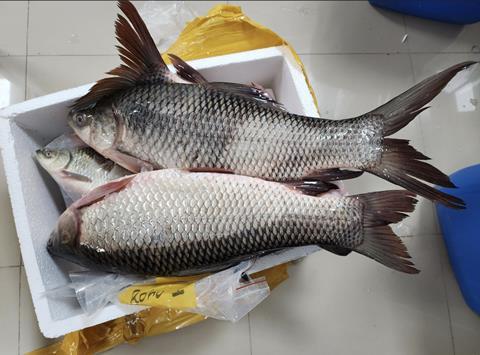
The study, by scientists at Colorado State University Fort Collins, ‘Comparative distribution of antimicrobial resistance genes in non-typhoidal Salmonella from chicken and aquaculture production systems, 2010–2025: a systematic review and meta-analysis’, is published in Letters in Applied Microbiology, an Applied Microbiology International publication.
Studies published between 2010 and 2025 from different parts of the world on AMR genes in non-typhoidal Salmonella from chickens and aquaculture species were reviewed, said corresponding author Dr Sami Ullah Khan Bahadur.
Resistance genes
“We wanted to understand which resistance genes were most frequently reported, whether similar resistance profiles occurred in both production systems, and how these patterns varied geographically and over time. This was important because chicken and aquaculture are both major food-production systems, but AMR research and surveillance has focused much more on terrestrial food animals,” he said.
Antimicrobial resistance is not limited to hospitals or human medicine. Resistant bacteria can occur in animals, food-production environments, water and the wider environment, making AMR an important One Health problem.
Salmonella is particularly important because it is a major foodborne pathogen that can reach people through contaminated food and other routes. When Salmonella carries resistance genes, some antimicrobials used for treatment may become less effective. These genes may also be associated with mobile genetic elements, creating opportunities for resistance to spread between bacteria.
Animal waste and aquaculture
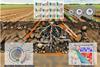
Chicken production and aquaculture may also be environmentally connected. For example, animal waste can enter water systems, and in some integrated farming systems chicken manure or litter may be used in fishponds. The team therefore wanted to compare the available evidence from both sectors and identify important knowledge and surveillance gaps.
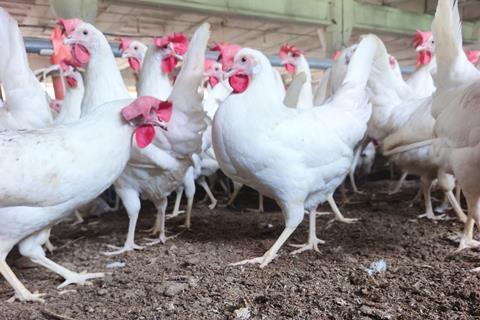
The scientists systematically searched six scientific databases and included 76 studies that met their eligibility criteria. Sixty-eight studies were from chickens, while only eight were from aquaculture, including seven involving fish and one involving shrimp. They combined data from eligible studies using meta-analysis to estimate the prevalence of important resistance genes. They also examined regional and temporal patterns and assessed whether the method used to detect AMR genes, particularly PCR or whole-genome sequencing, influenced the estimates.
Several important findings emerged. In chickens, tet(A), associated with tetracycline resistance, had the highest pooled prevalence at about 60%. Other commonly detected genes included sul2, blaTEM and floR. Aquaculture studies also reported important genes, including tet(A), blaTEM, blaCTX, aadA and blaCMY, although these estimates were based on far fewer studies.
Geographical differences
The team also observed important geographical differences, with several resistance determinants reported more frequently in the Eastern Mediterranean and South-East Asia regions. Across sampling periods, some genes, including tet(A), sul2, aadA and qnrS, showed higher prevalence in later periods, although this pattern was not consistent for every resistance gene.
“Despite the limited number of aquaculture studies, several important AMR genes were found in both chicken and aquaculture systems. This does not show direct transmission between the two sectors, but it raises important questions about shared selection pressures and possible environmental connections,” said Dr Bahadur.
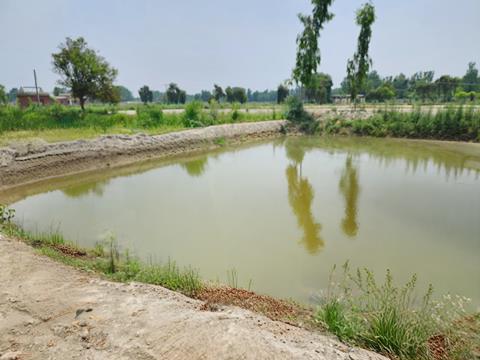
“Another important finding was that none of the included studies directly examined Salmonella resistance in aquaculture systems where chicken litter or manure was being used as fertilizer or feed input. Considering this as a potential connection between the two production systems, this represents an important gap for future research.”
Wider interconnected system
One of the main messages from the study is that antimicrobial resistance in food production should not always be considered within individual sectors separately. Chicken farms, aquaculture systems, food, water and the environment can be parts of a wider interconnected system.
The presence of clinically important resistance genes in foodborne Salmonella is relevant to both animal and human health. If resistant strains enter the food chain, they may contribute to human exposure and make infections more difficult to treat.
These findings therefore support stronger and more integrated AMR surveillance across food-production systems. They also show that surveillance needs vary across regions, and areas with higher burdens of resistance determinants may require greater attention to antimicrobial stewardship, surveillance and animal-health management.
Next steps
At the same time, the study identified overlapping resistance patterns but cannot establish direct transmission between chicken and aquaculture systems. That distinction is important. This study can also serve as a model for applying a systematic scientific approach to conducting literature searches on specific topics.
“Future studies should not only report which resistance genes are present but should combine genomic information with data on antimicrobial use, farm-management practices and environmental exposures,” said Dr Bahadur.
MICROBIOLOGY NEWS: Register with The Microbiologist for more free articles
“One area that particularly needs attention is integrated farming where chicken litter or manure is used as fertilizer or feed input in aquaculture. None of the studies included in our review directly characterized Salmonella resistance in aquaculture systems where chicken litter was being used. Without these data, it is difficult to determine how important this pathway may be for movement of resistant bacteria or resistance genes.
“Greater use of whole-genome sequencing, together with well curated AMR databases and farm level information, would also provide a clearer understanding of how resistance develops and moves through food-production environments.”
Study background
Dr Bahadur led the study at the Animal Population Health Institute, College of Veterinary Medicine and Biomedical Sciences, Colorado State University, together with Sangeeta Rao, Usman Talib, Anna Ferri, Muhammad Usman Zaheer and Mo Salman. Dr. Mo Salman, Dr. Sangeeta Rao and Dr Bahadur conceptualized the study.
Dr Bahadur conducted the literature search and data extraction, and Usman Talib and Dr Bahadur performed the study screening. Anna Ferri contributed her expertise in evidence synthesis and helped refine the search strategy and methodology.
Dr. Sangeeta Rao, Dr. Muhammad Usman Zaheer, Dr. Mo Salman and Dr Bahadur contributed to the data analysis, while all authors critically reviewed and contributed to the final manuscript. The study did not receive specific external funding.
‘Comparative distribution of antimicrobial resistance genes in non-typhoidal Salmonella from chicken and aquaculture production systems, 2010–2025: a systematic review and meta-analysis’ is published in Letters in Applied Microbiology.
Topics
- Agriculture
- AMR in the Environment
- Anna Ferri
- Antimicrobial Resistance
- Applied Microbiology International
- Aquaculture
- Aquatic Microbiology
- Bacteria
- chicken litter
- Colorado State University Fort Collins
- Community
- Emerging Threats & Epidemiology
- Food Security
- Healthy Land
- Mo Salman
- Muhammad Usman Zaheer
- non-typhoidal Salmonella
- One Health
- Research News
- Sami Ullah Khan Bahadur
- Sangeeta Rao
- Tetracycline
- USA & Canada
- Usman Talib
- Veterinary Medicine & Zoonoses
- Waste Management
- Wastewater & Sanitation




No comments yet