A new study published in Biochar reveals how specially prepared biochar can directly suppress a destructive soil-borne pathogen while helping rebuild a richer and more stable soil bacterial community. The findings offer a clearer scientific basis for designing biochar amendments that protect crops without broadly damaging beneficial soil life.

5492263-PPT

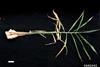
Source: Yuan-Min Shen, National Taiwan University, Bugwood.org

Diseased ginger plant with symptoms of southern bacterial wilt (Ralstonia solanacearum

Soil-borne diseases remain one of agriculture’s most stubborn challenges. Pathogens such as Ralstonia solanacearum, the bacterium responsible for bacterial wilt in crops including tomato and tobacco, can persist in soil and attack plant roots. Traditional soil disinfection methods can reduce pathogens, but they often act broadly, harming both harmful and beneficial microorganisms. This makes it difficult to maintain long-term soil health.

MICROBIOLOGY NEWS: Register with The Microbiologist for more free articles 

In the new study, researchers led by Hanzhong Jia investigated whether biochar could provide a more targeted way to manage soil pathogens. The team prepared biochars from four types of straw materials at different pyrolysis temperatures, ranging from 300 to 700 °C, and tested their antibacterial effects against R. solanacearum.

The strongest results came from tobacco stem biochar, which showed powerful antibacterial activity. Biochar made at 300 to 400 °C inhibited the pathogen by 92.91% to 99.60%, while biochar produced at 500 to 700 °C achieved 100% inhibition in laboratory tests.

Active amendment

“Our results show that biochar is not only a passive soil amendment,” said Hanzhong Jia, corresponding author of the study. “By controlling the raw material and pyrolysis temperature, we can tune the reactive chemistry of biochar and use it to suppress pathogens while supporting a healthier microbial community.”

The key lies in reactive oxygen species, or ROS. These oxygen-containing molecules can damage bacterial cells through oxidative stress. The study found that biochar’s ROS profile changed with pyrolysis temperature. At lower temperatures, tobacco stem biochar mainly produced free radical ROS, including hydroxyl radicals and superoxide radicals. At higher temperatures, it mainly contained non-radical ROS, including singlet oxygen and hydrogen peroxide.

This temperature-dependent switch mattered. Quenching experiments, which used chemical scavengers to neutralize different ROS, confirmed that ROS were the principal antibacterial mechanism. When the researchers reduced ROS activity, the biochar’s ability to suppress the pathogen also dropped sharply.

Plant protection

The team then tested whether this effect could protect plants. In hydroponic tomato seedling experiments, plants infected with R. solanacearum showed severe wilting. By contrast, seedlings treated with tobacco stem biochar showed no disease symptoms and maintained growth comparable to healthy controls. When ROS were quenched, the protective effect was largely lost, further confirming the central role of ROS.

Low-Res_0 (20)

Source: Meng Liu, Siqi Shen, Haiyang Qiao, Huiqiang Yang, Yaru Zhu, Yawei Zhou & Hanzhong Jia

Biochar modulates soil microbial communities via reactive oxygen species derived from its constituents

Beyond pathogen control, the study found that tobacco stem biochar helped reshape the rhizosphere microbiome. In artificial soil and diseased soil systems, biochar increased bacterial richness and promoted a more complex and stable microbial network. The Chao1 richness index increased by 497.77 to 951.34, while microbial network nodes increased by 82 to 136 and edges increased by 1,224 to 2,185. Beneficial genera such as Rhizobium, Paracoccus, Cellvibrio, Fluviicola, and Pseudomonas became more abundant, while several pathogen-associated or less desirable groups declined.

MICROBIOLOGY ON TAP: Get full access to all The Microbiologist articles from just £2.17 a month

“These findings help explain why biochar can sometimes improve disease resistance in soil,” Jia said. “The benefit comes not only from changing soil properties, but also from direct ROS-mediated interactions with microorganisms.”

Practical message

The study provides a practical message for agriculture: biochar performance depends strongly on how it is made. By selecting suitable biomass and pyrolysis temperatures, researchers and growers may be able to design biochar products that reduce soil-borne disease pressure while encouraging beneficial microbial recovery.

The research points toward more precise, microbiome-friendly strategies for sustainable crop protection.