The Serum Institute of India (SII) and the non-profit medical research organization Drugs for Neglected Diseases initiative (DNDi) have signed a licensing agreement covering clinical testing and future access for an SII-developed monoclonal antibody treatment (formerly known as VIS513) against dengue.

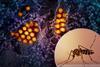
Aedes_Mosquito_and_Dengue_Virus_Particles

Source: NIAID

Aedes mosquito and a colorized transmission electron micrograph of dengue virus particles (yellow/red). Aedes mosquitoes are known to transmit dengue virus.

With this agreement finalized, a Phase III clinical trial led by DNDi is expected to begin in the first quarter of 2027 across Malaysia, Thailand, and Brazil, all home to leading public health institutions that are members of the Dengue Alliance, a global partnership of dengue-endemic countries working to develop effective and accessible treatments. 1,000 participants are expected to join the study across the three countries.

MICROBIOLOGY NEWS: Register with The Microbiologist for more free articles 

Monoclonal antibodies are currently among the most advanced dengue treatment candidates. SII has developed and optimized the current formulation of its treatment and conducted pre-clinical studies and Phase I and II clinical trials that delivered promising safety and efficacy results. It is currently leading a pivotal Phase III clinical trial in India. For the Phase III trial conducted by DNDi in Malaysia, Thailand and Brazil, SII will supply study medicines and manage their refrigerated transportation to clinical trial sites.

Going all out

”Serum Institute of India is committed to go all out in controlling dengue. We are working on both preventive and therapeutic applications to protect populations in dengue-endemic areas. Going by our philosophy, we will make all attempts to develop, produce, and distribute the vaccine and monoclonal antibodies all over the globe in an affordable manner, together with our committed partners, the Indian Council of Medical Research (ICMR) and DNDi. We are delighted and privileged to collaborate with DNDi to continue the development of our monoclonal antibody in the Dengue Alliance countries,” said Dr Rajeev Dhere, Senior Scientific Advisor at SII.

Led by DNDi, the trial in Malaysia, Thailand, and Brazil will be conducted with financial support from the European Commission’s Directorate-General for Health Emergency Preparedness and Response Authority (DG HERA) in partnership with the French Development Agency (AFD). Last November, DG HERA announced it will invest EUR 20 million to advance the development of two new dengue medicines.

Purely symptomatic

Despite dengue’s rapid global spread and increasingly frequent outbreaks, there is still no specific treatment. Patient management remains purely symptomatic, requiring intensive care—including close monitoring and administration of intravenous fluids—that can lead to health systems becoming quickly overwhelmed during outbreaks.

”Treatments will be essential to tackling dengue. We need therapeutics that can prevent progression to the severe stage of the disease to save lives and reduce economic strain, not only on patients but also on public health systems. Treatments are particularly needed for vulnerable groups, including children, pregnant women, and older people, who face a higher risk of severe and potentially fatal dengue,” said Dr André Siqueira, Head of Dengue at DNDi.

MICROBIOLOGY ON TAP: Get full access to all The Microbiologist articles from just £2.17 a month

Children under 15 years of age are at higher risk of developing severe dengue. Pregnant women with dengue face increased risk of maternal mortality and pregnancy loss.

Fast-growing threat

Dengue is one of the fastest-growing mosquito-borne viral infections, with 5.6 billion people at risk. The disease was once limited to tropical countries. Fuelled by climate change and globalization, dengue is expanding to many other parts of the world, including Europe.

Current efforts to control dengue focus mainly on reducing the transmission by Aedes mosquitoes that carry the virus, and on deploying vaccines developed in recent years. However, vaccine coverage remains low, and their effectiveness varies depending on prior exposure and virus serotype. Treatments are therefore an essential addition to the arsenal of health tools required to tackle the disease.

Equitable access

The partnership between SII and DNDi reflects a shared commitment to equitable access through provisions designed to meet public health needs. In low- and middle-income countries (LMICs), the product will be made available at the lowest sustainable price needed to support access while preserving reliable supply. In Europe, the product will be offered on an affordable basis in agreement with relevant authorities to ensure timely and equitable access while supporting long-term sustainability. The partnership will prioritize supply through the public sector in all countries.

The clinical study will be implemented in close collaboration with Dengue Alliance partners: the Oswaldo Cruz Foundation (Fiocruz) and the Universidade Federal de Minas Gerais in Brazil; the Faculty of Medicine, Siriraj Hospital, Mahidol University in Thailand; and the Ministry of Health in Malaysia.

DNDi’s dengue programme is financially supported by the European Commission DG HERA (via EU4Health 2025) through the French Development Agency (AFD), France; Federal Ministry of Research, Technology and Space (BMFTR) through KfW, Germany; Federal Ministry for Economic Cooperation and Development (BMZ) through KfW, Germany; Médecins Sans Frontières International; Dutch Ministry of Foreign Affairs (DGIS), the Netherlands; Swiss Agency for Development and Cooperation (SDC), Switzerland; UK International Development (UK); and other private foundations and individuals.