Fungal endophthalmitis, a devastating intraocular infection, remains one of ophthalmology’s greatest clinical challenges due to its rarity, delayed onset, and complex pathology.

Low-Res_40662_2025_456_Fig5_HTML

Source: Eye and Vision

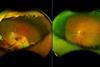
Treatment outcome in endogenous fungal endophthalmitis. a An 80-year-old patient presented with light perception vision in the right eye. Vitreous tap was negative for organisms and growth. Subsequent pars plana vitrectomy with sub-retinal exudate biopsy confirmed a Candida albicans infection, presumably secondary to antecedent colonoscopy. In addition to diagnostic and therapeutic vitrectomy, the patient was treated with intravitreal and systemic voriconazole, resulting in the resolution of subretinal exudate but minimal improvement in vision (hand movements at 50 cm). b A 72-year-old male on steroids for chronic obstructive pulmonary disease was referred from a tertiary referral hospital, where he had been admitted for the management of presumed endogenous endophthalmitis. The presenting vision was light perception. Previous pulmonary imaging revealed right upper lobe masses; bronchoscopy excluded malignancy and mycobacterial infection, though cultures were negative. Initial pars plana vitrectomy and vitreous microscopy, culture, and polymerase chain reaction were negative. A sub-retinal biopsy following pars plana vitrectomy (right and left eyes, 1 week following surgery in the right eye) confirmed Scedosporium apiospermum infection. This was managed with intravitreal and systemic voriconazole. The patient subsequently demonstrated resolution of infection but developed a retinal detachment under oil with no improvement in vision.

A global expert panel from the Asia-Pacific region has now issued 20 consensus statements providing comprehensive, evidence-based guidance for the diagnosis and management of this sight-threatening condition.

The guidelines emphasize early recognition, rapid microbiological confirmation, and prompt multimodal antifungal therapy, while addressing controversies such as corticosteroid use and vitrectomy timing. This landmark effort harmonizes clinical practice across countries, filling a critical gap left by the absence of randomized trials and offering a standardized roadmap to improve visual outcomes worldwide.

Fungal eye infections affect millions globally, with an especially high incidence in South and Southeast Asia. Yet, unlike bacterial infections, fungal endophthalmitis lacks standardized diagnostic or therapeutic protocols because of its low frequency, variable clinical presentation, and limited clinical trial data. Misdiagnosis or delayed treatment often results in irreversible blindness.

READ MORE: Novel bacteria identification methods might help speed up disease diagnosis

READ MORE: New hope for cats with eye infections: Study finds common cold sore cream safe and effective for feline use

Furthermore, emerging antifungal resistance and the absence of universal testing standards add to the complexity. Based on these challenges, a coordinated regional and international effort was urgently needed to identify controversies, unify diagnostic definitions, and develop best-practice guidelines for clinical management of fungal endophthalmitis.

Comprehensive statements

A research consortium led by the Asia-Pacific Vitreo-Retina Society (APVRS), the Academy of the Asia-Pacific Professors of Ophthalmology (AAPPO), and the Asia-Pacific Society of Ocular Inflammation and Infection (APSOII) has published (DOI: 10.1186/s40662-025-00456-y) a comprehensive set of 20 consensus statements on fungal endophthalmitis in Eye and Vision on October 2025.

The statements, developed by 24 experts from 12 countries, reconcile differing clinical opinions on early diagnosis, antifungal strategies, vitrectomy procedures, and the contentious role of corticosteroids, providing the first region-wide consensus for this rare yet vision-threatening infection.

The consensus project, coordinated by Professors Taraprasad Das and Dennis S. C. Lam, synthesized decades of clinical data and expert experience to form guidelines spanning five domains: disease entity, clinical diagnosis, pathobiology, treatment, and future development.

Infection presentation

Key agreements included: fungal infections typically present later than bacterial infections; AspergillusCandida, and Fusarium are the dominant pathogens; and immunocompromised patients are at highest risk. Early vitrectomy was strongly endorsed to reduce fungal load and improve drug penetration, while combined intravitreal, systemic, and topical antifungal administration was recommended for optimal outcomes.

Cutting-edge molecular methods—such as polymerase chain reaction (PCR), next-generation sequencing (NGS), and MALDI-TOF—were recognized as critical for culture-negative cases. However, expert opinions diverged on corticosteroid use, with only 25 % supporting intravitreal dexamethasone due to risks of immune suppression.

Future guidelines emphasize antifungal stewardship, biomarker assays like 1,3 β-D-glucan and galactomannan for rapid detection, and the integration of new agents such as olorofim and terbinafine for drug-resistant infections.

Catastrophic impact

“Fungal endophthalmitis is often underrecognized and under-reported, yet its impact on vision can be catastrophic,” said Professor Taraprasad Das, lead author and vitreoretinal specialist. “By uniting regional expertise and real-world experience, we have established a consensus framework that bridges the gap between evidence and practice. These guidelines offer clinicians a structured decision pathway—emphasizing rapid diagnosis, targeted antifungal use, and cautious surgery—to save vision where delay often means irreversible blindness.”

The newly established consensus represents a turning point for clinicians worldwide, especially in resource-limited regions. By standardizing diagnostic criteria and treatment protocols, it provides an actionable reference for ophthalmologists facing complex fungal infections. The adoption of molecular diagnostics and antifungal stewardship programs will enhance early detection and slow resistance evolution. Beyond clinical application, the consensus highlights the urgent need for global surveillance and collaborative research on emerging pathogens like Candida auris. Together, these recommendations lay the groundwork for future multicenter trials and improved patient outcomes in fungal endophthalmitis management.