
Scientists have discovered that degraded soils can regain their microbial diversity by combining soil microbiome transplants with artificial humic acid amendments.
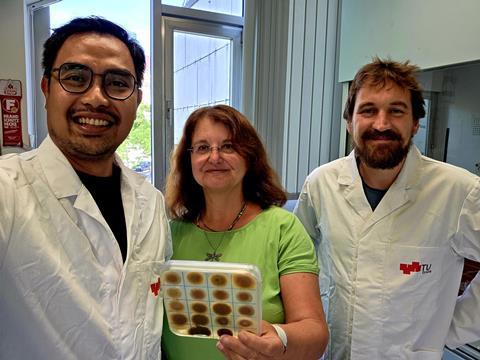
The research paper, by a team from Graz University of Technology, named ‘Microbiome Interventions Combined with Artificial Humic Acid Treatments for Restoring Soil Bacterial Diversity’, has recently been accepted for publication by Sustainable Microbiology, an Applied Microbiology International publication.
“Globally, soil health is declining due to intensive land use, pesticides, and other environmental pressures that disrupt soil microbial communities,” said corresponding author Prof. Dr. Gabriele Berg of the Institute of Environmental Biotechnology.
“Because soil microorganisms drive essential ecosystem processes such as nutrient cycling and plant productivity, their loss threatens sustainable agriculture and ecosystem stability. We aim to identify practical strategies that could help restore these microbial communities in degraded soils.
“We discovered that combining artificial humic acids with soil transplants can effectively restore bacterial diversity in degraded soils, helping the soil microbiome recover toward its original state.
”The study was conducted using controlled soil microcosm experiments with different soil types. The goal was to explore sustainable strategies to restore soil health, which is increasingly threatened by intensive agriculture and environmental pressures.”
Degraded soil systems
The team created degraded soil systems by reducing microbial diversity and then tested whether adding soil from healthy ecosystems (soil microbiome transplants) could help restore microbial communities. They also examined whether artificial humic acids, complex organic compounds known to influence soil chemistry, could enhance this restoration.
Using molecular techniques such as qPCR and 16S rRNA gene sequencing, together with metabolomic analyses, they tracked changes in microbial abundance, diversity, and soil chemistry across three soil types. They found that soil microbiome transplants increased bacterial diversity and abundance, while artificial humic acids reshaped the soil environment in ways that supported recovery.
The most effective restoration occurred when both strategies were combined, particularly when 10% healthy soil was added together with humic acids.
Surprising findings
One surprising finding was that artificial humic acids appeared to suppress fast-growing bacteria, allowing slower-growing and often more diverse microbial groups to recover. This shift helped create a more balanced and diverse soil microbiome.
“These findings suggest that combining soil microbiome transplants with humic acid amendments could provide a practical and sustainable strategy to restore degraded soils. By improving microbial diversity, this approach may enhance soil resilience, fertility, and ecosystem functioning, supporting sustainable agriculture and land restoration,” lead author Dr Wisnu Adi Wicaksono said.
“Future studies should test these strategies under realistic field conditions and examine how restored microbial communities influence ecosystem functions such as crop productivity, nutrient cycling, and soil carbon storage.”
Study background
The study was led by the microbiome research team Gabriele Berg, Wisnu Adi Wicaksono, and Samuel Bickel, who specialize in microbiome research. It benefited from interdisciplinary collaboration with Markus Antonietti, whose expertise in chemistry supported the development and application of artificial humic acids.
READ MORE: ‘Tiny biome tales’: playing a game to understand the human microbiome
READ MORE: Microbiome of fruit and vegetables positively influences diversity in the gut
Additional contributions came from team members at Graz University of Technology (Julia Peissl) and the Leibniz Institute for Agricultural Engineering and Bioeconomy (ATB) (Nader Marzban, Daniel Hoefle, and Ahmed Abdelfattah), reflecting a broad collaborative effort across microbiology, chemistry, and soil science.
‘Microbiome Interventions Combined with Artificial Humic Acid Treatments for Restoring Soil Bacterial Diversity’ is published in Sustainable Microbiology.
Topics
- Ahmed Abdelfattah
- Applied Microbiology International
- artificial humic acid amendments
- Bacteria
- Community
- Daniel Hoefle
- degraded soils
- Food Security
- Gabriele Berg
- Graz University of Technology
- Healthy Land
- Julia Peissl
- Leibniz Institute for Agricultural Engineering and Bioeconomy
- Markus Antonietti
- Nader Marzban
- Research News
- Samuel Bickel
- Soil & Plant Science
- soil microbiome
- Strategies for Sustainability
- Sustainable Microbiology
- UK & Rest of Europe
- Wisnu Adi Wicaksono




No comments yet