
Microplastics and organophosphorus flame retardants (OPFRs) are significant environmental contaminants of aquatic ecosystems, yet their impacts on urodele amphibians remains poorly understood.
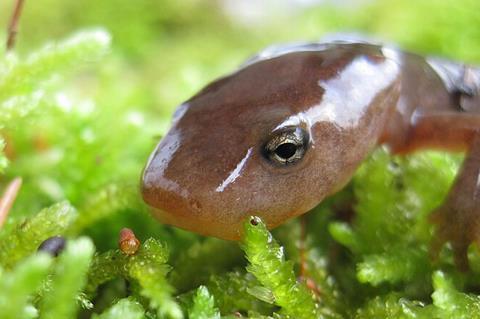
In a study published in the journal Environmental Chemistry and Ecotoxicology, a group of researchers from Nanjing Normal University, China, revealed the individual and combined effects of polystyrene nanoplastics (PS-NPs) and the organophosphorus flame retardant triphenyl phosphate (TPhP) exposure on the gut-liver axis of Pachytriton granulosus.
Gut microbiome
“We found that PS‑NPs increased the abundance of the bacteria Desulfovibrio, potentially triggering gut inflammation,” shares lead author Xinni He from the Herpetological Research Center at the College of Life Sciences, Nanjing Normal University, China. “TPhP reduced gut microbial diversity in a dose‑dependent manner, which may damage the gut barrier.”
Combined exposure to PS‑NPs and low‑dose TPhP further complicated microbial structure. At the metabolic level, both pollutants disturbed oxidative stress and inflammatory pathways, while activating lysosomal and AMPK‑mediated detoxification. “Notably, co‑exposure acted antagonistically and disrupted lipid metabolism through bile secretion,” adds He. “Multi‑omics analysis links several key gut bacteria to oxidative stress and lipid disorders.”
Amphibians
“Amphibians are critical environmental indicators, yet we still know surprisingly little about how nanoplastics and OPFRs jointly affect their internal health,” says senior author Hong Li, also from Herpetological Research Center, Nanjing Normal University, China. “Our findings reveal hidden gut-liver toxicity and uncovers non-additive interactions that would be overlooked in single-pollutant experiments.”
“This work fills a major knowledge gap for urodele amphibians, advance our understanding of the risks posed by combined pollutants, and emphasize the need to incorporate real-world mixed contamination into ecological risk assessments rather than focusing solely on individual chemicals,” says co-corresponding author Longhui Lin, a professor at the Zhejiang Provincial Key Laboratory of Wetland Intelligent Monitoring and Ecological Restoration, Hangzhou Normal University, China.
Topics
- amphibians
- Aquaculture
- Aquatic Microbiology
- Asia & Oceania
- Bacteria
- Clean Water
- Desulfovibrio
- Disease in marine aquaculture
- Environmental Microbiology
- gut microbes
- Gut Microbiome
- gut-liver axis
- Healthy Land
- Herpetological Research Center
- Hong Li
- microplastics
- Nanjing Normal University
- organophosphorus flame retardants
- Pachytriton granulosus
- polystyrene nanoplastics
- Research News
- salamander
- triphenyl phosphate
- Xinni He





No comments yet