
Hepatitis B (HBV) and hepatitis C (HCV) are viral infections that can lead to health conditions such as cirrhosis, cancer, and potentially death if unmanaged. HBV can be transmitted through sexual contact, blood exposure, and mother-to-child transmission, while HCV is primarily transmitted through blood-to-blood contact.
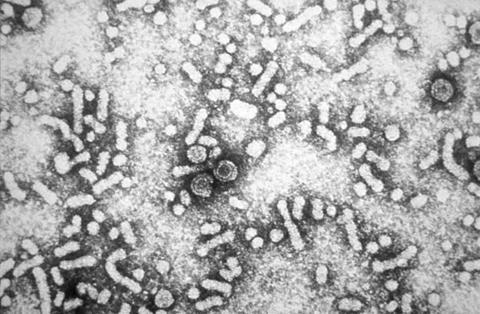
Researchers at Hiroshima University aimed to quantify their current burden of HBV and HCV in Japan and project future trends through 2050 to determine the difference sustained efforts across the country, over the course of decades, can make in the prominence of these two viruses.
Their paper was published as an early view article in Hepatology Research in March 2026.
Between the years 2000 and 2020, researchers have been monitoring their efforts in HBV and HCV management and case reduction. To do so, researchers used six categories of data from affected patients and carriers and a Markov model to project, based on the current state of research, the evolution of the viruses over time through to 2050.
The six categories for carriers are: undiagnosed carriers, patients in care, patients diagnosed but not linked to care, new infections, cured patients, and deceased.
Future projections
Major improvements from 2000 to 2020 give a basis for the model. Chronic HBV and HCV cases have dropped from around 3.0 to 3.07 million cases to between 1.1 and 1.4 million cases, which is lower than the prediction made for 2020 in 2015. This is most notable in the undiagnosed carriers category.
Under the current conditions and using the Markov model, researchers estimate the number of HBV infections to decline gradually down to around 200,000 cases by 2050, down from an estimate of 923,000 to 940,000 cases in 2020. HCV is estimated to decline to less than 20,000 cases, down from the estimate of 180,000 to 480,000 cases in 2020.
“In addition, the number of undiagnosed individuals has fallen to only tens of thousands, and HCV infections are projected to decrease to fewer than 20,000 by 2050. This represents a remarkable transition from a widespread chronic infection to a potentially near-eliminated disease,” said Tomoyuki Akita, lecturer at Hiroshima University’s Graduate School of Biomedical and Health Sciences.
Japan as a blueprint for hepatitis elimination
The data show overwhelming success in its goal of reducing the prevalence of HBV and HCV, even with some limitations. Limitations of the study include the inability to account for rare modes of transmission or the likelihood of treatment stopping at some point during a patient’s care.
Some model parameters had to be estimated from previous studies because nationwide linked individual-level data were unavailable. Future changes in healthcare access, treatment patterns, and transmission dynamics may also affect long-term projections.
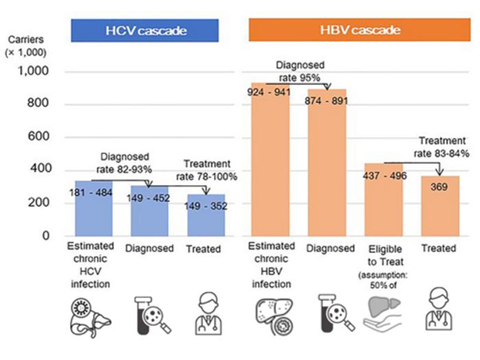
Still, despite limitations, Japan is seeing an active improvement over time using treatment and management strategies, as well as early intervention such as screening in blood donations, screening and intervention for HBV and HCV in pregnant women, vaccinations, and government-funded medical subsidies. Maintaining this high rate of diagnosis and treatment and strengthening intervention for high-risk groups continues to be one of the country’s goals, though the ultimate goal reaches further than just Japan.
Targeting hepatitis elimation
The findings suggest that Japan is one of the countries closest to achieving hepatitis elimination and may provide an effective model for other countries pursuing the same goal.
The research team also includes Junko Tanaka, Akemi Kurisu, Ko Ko, and Aya Sugiyama from Hiroshima University.
The Ministry of Health, Labor and Welfare Policy Research for Hepatitis Measures Program supported this work.






No comments yet