
I’m Wewerly Fernandes, a first-year PhD student at The Open University and my research explores the microorganisms living in Britain’s historic wells and natural springs, investigating how the diverse chemistries of these waters shape the microbial communities they support.
I’m particularly interested in whether these unique environments harbour microorganisms with antimicrobial resistance (AMR) genes.
My research journey began long before I stepped into this PhD. I worked as a research technician in planetary protection, running projects to test the survivability of microbes found in the cleanrooms where rovers and satellites are built. We exposed these microbes to Martian conditions - UV radiation, low pressure, and extreme cold - to see whether they could survive.
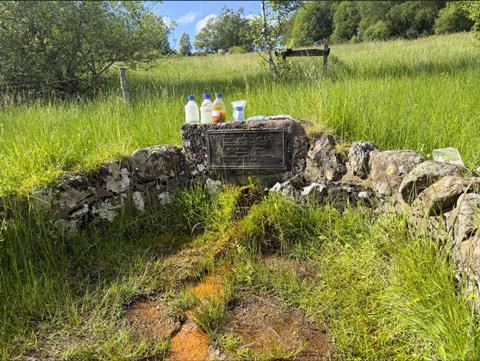
That early fascination with resilient microorganisms in extreme environments has carried straight through into this project, which starts beside historic wells and natural springs across Britain: places once believed to possess healing properties, and which have attracted visitors for centuries.
My PhD began in June 2026, and since then I’ve travelled across Britain collecting water from some remarkable locations. Every site is completely different. Some are hidden in quiet woodlands, while others are surrounded by centuries of history.
A day in the field
One of the things I enjoy most about my fieldwork is that every spring has a story to tell. Many of the wells I visit have been treasured for centuries, long before anyone knew microorganisms even existed. Their waters were believed to have healing properties, attracting local communities, pilgrims and travellers hoping to cure everything from skin conditions to digestive illnesses.
Some sites are linked to famous historical figures, such as Brow Well, where Robert Burns is said to have sought relief during the final weeks of his life. Others are steeped in folklore, like Hartfell Spa, associated with legends of Merlin.
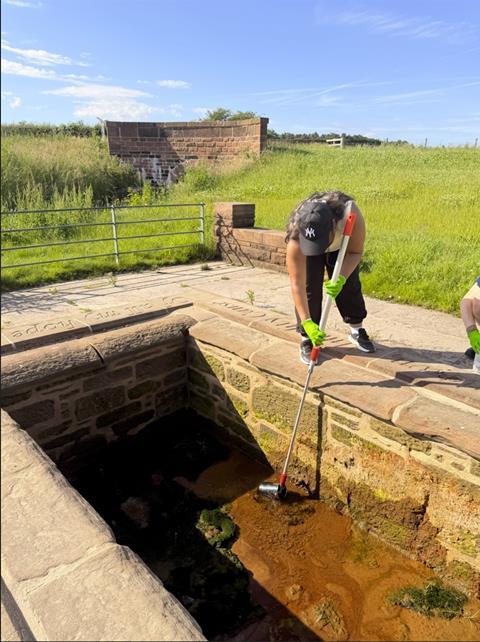
Standing beside these springs, it’s impossible not to think about the generations of people who came before me, each believing the water held something special. It’s exciting to think that the answers to some modern scientific questions may lie within waters that have fascinated people for hundreds of years.
Merlin’s ancient haunts
Not every sampling trip is glamorous, but I have found out that science sometimes takes you to places you wouldn’t otherwise visit. Reaching Hartfell Spa in the Scottish Borders (the proposed former residence of Merlin) meant hiking 5 km in the rain and muddy trails carrying sampling equipment, which was not my favourite way to spend a day!
In contrast, Kenwood Spa in North London is tucked within beautiful historic grounds managed by English Heritage, where iron-rich water flows from a well surrounded by pristine white marble. Every location offers a different environment, water chemistry, and the possibility of discovering something new.
MICROBIOLOGY NEWS: Register with The Microbiologist for more free articles
Before every field trip, I spend time planning. I work to identify and contact whoever owns the land on which the springs reside to ensure I can sample ethically, with these landowners ranging from councils, farms, and golf courses to private estates and charities. I also research the history of each spring, map out the route, and prepare everything I’ll need for sampling.
From my three years working as a research technician, I have started my PhD with an appreciation that organisation is just as important as the science itself because once you’re standing beside a spring, you only get one chance to collect a good sample.
Sampling the waters
Each sample I collect has a different purpose. Bottle One is used to understand the water itself. By analysing its chemistry, I can compare the minerals and elements present at different sites and investigate how these conditions influence microbial life.
Bottle two is for the microbes. This sample allows me to grow microorganisms from the water on different culture media to select for diverse taxa. What begins as a bottle of clear water (or in some cases orange or black) soon becomes a vast collection of colourful colonies, each with its own shape, size and appearance. These differences help me understand the diversity of microorganisms that can be cultured from each site and allow me to make an informed selection of colonies for further investigation.
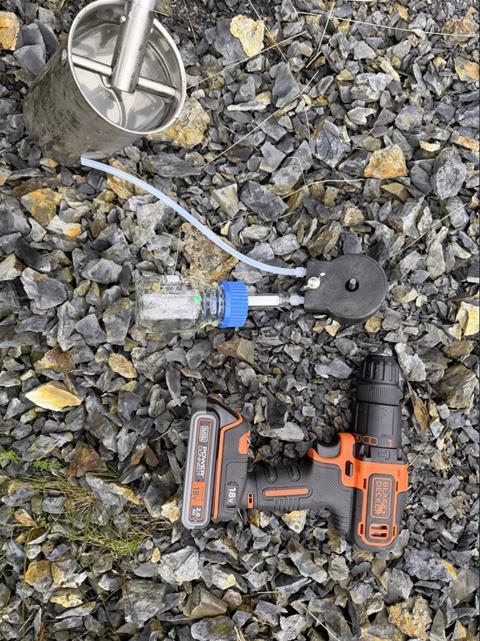
However, growing microorganisms only tells part of the story. As many environmental microbes simply won’t grow under laboratory conditions. I also capture them on specialised filters to preserve and analyse their DNA back in the lab - doing this filtering in the field has meant adapting a drill into a peristaltic pump. By processing the samples in this manner, I am able to investigate the wider microbial community with a sequencing-based approach and compare it with the organisms that successfully grow on my culture plates.
A day in the laboratory
As documentation is a love letter to your future self, once I’m back in the lab, the priority is organisation, making sure every sample is labelled, logged and stored correctly. From there, I prepare part of each sample for water chemistry analysis and another for microbiology.
To date, I have collected samples from twelve wells across Scotland and England – processing of materials from each of these wells for geochemical, microbiological and molecular analyses steadily increases the number and diversity of samples so I have found accurate bookkeeping is fundamental.
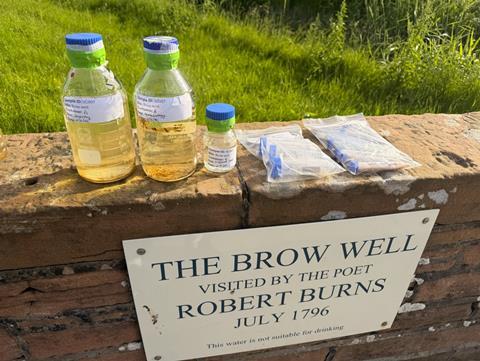
The samples intended for cultivation of microbes are diluted and plated onto a range of culture media, each designed to encourage different types of microorganisms to grow. Then comes one of the biggest lessons I’ve learned as a microbiologist - patience! While the plates incubate, I spend my time analysing data, updating my lab notebook, reading papers, planning the next experiments and catching up with my supervisors.
The great reveal
The following morning is always the most exciting part of my day. Opening the incubator feels like opening a surprise. Plates that looked empty the day before are now dotted with colonies of different colours, shapes and sizes. I count the colonies, record their different appearances and select interesting ones for further study.
It’s easier to think history and modern science as two separate worlds, but standing beside these springs never feels that way. The same water that once drew pilgrims searching for a cure may hold microbes relevant to a very modern problem of antimicrobial resistance.
I don’t know yet which of these wells, if any, will turn out to matter. But if these waters were worth trusting then, they’re worth testing now.
Wewerly Fernandes is a PhD student at the Open University and a member of Applied Microbiology International.
Topics
- AMR in the Environment
- Antimicrobial Resistance
- Applied Microbiology International
- Brow Well
- Clean Water
- cleanrooms
- Community
- Early Career Research
- Extremophiles
- Hartfell Spa
- Kenwood Spa
- Microbes and Culture
- Microbes and Space
- Nine to five
- One Health
- peristaltic pump
- Robert Burns
- springs
- The Open University
- UK & Rest of Europe
- wells



No comments yet