
Antibiotics enter agricultural soils through routes including manure application and wastewater irrigation, where persistent residues can affect soil organisms and ecosystem functions. Biochar, a carbon-rich material produced by heating biomass under oxygen-limited conditions, has attracted attention because it can bind pollutants and alter microbial habitats.
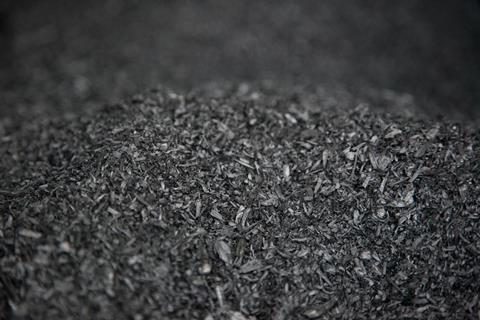
Chemical modification can further improve its adsorption properties. However, results vary among soils, and the microbial consequences remain difficult to predict. Understanding how soil properties interact with modified biochar is therefore essential to determine whether improved antibiotic removal accompanies changes in bacterial communities and their potential functions.
A study published in Biochar X on 30 September 2026 by Xiaohui Liu’s & Ying Liu’s team, Ocean University of China, reports that modified biochars enhanced antibiotic removal through processes consistent with adsorption and soil-dependent restructuring of bacterial communities.
Testing modified biochar
The researchers produced biochar from common reed, Phragmites australis, by heating the biomass at 550 °C under nitrogen, then modified separate batches with phosphoric acid, the surfactant cetyltrimethylammonium bromide, or ferric chloride. Microscopy, elemental analysis, and infrared spectroscopy characterized the resulting materials. Laboratory microcosms compared all three modifications in black soil collected from Heilongjiang, while the phosphoric-acid-modified material was also tested in fluvo-aquic soil from Shandong and acidic latosol from Hainan.
Eleven treatments, each with three replicates, included uncontaminated controls, antibiotic-contaminated controls, and biochar-amended soils. Contaminated treatments received 20 nanograms of sulfamethoxazole per gram of soil, and amended treatments received 1% biochar by weight. The soils were incubated for 90 days at 25 °C. Antibiotic residues were measured after 30, 60, and 90 days, alongside analyses of soil chemistry, enzyme activities, and dissolved organic matter. Bacterial DNA sequencing at day 90 supported community comparisons, co-occurrence network analysis, and computational predictions of metabolic potential.
All three modified biochars improved antibiotic removal in black soil, with reported enhancements of 34.9%–37.7% relative to contaminated controls. Residual concentrations fell to 0.85–1.40 nanograms per gram after 90 days, and the surfactant-modified material performed best. Phosphoric-acid-modified biochar increased removal by 50.2% in fluvo-aquic soil and 56.9% in latosol.
Microbial communities are reshaped
Microbial responses differed markedly: bacterial richness declined most strongly in latosol, where the Chao1 richness estimate fell by 67.0%. Biochar also simplified bacterial association networks and shifted key network taxa from Firmicutes toward Proteobacteria. Several bacterial groups previously associated with sulfamethoxazole degradation, including Streptomyces, Micromonospora, and Rhodococcus, became more abundant.
Functional predictions suggested recovery of carbohydrate, amino acid, and xenobiotic metabolism suppressed by antibiotic exposure, particularly in latosol; these predictions describe potential functions rather than directly measured metabolic activity. Together, these measurements linked improved residue removal to changes in both the soil environment and the composition of resident bacterial communities.
Overall, the study supports matching modified biochar to soil conditions rather than assuming uniform performance. Its results connect antibiotic removal with changes in soil chemistry and microbial organization, while showing that greater removal can coincide with reduced bacterial richness.
MICROBIOLOGY NEWS: Register with The Microbiologist for more free articles
Because only the phosphoric-acid-modified material was evaluated across all three soils, the findings establish its soil-dependent behavior without identifying the best modification for every soil. Further field testing and direct measurements of degradation would help translate these laboratory observations into practical remediation approaches.


No comments yet