
Almond growers across Mediterranean regions are facing a growing threat from anthracnose, a destructive fungal disease that can wipe out blossoms and young fruits during wet spring seasons. Now, new research suggests that help may already be living inside almond trees themselves.
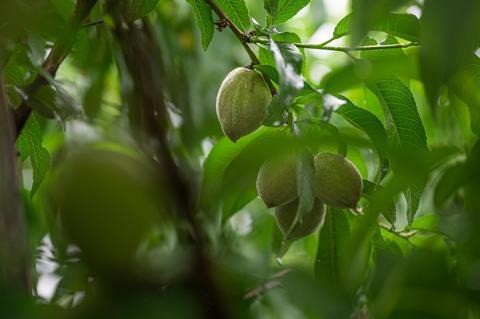
In a study published in Agricultural Ecology and Environment, researchers from the University of Lisbon report that naturally occurring fungi found on and within almond trees can strongly suppress Colletotrichum godetiae, the primary cause of almond anthracnose in the Mediterranean Basin. The findings open the door to environmentally friendly alternatives to chemical fungicides.
Almond production has expanded rapidly in recent years, driven by irrigation, intensive farming systems, and high demand. But these same changes have created ideal conditions for fungal diseases to spread. Anthracnose can cause flowers to rot, fruits to shrivel and mummify, and yields to collapse, particularly in cool and rainy springs.
Current control strategies rely heavily on preventive fungicide applications. While effective, these treatments raise concerns about environmental impacts, chemical residues, and the emergence of resistant pathogen strains.
“Our goal was to look at the almond tree not just as a host for disease, but as a reservoir of beneficial microorganisms,” said Pedro Talhinhas, senior author of the study. “Many fungi live quietly inside plant tissues without causing harm, and some of them can actively protect the plant against pathogens.”
Fungal isolates
The research team collected flowers, leaves, branches, and fruits from 16 almond cultivars grown in major production regions of Portugal. By comparing surface disinfected and non disinfected plant tissues, the scientists were able to distinguish fungi living inside the plant, known as endophytes, from those living on the surface.
In total, nearly 20,000 fungal isolates were recovered, representing 39 different genera. Branches and fruits emerged as particularly rich reservoirs of endophytic fungi. The most abundant groups included Alternaria, Cladosporium, and Trichoderma, all commonly found in agricultural systems.
From this diverse community, 24 fungal isolates were selected for laboratory tests against Colletotrichum godetiae. Several stood out for their ability to strongly inhibit the pathogen’s growth and reproduction.
Effective species
Species of Trichoderma and Neurospora intermedia proved especially effective, suppressing more than 75 per cent of the pathogen’s growth and dramatically reducing its production of spores, which are responsible for spreading disease. One isolate of Trichoderma viridescens reduced spore production by more than 99 percent.
READ MORE: Friendly soil fungus could replace chemical sprays in battle against crop diseases
READ MORE: Can fungi turn food waste into the next culinary sensation?
“These fungi use multiple strategies,” explained first author Madalena Ramos. “Some grow faster and physically overtake the pathogen, while others appear to release substances that block its development or prevent it from producing spores.”
Biological control
Importantly, many of the most effective fungi were endophytes, meaning they are already well adapted to living inside almond tissues. This increases their potential as reliable biological control agents under real field conditions.
The researchers emphasize that further testing is needed before these fungi can be deployed in orchards, including greenhouse and field trials. However, the study provides a crucial foundation for developing biocontrol products tailored to almond production.
“By working with the almond tree’s own microbiome, we can move toward crop protection strategies that are both effective and environmentally sustainable,” Talhinhas said. “This is a promising step toward reducing our dependence on chemical fungicides while safeguarding yields.”



No comments yet