
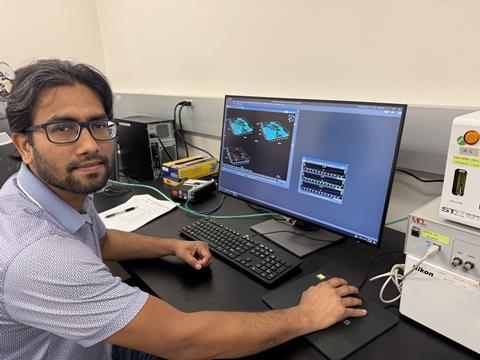
We caught up with Md Ekramul Karim, a Ph.D. candidate at the University of Houston, who is one of the newest Junior Reviewers with Letters in Applied Microbiology.

Md. Ekramul Karim is a PhD researcher in Cell and Molecular Biology at the University of Houston. His research focuses on the mechanistic investigation of Clostridioides difficile biofilm formation in clinical isolates and how these biofilm responses influence antimicrobial resistance and treatment outcomes.
His research interests include antimicrobial resistance, microbial biofilms, bacterial pathogenesis, host-microbe interactions, and environmental microbiology.
What drew you to become a Junior Reviewer for LAM and what excites you about the role?
My motivation to become a Junior Reviewer for Letters in Applied Microbiology stems from my long-term goal of being actively involved in academic and scientific publishing. I have consistently sought opportunities to engage in peer review with reputable journals, as this has helped me better understand the review and editorial process, as well as the standards that define rigorous and impactful research.
As a microbiology researcher working on Clostridioides difficile biofilms, I regularly engage with literature where methodological quality and interpretation directly influence clinical understanding. This naturally led me to contribute more actively to the peer-review process.
Beyond individual manuscript review, I am particularly motivated to be part of a structured and broader microbiology community where I can both contribute and learn, exchange ideas, and grow as a scientist. The LAM Junior Reviewer position particularly drew my attention because it offers a structured platform to engage with high-quality applied microbiology research while being part of a collaborative community that supports both scientific contribution and professional development.
What excites me most about the Junior Reviewer role is the opportunity to critically evaluate emerging research while supporting authors in strengthening their work through constructive, thoughtful feedback. I view peer review not simply as a gatekeeping process, but as a collaborative scientific dialogue that enhances clarity, reproducibility, and translational relevance. Being part of LAM provides a valuable platform to engage with high-quality applied microbiology research while continuing to refine my scientific thinking, analytical abilities, and editorial perspective - skills that are essential for my long-term goals in academic publishing and research leadership.
What first sparked your interest in microbiology and how did your career develop?
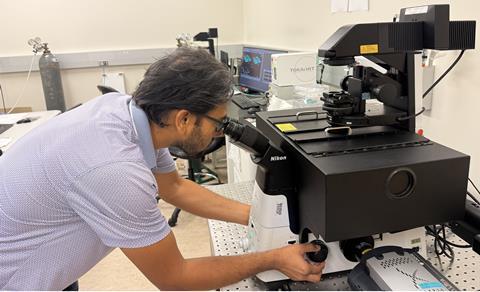
My interest in microbiology began during my undergraduate studies while working on a project investigating plant pathogens causing powdery mildew in Ocimum sanctum leaves. I initially attempted to culture and image the pathogen on fungal media, but after several unsuccessful attempts, I realized that some pathogens are obligate intracellular and cannot be easily isolated from their host. This led me to adapt my approach and use the tape-lift method, where I transferred spores and hyphae directly from the leaf surface using a clear adhesive tape onto a microscope slide.
Successfully visualizing the organism through this simple yet smart technique was a turning point - it revealed how much there is to discover in the unseen microbial world. This early experience sparked my fascination with the hidden complexity of microorganisms and their profound influence on health, the environment, and even extreme ecosystems. The idea that microscopic life can drive disease, regulate ecological balance, and potentially exist in extreme environments - even beyond Earth - continues to inspire me.
My career has unfolded as a journey across different domains of microbiology, shaped by both curiosity and opportunity. I began with my Bachelor’s and Master’s degrees in Microbiology at the University of Chittagong, Bangladesh, where I built a strong foundation in the field. From there, I moved into the pharmaceutical industry as a microbiologist, gaining hands-on experience in pharmaceutical microbiology.
Wanting to explore research more deeply, I transitioned to the National Institute of Biotechnology in Bangladesh as a research scientist. There, I worked on bacteria capable of transforming heavy metals, hydrocarbons, and textile dyes, and explored their potential as plant growth-promoting agents for restoring polluted and degraded environments. It was a fascinating experience that showed me how microbes can be harnessed for real-world environmental solutions.
During this time, I was fortunate to receive multiple competitive research fellowships and grants from the Ministry of Science and Technology, Bangladesh, supporting my work on bioremediation and environmental microbiology. I later moved into academia as a faculty member in the Department of Microbiology at Jagannath University, where I combined teaching with research and had the opportunity to mentor students while continuing to explore microbial science.
Currently, as a Ph.D. researcher in Cell and Molecular Biology at the University of Houston, USA, my focus has shifted toward clinically relevant questions, particularly the biofilm biology of Clostridioides difficile. Looking back, my path reflects a gradual shift - from learning the fundamentals, to applying microbiology in industry and the environment, and now to addressing complex challenges in human health through advanced translational research.
What’s the microbe that most fascinates you and why?
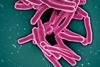
The microbe that fascinates me most is Clostridioides difficile. It is an anaerobic, spore-forming, Gram-positive bacterium that causes severe gastrointestinal infections, particularly in patients who have received antibiotics. By disrupting the normal gut microbiota - which normally provides colonization resistance - antibiotics create an opportunity for C. difficile to flourish itself in the intestine, leading to symptoms ranging from mild diarrhea to life-threatening colitis. Its ability to persist in the host despite antibiotic treatment - largely through biofilm formation and spore production - makes it both biologically intriguing and clinically challenging.
What I find particularly compelling is how C. difficile integrates multiple survival strategies - toxin production, dormancy via spores, and participation in structured biofilm communities, often alongside other gut microbes - to adapt to fluctuating environments during antibiotic perturbation. Understanding these mechanisms is not only scientifically fascinating but also essential for addressing recurrent infections, which remain a major challenge in the clinical management of C. difficile infection, especially given the limited range of effective antibiotics.
What real-world problem would you eventually love to solve with microbiology?
I would love to help solve the problem of persistent and recurrent infections, especially those driven by biofilm-forming pathogens. These infections are often frustratingly difficult to treat - patients may initially respond to antibiotics, only for the infection to return because a portion of the microbial population survives in a protected state.
What drives my interest is understanding why these infections don’t fully clear. In many cases, microbes within biofilms behave very differently from their free-living counterparts, showing increased tolerance to antibiotics and the ability to persist in the host environment. My goal is to better understand these biofilm-associated survival strategies and use that knowledge to develop more effective treatments.
Rather than relying only on traditional antibiotics, I’m interested in approaches that can disrupt biofilms, alter microbial behavior, or enhance treatment susceptibility. Ultimately, I hope to contribute to solutions that not only treat infections more effectively but also prevent them from coming back - improving patient outcomes and reducing the long-term burden on healthcare systems.
How important do you think the role of applied microbiology could be in solving some of the world’s problems?
Applied microbiology is incredibly important - it sits at the center of many of the world’s most crucial challenges, often providing solutions that are both effective and sustainable. For example, microbes are already helping us tackle environmental pollution through bioremediation, where bacteria can remediate oil spills, heavy metals, and industrial waste.
In agriculture, beneficial microbes are being used to improve soil health and promote plant growth, reducing the need for chemical fertilizers. In industry, microbes are increasingly being used as biological factories to produce valuable chemicals and products, including enzymes, organic acids, biofuels, antibiotics, vitamins, fermented foods, and bio-based materials.
In medicine, microbiology is essential in addressing infectious diseases and antimicrobial resistance, as well as in the development of vaccines, drugs, probiotics, and microbiome-based therapeutics.
Microbes are also playing a growing role in climate change mitigation, such as carbon cycling and waste-to-energy technologies, and in emerging areas like bio-based materials and sustainable manufacturing. In addition, extremophilic microorganisms that survive in harsh environments such as deep-sea vents, acidic hot springs, deserts, and polar ice are expanding our understanding of the limits of life. These microbes can serve as biological models and biomarkers in the search for extraterrestrial life beyond Earth, helping scientists identify biosignatures and understand how life might persist under extreme environmental conditions on planets or moons such as Mars or Europa.
What makes applied microbiology so powerful is its ability to translate fundamental science into practical, scalable solutions. Microbes are everywhere, incredibly adaptable, and often capable of doing things that chemical or mechanical approaches cannot. As global challenges become increasingly complex, interdisciplinary approaches that integrate artificial intelligence and engineering sciences with microbiology will be essential for developing sustainable and scalable solutions.
What opportunities will this role bring for you?
This role will provide an opportunity to further develop my skills in critical thinking, scientific writing, and editorial decision-making. Engaging with diverse manuscripts will expose me to emerging trends and methodologies in applied microbiology beyond my immediate research area. It will also allow me to contribute to the scientific community by supporting high-quality, reproducible research, while building experience that aligns with my long-term goals in academic publishing and research leadership.
Importantly, this role will strengthen my perspective as both an author and reviewer, enhancing how I approach my own work. It also offers the chance to connect with and learn from leading scientists and publishing professionals within the AMI network, improving my scientific communication and professional networking skills.
Additionally, being part of the AMI community opens up opportunities to apply for research and travel grants, which would support my participation in scientific conferences. These experiences are invaluable for showcasing my research, exchanging ideas, and staying engaged with advances in the field.
Is there anything else you would like to add?
I strongly value the role of peer review in fostering a constructive and inclusive scientific culture, where feedback not only strengthens research but also supports the growth and development of researchers. I see it as a collaborative process that advances both science and the scientific community. I look forward to contributing to this culture through the role, while continuing to learn, engage, and grow as part of the broader microbiology and publishing community.
Letters in Applied Microbiology is an inclusive and accessible journal that supports and develops the next generation of applied microbiologists. Find out about submitting your research HERE.
Topics
- Antimicrobial Resistance
- Applied Microbiology International
- Asia & Oceania
- Bacteria
- Biofilms
- Clostridioides difficile
- Community
- Early Career Research
- Environmental Microbiology
- Infection Prevention & Control
- Infectious Disease
- Md. Ekramul Karim
- People News
- Publishing
- University of Chittagong
- University of Houston
- USA & Canada

No comments yet