
In a new study published in Nature, Saint Louis University School of Medicine researchers reveal an entirely unexpected blueprint for how one of the oldest microbes on Earth processes nitrogen to create ammonia, the building block of fertilizer.
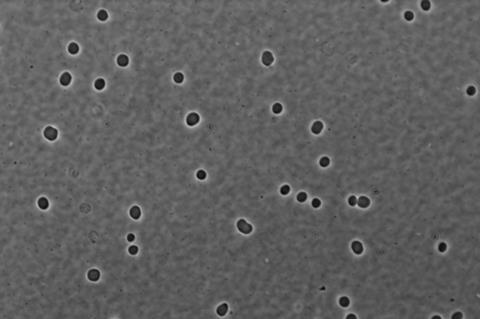
The SLU team uncovered a previously unknown structure in a key enzyme responsible for biological nitrogen fixation, a discovery that could advance new biotech possibilities to reduce costs and pollution associated with industrial agriculture, play a significant role in green energy and even support space travel to Mars.
“For decades, scientists have relied on a model of nitrogenase based on what we observed in common bacteria,” said Edwin Antony, Ph.D., professor of biochemistry and molecular biology at Saint Louis University School of Medicine and the study’s principal investigator. “This discovery demonstrates that nature has evolved alternative ways to accomplish the same chemistry, giving us an entirely new framework for understanding biological nitrogen fixation.”
Oxygen-averse microbe
The achievement, funded by the Department of Energy, is the culmination of a multi-institution collaboration across SLU and the University of Arkansas. The University of Arkansas team, led by Daniel Lessner, Ph.D., spent several years engineering the oxygen-averse microbe and isolating the native protein before sending samples to Antony’s laboratory at SLU.
At SLU, researchers overcame a major technical hurdle by developing specialized cryo-electron microscopy (cryo-EM) workflows that maintained strict anaerobic conditions during grid preparation and imaging. Preserving the oxygen-sensitive protein in its native state required complex engineering and meticulous sample handling at every step. Overcoming these challenges enabled the team to determine the protein’s structure, providing an unprecedented view of its molecular architecture.
To picture how that imaging technology works imagine a freeze frame of someone dancing in the room, with thousands of different images taken from different angles, all capturing that single moment in the dance, says Rajnandani Kashyap, Ph.D., a postdoctoral fellow at Saint Louis University School of Medicine and the study’s first author and lead researcher.
Using this imaging technique, she was able to reconstruct a 3D model of the enzyme’s structure.
Nitrogenase supercomplex
Kashyap said the result was the discovery of a nitrogenase supercomplex, a structure that contradicts decades-old assumptions derived from how the enzyme works in common bacteria.
“Looking at this, it’s the coolest discovery of my life,” said Kashyap.
The team’s achievement was made possible by SLU’s investment in cryo-EM capabilities. As part of a 15-year agreement established in 2019 with Washington University in St. Louis, the Department of Biochemistry and Molecular Biology at SLU contributed $2.5 million from its Doisy Fund toward the purchase of a new $5 million cryo-EM. In turn, SLU researchers can access the cryo-EM and use the Washington University Center of Cellular Imaging (WUCCI) — one of the best of its kind in the nation.
MICROBIOLOGY NEWS: Register with The Microbiologist for more free articles
Enrico Di Cera, M.D., chair of the Department of Biochemistry and Molecular Biology at SLU, credits the investment with generating more than $22 million in federal grant funding, dozens of publications in top-tier journals and key new hires for the department.
“This has been and continues to be an exemplary success story,” Di Cera said.
Student empowerment
Beyond the funding, Antony and Kashyap say the world-class infrastructure pairs with an exceptional student experience at SLU, providing incoming undergraduate and graduate students with a level of personalized support and mentorship that allows students to contribute to leading edge research at an uncommon level.
“As young investigators, we have the energy to carry on challenging projects and tackle those challenging questions,” Kashyap said. “It takes a lot of hard work and time and effort, but we should not get scared….they are going to reward you in the long run.”
Topics
- anaerobic
- Bacteria
- Climate Action
- cryo-electron microscopy
- Daniel Lessner
- Early Career Research
- Edwin Antony
- Enrico Di Cera
- Healthy Land
- nitrogen fixation
- nitrogenase supercomplex
- Proteomics & Enzymology
- Rajnandani Kashyap
- Research News
- Saint Louis University School of Medicine
- Soil & Plant Science
- University of Arkansas
- USA & Canada




No comments yet