
An in silico scan of human respiratory viruses by a team of reseachers in China identified 3CLpro cleavage motifs within influenza NP and PA. Their experimental validation confirmed that 3CLpro-mediated cleavage triggers rapid protein degradation and cytoplasmic mislocalization. The findings are published in Virologica Sinica.
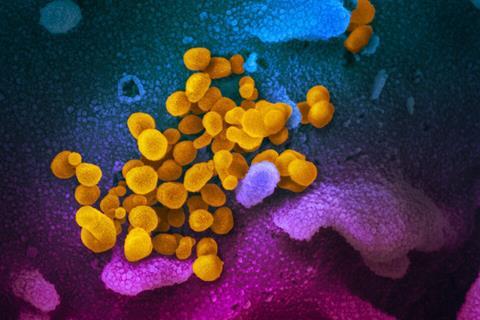
“During the COVID-19 pandemic, influenza cases decreased by over 95% in many regions, even after travel restrictions were lifted,” says senior and co-corresponding author Xiaoxue Peng. “This decline could not be fully explained by masks and social distancing alone, because SARS-CoV-2 continued to spread aggressively despite those very same measures.”
This paradox prompted Peng and colleagues to investigate whether something intrinsic to the viruses themselves might be at play.
Viral warfare
“Our computational scan of human respiratory viruses revealed influenza viruses carry potential cleavage sites for SARS-CoV-2’s 3CLpro protease, a viral enzyme essential for coronavirus replication,” explains Peng. “We identified two vulnerable sites within the influenza NP and PA proteins, both critical components of the influenza replication machinery.”
To test whether these sites are truly functional, the team developed a luciferase-based screening system that acts like a molecular stopwatch: when 3CLpro cuts the target site, a light-emitting signal is released, allowing us to measure cleavage efficiency in real time. “This approach, combined with traditional Western blot validation, confirmed that 3CLpro indeed recognizes and cleaves both NP and PA,” adds Peng.
MICROBIOLOGY NEWS: Register with The Microbiologist for more free articles
When 3CLpro was expressed in cells, NP, normally a nuclear protein, began leaking into the cytoplasm and its overall abundance dropped significantly. PA showed similar vulnerability.
“It was as if 3CLpro systematically disassembled the influenza virus’s essential machinery,” says lead author Liubing Du. “We observed that a single viral protease could so effectively dismantle key components of an entirely unrelated virus.”
Multi-strain targeting
The functional relevance became clear when cells stably expressing 3CLpro were infected with multiple influenza strains, including both influenza A and B viruses. “Viral replication was markedly suppressed across all tested strains,” says Du. “When we used a single-cycle SARS-CoV-2 viral replicon particle system, a safe viral particle that mimics authentic infection without requiring high-containment facilities, we observed the same inhibitory effect.”
Notably, treatment with nirmatrelvir, a 3CLpro inhibitor, reversed this suppression, confirming that the effect is specifically mediated by 3CLpro’s enzymatic activity.
These findings shine new light on virus-virus interactions during coinfections. “Rather than simply competing for host resources, SARS-CoV-2 appears to actively disarm influenza through direct proteolytic attack,” says Peng. “This mechanism may partially explain why influenza virtually disappeared during the pandemic peak, even as SARS-CoV-2 thrived.”
“Moreover, our finding allow new avenues for therapeutic development: understanding how 3CLpro cleaves these sites could guide the design of broad-spectrum antivirals or influenza vaccine strains that are intentionally attenuated through engineered cleavage sites,” adds Du.
The team hopes this work encourages further investigation into the molecular arms race between co-circulating viruses, an area that remains underexplored despite its obvious clinical relevance during pandemics.






.jpg)
No comments yet