
Tackling a common childhood virus could open the door to preventing bladder cancer, according to new research funded by Kidney Research UK and York Against Cancer.
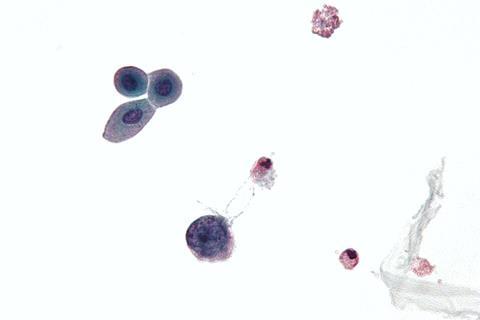
The study, published in Science Advances by Dr Simon Baker and colleagues at the University of York, suggests that a virus most people pick up in childhood can trigger the type of DNA damage that can lead to bladder cancer later in life.
In laboratory studies using the human tissue that lines the urinary tract (urothelium), the team observed DNA damage patterns caused by the cell’s antiviral defences after controlled exposure to BK virus - the childhood infection identified earlier as lying dormant in the kidney.
READ MORE: Research yields new model for replication of BKPyV virus, a major cause of kidney transplant failure
READ MORE: Gut microbiome as a predictive factor for kidney rejection?
In this fight against BK virus “friendly fire” from enzymes meant to damage the virus can cause collateral damage in the cells’ own DNA. This evidence supports a theory in which an individual’s own antiviral response to BK virus infection causes the DNA mutations that can lead to cancer.
Simon said: “In other types of virus-related cancer, such as cervical cancer, we know that virus DNA combines with our own genetic material to drive tumour development. Our results have shown that in the bladder, the tissue’s defensive response to the virus causes DNA changes which can lead to cancer.
“We found that DNA damage happens not only in infected cells but also in surrounding ‘bystander cells’, witnessing infection in their neighbours. This is important because it might explain why most bladder cancers have no sign of the virus in them when they are diagnosed many years later.”
Dormant in kidney
After being contracted in childhood, BK virus usually lies dormant in the kidney. For kidney transplant patients in particular, this can be an anxious time. BK virus infections do not have obvious symptoms, but researchers have learnt a lot about the virus
from the experiences of kidney transplant recipients who have to take immunosuppressants to prevent the immune system from targeting their new kidney.
Immunosuppressants can allow dormant BK virus to reactivate, damaging the kidneys, ureter and bladder. For patients like Tim Tavender, 51, from Southampton, the research offers hope. After a kidney transplant in 2015, Tim developed a BK virus infection and later, bladder cancer.
Tim said: “It was a terrifying experience. BK virus made me feel sub-par, like constantly having the flu, and lowering my immunosuppressants to fight it left me walking a medical tightrope. Then, in 2021, I noticed blood in my urine. It wasn’t just a little bit, it was claret. That visit to the doctor probably saved my life.
“The surgery to remove my bladder took more than 13 hours and it was incredibly difficult. I hated it at first and felt quite down, but I’m grateful I don’t have cancer anymore and my body is working well. Seeing this research makes me hopeful. If
scientists like Dr Baker can find new ways to control BK virus, it could spare other people from going through what I did — and that would be life-changing.”
Bladder cancer prevention
Current bladder cancer prevention work asks people stop smoking. These findings provide a new opportunity to help prevent bladder cancer through identification and control of BK virus earlier.
Simon said: “This is a major shift in our thinking about the origins of bladder cancers. Because kidney transplant recipients are affected by BK virus and are over three times more likely to develop bladder cancer, we suspected that BK virus was
involved, but didn’t know how.
“We can now see how BK virus may contribute to bladder cancer, in transplant recipients and the general population, and explain why tumours show no trace of the virus years later. It gives us motivation to seek prevention strategies for both bladder cancer and the kidney damage caused by BK virus. With support from Kidney Research UK and York Against Cancer, our lab is developing new ways to control BK virus.”
Driving discovery
Dr David Crosby, chief research officer at Kidney Research UK, commented: “Simon’s work is a clear example of how our research funding can drive discoveries with the potential to benefit huge numbers of people. These findings move us closer to understanding why some people develop bladder cancer and show how tackling BK virus early could one day stop these cancers from developing at all. For transplant patients, that could mean protecting both their kidney and their long-term health. That’s exactly the kind of impact we’re working to deliver.”
Professor Stephen Leveson, Board Member of York Against Cancer and Emeritus Professor of Surgery, said, “York Against Cancer are proud to be associated with research from the Jack Birch Unit at the University of York. There has, in the past, been a lack of investment in bladder cancer research which is prevalent and has worse outcomes in Yorkshire than the rest of the country.
“This new research implicating BK virus is very important in enhancing our knowledge of the cancer development process and is potentially a way forward in diagnosis and treatment. We are grateful for the support of Kidney Research UK.”





No comments yet