
A tiny parasite-carrying tick is posing an outsized threat to Missouri’s cattle. Now, researchers at the University of Missouri are stepping in to protect the state’s $4 billion cattle industry by tracking different ways the American dog tick spreads a deadly disease known as bovine anaplasmosis.
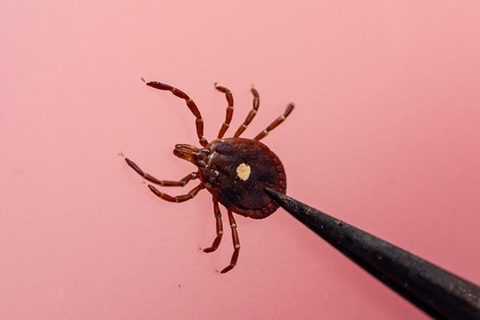
Bovine anaplasmosis kills red blood cells, causing lethargy, weight loss and sometimes miscarriage or death in cattle, which can be financially devastating for livestock producers. A 2025 Mizzou study found that nearly half of all Missouri cattle have been exposed to the disease. Nationwide, the infection has an estimated impact of nearly $300 million annually.
For the latest study, Mizzou researchers set out to better understand how the American dog tick may spread the disease to cattle in Missouri. They dragged cloth over cattle pastures in five counties, collecting more than 29,000 total ticks, about 1,500 of which were the American dog tick.
Researchers analyzed the ticks’ DNA and discovered that fewer than 1% of the male American dog ticks actually carried the bacterium that causes bovine anaplasmosis.
Surprising find
Rosalie Ierardi, an assistant clinical professor in the College of Veterinary Medicine and first author on the study, was surprised. How could the bacterium infecting so many Missouri cattle not be more present in the ticks? It could be that the disease spreads in ways scientists have not fully mapped out yet.
“Rather than just always waiting in the grass for a new host to walk by, these ticks may be moving directly from cow to cow while the livestock are huddling in the shade or grooming one another,” Ierardi said. “By better understanding where certain ticks are located and how diseases spread, we can inform public health strategies to raise awareness and ultimately keep animals and humans safe from disease.”
“Detection of Anaplasma marginale (Rickettsiales: Anaplasmataceae) in host-seeking adult Dermacentor variabilis (Acari: Ixodidae) on cattle pastures, Missouri, United States” was published in Journal of Medical Entomology.





No comments yet