
Wild plants traditionally used as natural starter cultures for fermentation of Munkoyo, a traditional non/very low-alcoholic fermented cereal beverage consumed in parts of Africa, can influence not only the initiation of fermentation but also the microbial communities and flavour characteristics of the final beverage.
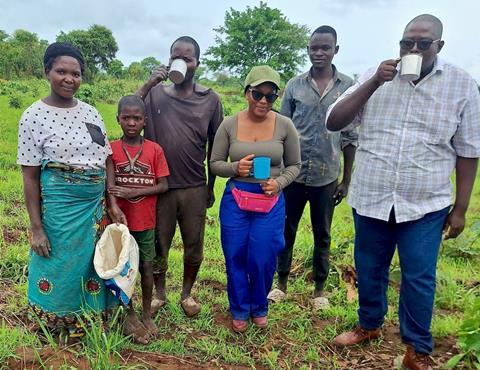
A new study has found that these flavour characteristics result from the biological activities of the microbial communities as they grow in the cereal-based porridge after they are added via the plant roots. Importantly, the identity and geographic origin of the wild plant, as well as the cereal used, can leave distinct microbial and biochemical/flavour signatures in Munkoyo.
This study, ‘How plant species origin, identity, and cereal type shape the microbial composition and functional properties of Munkoyo, a traditional fermented Beverage’ was carried out by a team of researchers from Zambia and The Netherlands, and has been accepted by Sustainable Microbiology, an Applied Microbiology International publication.
Traditional fermentation
Traditional fermented foods and beverages are important and ancient sources of food and nutrition and are produced by millions of people, particularly in regions where modern food-processing infrastructure may be limited.
“However, many traditional fermentations remain poorly understood from a scientific perspective. Moreover, we know biodiversity is in decline and with that important sources for traditional food products. We hope that our study helps to raise awareness about the important value of wild plants and their associated organisms and cultural values,” said corresponding author Prof. dr. ir. Gerlinde B. De Deyn, from Wageningen University.
“Munkoyo is a good example. Previous research has shown that the roots traditionally used to initiate Munkoyo fermentation provide amylolytic enzymes that help break down cereal starch and also harbour microbial communities. However, it was not known to what extent these root-associated microorganisms are introduced into the fermenting beverage and whether differences in the plant species used or location where the plants grow in the wild translate into differences in the microbial community and characteristics of the final beverage.
“We therefore wanted to determine whether the microbial communities associated with Munkoyo roots act as microbial starter culture for fermentation and are thus reflected in the bacterial communities that develop during fermentation, and whether differences in plant species, geographic origin, and cereal substrate lead to different microbial, metabolic, and physicochemical characteristics of the resulting beverage.”
Wild plants and porridge
This study was performed by a team of researchers from Zambia and The Netherlands and focused on Munkoyo, a traditional non/very low-alcoholic fermented cereal beverage widely consumed in Zambia and parts of the Democratic Republic of Congo.
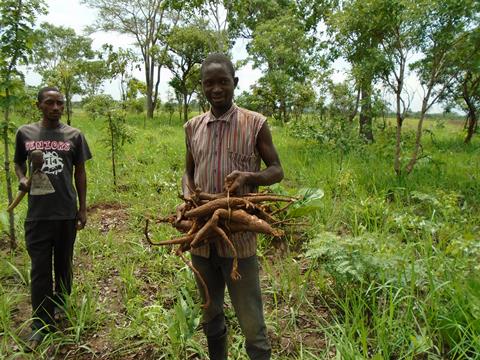
The beverage is traditionally prepared by adding roots from specific wild plants to cooked cereal porridge. The main plant species that are used for this purpose were identified as the leguminous plant species Rhynchosia insignis, Rhynchosia heterophylla, and Eminia holubii (published in 2025, Kalumbilo et al. BMC Plant Biology).
The study to test terroir-like effects in the fermentation of Munkoyo was conducted in Zambia using Munkoyo roots collected from different locations in Zambia. The study was designed to investigate whether differences in the plants’ identity, their geographic origin, and the cereal substrate could influence the fermentation process and the characteristics of the resulting beverage. The analysis of the biochemical composition (nutritional and flavour compounds) of the Munkoyo resulting from the different roots and cereals were performed at Wageningen University.
Controlled fermentation experiments
The team conducted three controlled fermentation experiments. First, they compared the three main plant species traditionally used as Munkoyo starters: R. insignis, R. heterophylla, and E. holubii which were co-occurring in the same location, grown in the same soil and experience the same climatic conditions. Second, they used a single plant species, R. insignis, but collected individuals from this species in three geographically separated locations in Zambia to determine whether the origin of the plant affected fermentation and product quality. Finally, they compared Munkoyo prepared from maize and sorghum using the same starter plant species, R. insignis, collected from the same geographic area.
The scientists then characterized the bacterial communities in the fermented beverages and measured pH, acidity, lactic acid bacteria, organic acids, sugars, ethanol, acetoin, and volatile compounds responsible for aroma. They also used bioinformatic tools to predict the functional potential of the bacterial communities based on their genetic profiles.
They found that plant species used to initiate fermentation significantly influenced the bacterial communities and the chemical characteristics (that make up the flavour of the beverage) of Munkoyo. The geographic origin of R. insignis also affected the bacterial communities, metabolite profiles, and volatile compounds produced during fermentation. The cereal substrate had an additional strong effect, with maize- and sorghum-based Munkoyo showing distinct microbial and chemical profiles.
Microbial terroir
“One of the most interesting findings was that changing the geographic origin of the same plant species could still produce measurable differences in the fermentation outcome. In other words, even when we used the same plant species and the same cereal, where the plant came from mattered!” said Prof De Deyn.
“This was particularly interesting because it suggests that the microbial communities associated with these traditional starter plants may contribute to a kind of microbial terroir in Munkoyo.
“Another interesting observation was that differences in bacterial community composition did not always translate into large differences in their predicted functional potential. For example, the different plant species harboured bacterial communities with different taxonomic compositions, but many of their predicted metabolic functions were shared. This suggests functional redundancy such that different microbial communities may sometimes perform similar functional roles during fermentation.
“So, it is still the question which subsets of the microbes that live in the roots and end up in the porridge are the ones of prime importance for making up the distinct profiles of flavour compounds in the Munkoyo beverage. Unravelling this requires follow-up studies.”
Traditional knowledge and experience
The findings provide scientific evidence for the traditional knowledge and experience of Munkoyo producers and consumers: the choice of wild root species and where these were collected in the wild matters. A person buying Munkoyo roots at a local market may purchase what appears to be the same plant species, but roots originating from different locations or roots from different plant species can carry different microbial communities and can therefore contribute to differences in the resulting beverage.
“This is important because Munkoyo is not simply defined by its cereal recipe and fermentation process. Our findings show that the plant identity and geographic origin can also contribute to the microbial and chemical characteristics of the beverage. This provides a possible scientific basis for understanding why Munkoyo produced in different regions may have distinctive characteristics and consumer preferences,” said Prof Schoustra.
“In the longer term, this could help producers improve the consistency of fermentation and potentially identify and preserve distinctive regional characteristics of Munkoyo. More broadly, it raises the possibility of investigating microbial terroir in traditional fermented foods and other agricultural products from low- and middle-income settings, where local biological resources and traditional processing practices may contribute to geographically distinctive food products.”
Pinpointing the microbes
The next step will be to move from identifying microbial communities and their predicted functional potential to determining which microorganisms are actually responsible for particular fermentation processes and beverage characteristics. This will involve isolating and culturing key microorganisms from the starter roots and fermented beverage and experimentally investigating how individual strains or defined microbial communities influence the production of primary metabolites and volatile compounds.
MICROBIOLOGY NEWS: Register with The Microbiologist for more free articles
It would also be important to track key microorganisms from the root endosphere into the fermentation process to determine which organisms are transferred to the beverage, which successfully establish and grow during fermentation, and how their dynamics relate to changes in metabolites that make up the flavour and other beverage characteristics. Combining this with more detailed metabolomic and functional analyses could provide a clearer link between individual microorganisms, metabolic pathways and the sensory properties of Munkoyo.
Distictive Zambian foods
“Beyond Munkoyo, similar approaches could be applied to other traditional and geographically distinctive Zambian foods and beverages. Products such as Mwinilunga honey, Kasama coffee and Mongu rice, for example, could provide interesting systems for investigating whether environmental conditions, plant- or product-associated microbiomes and traditional processing practices contribute to reproducible microbial and chemical signatures of particular regions. These examples are of course not limited to Zambia, every country will have its own traditional fermented products with a direct or indirect link to soils,” said Dr Kalumbilo.
“Eventually, this could help establish whether microbial terroir is a broader feature of traditional food systems, particularly in regions where local biological resources and traditional knowledge contribute to distinctive foods. Such research could have implications not only for understanding fermentation, but also for product authentication, quality control and the preservation and promotion of geographically distinctive traditional foods.
“This study was an exciting multi-disciplinary and multicultural endeavour. The idea of coupling soil-plant-food microbes has lingered for a few years amongst the senior scientists involved but it was hard to find regular funding as we had not yet proven our multidisciplinary approach would work.”
Award-winning research
With the FoodShot Global GroundBreaker Prize for Innovating Soil 3.0, awarded to Prof. Gerlinde De Deyn, the team could really get started with hands-on collaborations between the University of Zambia (Dr. Chuba, Botany and Dr. Banda, Biology) and Wageningen University & Research (Soil Ecology, Prof. De Deyn, Food Fermentation Microbiology, Prof. Smid and Genetics, Prof. Schoustra).
“We were lucky to find Mubonda Kalumbilo, now Dr Kalumbilo, to work on this project for his PhD research, which he performed both at Wageningen University & Research and the University of Zambia. A notable part of his PhD was the field work, working with the local communities and collecting the wild plants and local soils. Two other thesis chapters (on the plant identity and on the coupling between soil, rhizosphere and endosphere microbial communities) are already published and we are very happy to see his final PhD thesis chapter now being published in Sustainable Microbiology,” said Prof De Deyn.
‘How plant species origin, identity, and cereal type shape the microbial composition and functional properties of Munkoyo, a traditional fermented Beverage’ is published in Sustainable Microbiology.
Topics
- Applied Microbiology International
- Community
- Early Career Research
- Eminia holubii
- Food and Fermentation
- Food Security
- geographically distinctive foods
- Gerlinde B. De Deyn
- Healthy Land
- microbial terroir
- Middle East & Africa
- Mubonda Kalumbilo
- Munkoyo
- Research News
- Rhynchosia heterophylla
- Rhynchosia insignis
- Starter Cultures in Fermentation
- traditional food systems
- UK & Rest of Europe
- University of Zambia
- Wageningen University





No comments yet