
All Research News articles – Page 32
-
 News
NewsTwo types of biochar help alfalfa survive salty soils
A new study shows that carefully designed biochar can guide plant metabolism and reshape beneficial microbial communities around the roots to help reduce stress from saline-alkali soil.
-
 News
NewsScientists just found 4 new species of underwater ‘living pink rocks’ that help to store carbon
Rhodoliths may look like small rocks on the seafloor, but they’re actually living algae that create habitats for marine life and contribute to long-term carbon storage. The deeper ‘low-light’ waters off Japan’s Tanegashima Island harbor a surprisingly distinct and diverse community, including four species completely new to science.
-
 News
NewsBacteria organise themselves into diverse, coordinated communities in order to travel across large distances
A new study examined the migration of microbial communities over long distances, and found bacteria migrate not as solitary swimmers, but in diverse, coordinated communities that also contain viruses and “hitchhiking” microbes that cannot swim on their own.
-
 News
NewsNew antibiotic attacks bacteria in never-before-seen way
Scientists have discovered a new antibiotic that works in a never-before-seen way and may be the next frontliner in the fight against drug-resistant superbugs.
-
 News
NewsWhy plastic lingers: Water chemistry slows nature’s cleanup
In a new study designed to mimic real environmental conditions, researchers found that the chemical makeup of natural waters significantly delays the breakdown of polystyrene, a common plastic used in packaging and food containers. Because sunlight cannot effectively initiate the degradation process, microbes cannot finish the job.
-
 News
NewsThe evolution of individual species can shape entire species communities
A study demonstrated that the evolution of a single species can alter the composition of an entire species community. The study monitored a microbial community composed of 23 bacterial species for four years. Researchers analysed the community’s species composition and changes in bacterial genomes.
-
 News
NewsBiochar and beneficial microbes team up to restore polluted soils and boost crop growth
A new review examines how biochar-immobilized microbes can help clean contaminated soils, improve soil health, and support crop growth. By analyzing evidence from 92 published studies, the authors provide a data-driven overview of how this technology works and what is needed to bring it closer to practical use on farms.
-
 News
NewsStudy finds common infection does not increase risk of recurrent preterm birth
A new study has found that the common sexually transmitted infection, Mycoplasma genitalium, also known as MGen, does not appear to increase the risk of recurrent preterm birth. Earlier research suggested that certain Mycoplasma species might contribute to preterm labor, but those studies were limited.
-
 News
NewsResearcher efforts to reproduce corals shared with TV cameras
Scientists at Nova Southeastern University are sharing a rare look at a marine mission that aims to pump life back into coral reefs. Researchers waiting for coral-spawning hope the project will be a game-changer in the South Florida ecosystem.
-
 News
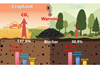
NewsWarming may weaken biochar’s climate benefits in cropland soils, global study finds
Researchers found that warming significantly increased carbon dioxide emissions from soils treated with biochar by an average of 77%. The effect was especially strong in croplands, where emissions increased by 117.5%, compared with 30.9% in forest soils.
-
 News
NewsFirst-in-human clinical trial shows promising results for new Lassa fever vaccine
Researchers have reported encouraging results from an early clinical trial that tested a new dual vaccine against Lassa fever and rabies. The study found that the vaccine was safe and induced immune responses against both viruses. There are currently no vaccines against Lassa fever on the market.
-
 News
NewsPlants could be used to grow medicines in space, study shows
Astronauts on long space missions may one day use plants to produce fresh stocks of medicines on demand. Researchers developed a simple method to grow and repeatedly harvest plant virus-based pharmaceuticals from plants under space-like conditions, without destroying the plants or generating large amounts of waste.
-
 News
NewsDolichol biosynthesis conserved across eukaryotes, not limited just to humans
Researchers say a newly proposed three-step “detour” pathway for making dolichol may be more universal than scientists realized. Experiments in yeast suggest eukaryotes may rely on overlapping biochemical pathways, including the evolutionarily conserved “detour” and evidence of a possible “backup route,” to produce a molecule essential to life.
-
 News
NewsWhat dental calculus can tell us about the oral microbiomes of ancient Japan
Microbe DNA from ancient dental calculus offers insights into the past oral microbiomes of the Japanese people, including the phylogeny of the periodontal disease-associated archaeon, Methanobrevibacter oralis.
-
 News
NewsAntibiotics drive resistance in waterways - even after they break down
Antibiotics continue to drive resistance to bacteria, even after they are broken down in wastewater treatment plants and discharged into rivers and seas, new research published on World Oceans Day has shown for the first time.
-
 News
NewsDigital model guides cleaner biohydrogen production
A research team has developed an enzyme-aware digital model that explains why hydrogen-producing microbes often struggle to grow fast and generate hydrogen efficiently at the same time. The study reveals how limited enzyme resources shape the balance between cell growth, by-product formation, and hydrogen generation.
-
 News
NewsShiga-producing E. coli infections are becoming more resistant to antibiotics
A new study indicates resistance to antimicrobial agents is rising among human infections with Shiga toxin–producing Escherichia coli bacteria.
-
 News
NewsTime for an AI checkup: Flaw found in machine learning for sepsis treatment
Researchers found a flaw in many peer-reviewed studies using the AI method known as reinforcement learning as a theoretical guide for the treatment of sepsis. If these flawed systems for sepsis treatment were deployed in a healthcare setting, they would recommend either overtreatment or undertreatment in nearly half of patient states.
-
 News
NewsMost cases of HIV persistence in blood following treatment explained by defective copies of the virus
A study based on blood samples strongly suggests that most persistent cases of viral detection, despite ideal HIV drug therapy, are not due to virus transmission or a rebound of active disease.
-
 News
NewsScientists probe links between green space exposure, mental health and the nasal microbiome
Researchers recently studied associations among green space exposure, mental well-being, and the nasal microbiome—the microbes in a person’s nose. The analysis showed correlations among microbial signatures, time spent outdoors and positive mental well-being.