
All Soil & Plant Science articles
-
 News
NewsBiochar as an “electron bridge” unlocks hidden power of energy‑saving wastewater treatment
New research reveals how a charcoal‑like material triples electron transfer capacity in ammonia‑removing microbes, cutting wastewater treatment costs by up to 90%.
-
 News
NewsBiopolymers for better soil
Researchers take a new approach to tackling desertification - adding bacteria and fungi to the sand in order to form structured networks across sand grains, giving them more cohesion.
-
 News
NewsBurying crop residues deeper could help protect maize from ear rot and mycotoxins
A new study has found that incorporating maize straw deeper into the soil can substantially reduce maize ear rot and harmful mycotoxin contamination while creating a healthier soil environment.
-
 News
NewsNative microbial team helps acidic soil recover while boosting crop growth
Researchers have developed a small, carefully selected community of native soil bacteria that can reduce acid stress while helping plants access essential nutrients.
-
 News
NewsMicrobes drastically change behavior outside the lab
New research shows that corn root bacteria behave completely differently when grown on a plant rather than in a lab, underscoring the importance of studying microbes in their natural setting, rather than relying solely on laboratory research.
-
 News
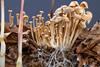
NewsMapping plant-fungus symbiosis, cell by cell.
Scientists have produced the first high-resolution, cell-by-cell map of how tomato roots respond to colonization by arbuscular mycorrhizal fungi, a partnership which help plants absorb nutrients from the soil.
-
 News
NewsBarley discovery reveals nitrogen cycling pathway that could offer a nature-based solution to fertilizer loss
A new study reveals the presence of a nitrogen cycling pathway in barley that could prove valuable in cutting fertilizer requirements as the cost to farmers rises.
-
 News
NewsPlant pathologist selected as Fulbright Distinguished Scholar
Heather Kelly, field crops pathologist in the University of Tennessee Department of Entomology and Plant Pathology, has received a prestigious Fulbright Distinguished Scholar Award for two one-month trips to Brazil in 2026 and 2027.
-
 News
NewsOak leaves harbor distinct microbial worlds on their opposite surfaces
Researchers have discovered that the upper and lower surfaces of a single oak leaf function as two fundamentally different microbial habitats.
-
 News
NewsResearchers discover a fungal protein that causes leaf loss in crops
A research team has succeeded in gaining insights into the genetic basis of “defoliation” caused by the pathogenic fungus Verticillium dahliae. A key protein they have identified is responsible for the aggressive nature of the fungus.
-
 News
NewsRewetting severely wildfire-affected peatlands could deliver unexpected climate benefits
Researchers have found that severely burned peatlands, when rewetted, emit dramatically less methane than unburned or mildly burned ones, suggesting that areas already degraded by wildfire could become prime candidates for accelerated restoration.
-
 News
NewsNo-tillage and microbial fertilizer work together to build carbon in nutrient-poor albic soils
A field study in northeastern China shows that combining reduced soil disturbance with microbial organic fertilizer can increase soil organic carbon across both surface and deeper soil layers.
-
 News
NewsResearchers visualise underground fungal networks in 3D
Researchers have visualized the complex network of plant roots and mycorrhizal fungi in soil in three dimensions for the first time.
-
 News
NewsWarming boosts bacterial denitrification, suppresses fungal pathways in paddy soils
A new study could change climate prediction models by enabling region-specific, microbe-targeted strategies to mitigate greenhouse gas emissions from agricultural ecosystems.
-
 News
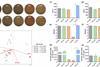
NewsSoil properties determine how farmland microbes release nitrous oxide
A study of agricultural soils reports that physicochemical constraints and microbial functional differences jointly regulate denitrification, causing carbon and nitrogen inputs to alter N₂O and N₂ production differently among soil types.
-
 News
NewsHidden genome variation steers growth in fungus-dependent orchid
A chromosome-level genome and population survey of the fungus-dependent orchid Gastrodia elata has revealed how hidden genetic differences may shape growth, tuber form, and carbohydrate allocation.
-
 News
NewsWarming reshapes how nitrogen is stored and lost in flooded rice soils
A three-year field experiment shows that higher temperatures accelerate nitrogen cycling while promoting retention in protected soil pools.
-
 News
NewsSilencing a fungal wall protein cuts powdery mildew on melon leaves
Powdery mildew fungi survive on living plants behind a cell wall that provides both structural support and a shield against host immunity. Researchers have now identified the fungal cell wall assembly protein ECM33 as a weak point in that defense.
-
 News
NewsOxygen nanobubbles turn biochar into an active defense against cadmium in flooded rice soils
A newly engineered biochar maintained oxygen around rice roots, shifted cadmium into more stable soil forms, and substantially reduced cadmium accumulation in rice plants.
-
 News
NewsCould understanding leaf surfaces lead to new ways to prevent crop disease?
Researchers have adopted a biointerfaces approach to the problem of fungicide resistance in plant diseases. Rather than treating fungal diseases with nontargeted fungicide application, they suggest looking at the location where plant-fungi interactions begin: the leaf’s surface.