
All Strategies for Sustainability articles – Page 2
-
 News
NewsBiochar-coated catalyst turns wet microalgae into cleaner fuel-building chemicals
Turning microalgae into usable liquid fuels remains difficult because algae-derived bio-oil often contains high levels of oxygen and nitrogen compounds. A new study reports a promising strategy to address this challenge.
-
 News
NewsThree interlinked factors are needed to sustainably grow microbes for MICP
A new review investigates cost-effective and greener ways to grow microorganisms for use in Microbially Induced Calcium Carbonate Precipitation (MICP), a microbial process that precipitates calcium carbonate, and identifies three interlinked factors that determine success or failure.
-
 News
NewsBiochar’s hidden electron power could unlock cleaner pollution control and energy recovery
A new review highlights how biochar’s natural redox properties may help overcome key barriers to large-scale environmental applications.
-
 News
NewsMaterial extends shelf life and prolongs release of fungus used as bioinsecticide
Encapsulating Beauveria bassiana in a biopolymer made of cellulose and aluminum increased the viability of the fungus from 69% to 85% after five months of storage, providing a more sustainable alternative that releases the bioinsecticide.
-
 News
News‘Baked’, printed, ready – premiere of architecture made from yeast
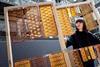
Researchers have developed a new, entirely bio-based material from a somewhat unexpected ingredient: yeast. The material is 3D printed and customised for use in architectural and interior design elements that are currently made from non-renewable or fossil-based materials, such as plaster, plastic or synthetic textiles.
-
 News
NewsEU project aims to make climate-neutral plastics and cosmetics using bacteria
A European research team is aiming to revolutionize the chemical industry: as part of the CarboNcare project, scientists are developing bacteria that can produce important chemical base materials from sustainable methanol – thereby replacing fossil resources.
-
 News
NewsRedesigning an elusive bacterial enzyme into an efficient green catalyst
Scientists engineer the CYP107J1 enzyme from Bacillus subtilis into a more practical tool for selective oxidation chemistry.
-
 News
NewsScientists turn microalgae waste into high-performance membranes for cleaner municipal wastewater
A new study reports a sustainable membrane technology that converts microalgae-derived biochar into an advanced material for municipal wastewater treatment, offering a promising route to cleaner water and waste valorization.
-
 News
NewsGenetic engineering of cyanobacteria for the production of sulfated polysaccharide
Researchers have developed a novel strategy to genetically engineer bacteria for the production of sulfated polysaccharides. They demonstrated the successful transfer and functional integration of an entire gene cluster responsible for producing a sulfated polysaccharide known as “synechan.”
-
 News
NewsScientists establish ‘eco-friendly bio-platform’ to replace petroleum-derived naphtha
KAIST announced on May 19th that the KAIST-Hanwha Solutions Future Technology Research Institute has secured bio-technology capable of mass-producing eco-friendly raw materials for plastics and textiles using waste resources, offering an alternative to petroleum-derived naphtha. Source: KAIST From Left: Hyun Bae Bang, Cheon Woo Moon, Cindy Pricilia Surya ...
-
 News
NewsSynthetic biology leads to recyclable textiles: Engineered protein fibers for a cleaner future
Scientists have created protein-based materials, which are produced in bioreactors using genetically engineered microbes. These materials can be readily recycled after use and remade into the same fibers over multiple cycles. In addition, any microparticles, if released from these fibers during washing, would be biodegradable.
-
 News
NewsFarming with fish: A natural boost for soil phosphorus
Researchers have uncovered new evidence that rice fish coculture can improve soil nutrient cycling—particularly P—without relying on fertilizers. This reveals that introducing fish into rice paddies enhances the composition and function of phoD-harboring bacteria, which are known to facilitate P mineralization.
-
 News
NewsMarine-inspired sunscreen ingredient made by E. coli
Researchers have engineered microbial “cell factories” to sustainably produce the UV-protective compound gadusol, which could eventually serve as a sunscreen ingredient and an antioxidant additive. Gadusol, found in the eggs of various fish and other marine organisms, helps protect against ultraviolet damage.
-
 News
NewsTiny molecules unlock big gains in soil health
By adding lignin- and humus-based small molecules (LSMs and HSMs) to straw-amended soils, researchers observed remarkable gains in the formation of stable mineral- and particulate-associated carbon, driven by shifts in microbial communities and enhanced cross-trophic interactions.
-
 News
NewsResearchers develop microalgae that photosynthetically produce and secrete biofuel precursors
A research group has developed cyanobacterial strains that produce free fatty acids (FFAs) and secrete them into the culture medium. FFAs are important precursor materials for sustainable aviation fuel and diesel fuel alternatives.
-
 News
NewsNew reactor design produces renewable methane from carbon dioxide
A new reactor design efficiently converts carbon dioxide and renewable electricity into methane while scaling the system up by roughly an order of magnitude. It demonstrated that microbial electrosynthesis systems can be expanded beyond laboratory-scale devices while maintaining high energy efficiency and methane production rates.
-
 News
NewsInvasion, restoration, and the surprising season for soil life
Microbes beneath our feet quietly orchestrate the health of ecosystems, but their seasonal rhythms remain a mystery—especially in coastal wetlands. A new study uncovers a surprising twist: microbial diversity and interaction networks are richer and more intricate in winter than in summer.
-
 News
NewsSwansea spin-out Bionema Group receives second King’s Award for Enterprise
Bionema Group Ltd, a Swansea University spin-out specialising in biological crop protection and sustainable agriculture, has been awarded the King’s Award for Enterprise: Sustainable Development 2026. It highlights Bionema’s contribution to developing environmentally sustainable alternatives to synthetic pesticides.
-
 News
NewsBoyce Thompson Institute names Dr. Natalie Hoffmann inaugural Jane Silverthorne Postdoctoral Fellow
How do beneficial fungi grow into and through plant cells without destroying them in the process? That question sits at the center of Dr. Natalie Hoffmann’s research – and it’s what earned her the inaugural Jane Silverthorne Postdoctoral Fellowship at the Boyce Thompson Institute (BTI).
-
 Careers
Q&A: Meet Letters in Applied Microbiology Junior Editor Verônica Ortiz Alvarenga
We caught up with Verônica Ortiz Alvarenga, a food engineer and Professor at Universidade Federal de Minas Gerais in Brazil, who is one of the newest Junior Editors with Letters in Applied Microbiology.