
As industries seek greener alternatives to petroleum-based manufacturing, methanol has emerged as a promising renewable feedstock. However, engineering microorganisms capable of thriving under the harsh conditions of industrial fermentation remains a challenge.
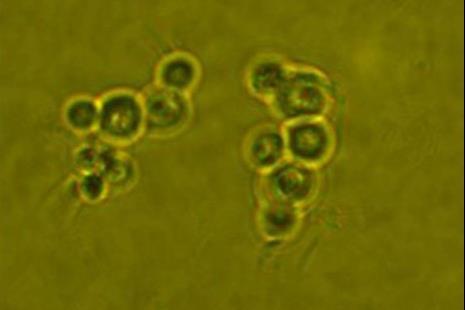
Researchers from Zhejiang University have now developed a powerful new tool that accelerates microbial evolution. Their study, published in Engineering Microbiology, introduces RAMPAGE (Random Mutagenesis Platform for Accelerated Genome Evolution), a programmable system that continuously generates genetic diversity across the genome of the industrial yeast P. pastoris.
Unlike conventional adaptive laboratory evolution, which can require hundreds of generations and months of cultivation, RAMPAGE increases mutation rates by coupling a DNA-editing enzyme with proteins naturally involved in DNA replication. This allows beneficial mutations to arise more rapidly and enables researchers to evolve strains with desirable industrial traits.
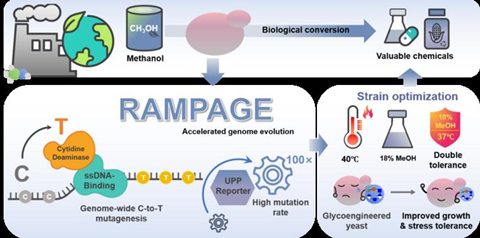
Using the platform, the team evolved yeast strains capable of growing in media containing 18% methanol—among the highest levels reported for P. pastoris. They also generated strains that remained viable at 40 °C — a temperature that can significantly lower cooling costs during large-scale fermentation. Furthermore, RAMPAGE improved the growth and stress tolerance of glycoengineered yeast strains commonly used for producing therapeutic proteins.
Evolved strains
“Genome sequencing of the evolved strains revealed previously unknown genetic targets associated with methanol tolerance, thermotolerance, and cellular fitness,” says senior and co-corresponding author Jiazhang Lian. “These findings provide valuable clues for future rational strain engineering efforts.”
“Industrial biotechnology increasingly relies on microbial cell factories that can withstand multiple environmental stresses,” says co-corresponding author Chang Dong. “RAMPAGE provides a simple and programmable way to accelerate evolution and discover genetic solutions that would be difficult to identify through traditional engineering approaches.”
MICROBIOLOGY ON TAP: Get full access to all The Microbiologist articles from just £2.17 a month
The researchers believe the technology could be broadly applied beyond P. pastoris to accelerate the development of microorganisms for sustainable chemical production, biofuels, pharmaceuticals, and other biotechnology applications.
Next steps
“Our goal is to build more resilient microbial platforms for the bioeconomy,” Lian shares. “By combining RAMPAGE with genome sequencing and high-throughput screening, we expect to uncover new biological mechanisms and greatly shorten strain development timelines.”
The team envisions future applications integrating RAMPAGE with artificial intelligence and multi-omics analysis to rapidly identify beneficial mutations and engineer increasingly complex industrial phenotypes.






.jpg)
No comments yet