
A microbial process that precipitates calcium carbonate shows promise for sustainable ways of stabilising soil, bioremediation and producing greener construction materials - but is hampered by the need to grow microbes economically in large quantities.
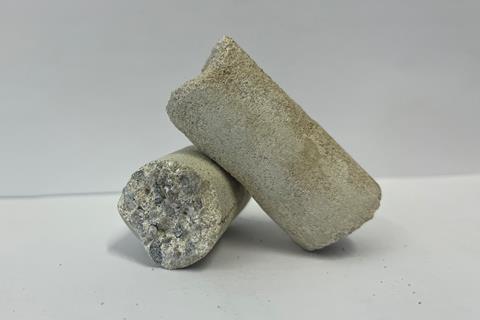
A new review investigates cost-effective and greener ways to grow microorganisms for use in MICP (Microbially Induced Calcium Carbonate Precipitation) and identifies three interlinked factors that determine success or failure.
The study, by a team of researchers from Munich University of Applied Sciences, highlights critical factors and explains trade-offs when choosing microbial strains, selecting growth media and defining production processes. The paper, ‘Perspectives on sustainable bioprocesses for Microbially Induced Calcium Carbonate Precipitation (MICP)’ appears in Sustainable Microbiology, an Applied Microbiology International publication.
Substantial quantities
“Large-scale implementation of MICP requires substantial quantities of bacterial biomass, calcium sources, and, in many cases, urea,” said lead author Benjamin Enogieru.
“Previous review studies have primarily focused on reducing the cost and carbon footprint associated with calcium and urea, as these represent major economic and environmental burdens. However, practical implementation of MICP also remains constrained by the environmental and economic sustainability of producing sufficient microbial biomass.”
“While the need for calcium and urea depends on the case of application, microbial cultivation is a fundamental requirement across all MICP applications. However, it has not been addressed in detail yet. Therefore, this review explores strategies for reducing the cost and environmental impact of microbial biomass production, thereby enhancing the overall sustainability of MICP technologies.”
Three key factors
The review focuses on three different factors influencing cultivation, namely strain selection, media composition, and bioprocess operation. Research so far has investigated how these factors individually influence sustainability of cultivation and the overall MICP process. The review thus showcases various aspects and trade-offs - for example:
Strain selection: Sustainability (economic and environmental aspect) of a certain strain depends on its nutrient requirement, production of (toxic) by-products and not only on efficient CaCO3 precipitation.
Media composition: Substituting high-grade chemical media components with wastewater-derived resources can substantially reduce media costs. However, these wastewaters are rarely suitable for use as the sole medium source because they often lack sufficient quantities of essential nutrients. Therefore, optimizing wastewater-based media offers a cost-effective and resource-efficient approach.
Bioprocess operation: A lot of energy consumption can be mitigated by avoiding sterilisation. However, if media are not sterilised, the bioprocess is more prone to contamination. Nonetheless, it was shown that contamination can be mitigated by cultivating with a selective pressure. This can be achieved e.g. by cultivation of extremophile organisms in harsh environments (e.g. high pH, high salt concentration) where most microbes cannot survive or grow but the target organisms.
“During the review it became clear that the above-mentioned factors are interlinked. Thus, the sustainability of cultivation for MICP depends not on isolated improvements but on the coordinated optimization of strains, media, and bioprocess operation,” Mr Enogieru said.
Media costs
One of the biggest ways to cut media costs by 90-95% would be to replace media with wastewater, for example.
However, suitable wastewaters tend not to be utilised alone, but need supplementation, and the risk of contamination is high.
To avoid the economic and energy costs of sterilisation, other strategies for microbial inactivation should be considered. However, one alternative would be the cultivation of extremophiles which could promote competitiveness of the target organism without sterilization while reducing potential contamination.
Holistic approach
“This example clearly illustrates that a holistic approach is required to develop a bioprocess that is as sustainable as possible ,” Mr Enogieru said.
“Additional research is required to develop application-specific frameworks for establishing highly sustainable bioprocesses for MICP. This research should comprehensively evaluate the three areas discussed and demonstrate how competing objectives and trade-offs can be effectively managed to achieve overall process sustainability.”
The study is led by Robert Huber and Benjamin Enogieru and co-authored by David Kostner, with funding from Volkswagen Stiftung (Grant number: 9C928). It is published in Sustainable Microbiology.
Topics
- Applied Microbiology International
- Benjamin Enogieru
- Bioremediation
- calcium carbonate
- Climate Action
- Community
- construction materials
- Extremophiles
- Healthy Land
- Kostner
- Microbes of the Earth
- microbial biomass production
- Microbial Biotechnology
- Microbial Fermentation
- Microbially Induced Calcium Carbonate Precipitation
- Munich University of Applied Sciences
- Pollution and Remediation
- Research News
- Robert Huber
- Soil & Plant Science
- Strategies for Sustainability
- UK & Rest of Europe
- Wastewater & Sanitation






No comments yet