
All AMR in the Environment articles – Page 3
-
 News
NewsRethinking global AMR strategy: the 2024 WHO Bacterial Priority Pathogens List from a One Health perspective
A new perspective examines the World Health Organization’s 2024 Bacterial Priority Pathogens List (WHO BPPL), highlighting its strengths as a research roadmap while identifying critical gaps for a truly holistic antimicrobial resistance (AMR) strategy.
-
 News
News£2.8 million research project to combat one of the world’s most urgent health threats
An ambitious new £2.8 million international programme will aim to tackle antimicrobial resistance (AMR) across East Africa. It will examine how environmental, social and economic factors influence the spread of drug-resistant infections in East African communities.
-
 News
NewsTracking antibiotic resistance in the environment gets a high tech upgrade
Antibiotic resistance is often framed as a hospital problem, but a growing body of evidence shows that the environment plays an equally critical role in the global spread of drug resistant bacteria. Rivers, soils, wastewater, and even the air can act as reservoirs for antibiotic resistance genes that may eventually ...
-
 News
NewsPine bark removes pharmaceutical residues from wastewater – an affordable way to keep antibiotics out of nature
Researchers have developed a pine‑bark–based water‑treatment medium that efficiently removes antibiotics as well as residues of blood‑pressure and antidepressant medicines from wastewater treatment plant effluent.
-
 News
NewsBacterial energy model reveals how antimicrobial resistance (AMR) spreads in environment
Researchers analyzed how bacteria in aquatic environments distribute energy across diverse functions such as growth, biofilm formation, conjugative transfer of antimicrobial resistance genes and heavy‑metal tolerance, to clarify bacterial energy investment strategies.
-
 News
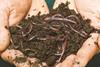
NewsEarthworms turn manure into a powerful tool against antibiotic resistance
Earthworms could become unexpected allies in the global fight against antibiotic resistance, by helping farmers turn manure into safer, high-value organic fertilizer through vermicomposting. Researchers report it can remove antibiotic resistance genes far more consistently than conventional composting.
-
 News
NewsBiodegradable and conventional plastics shape very different antibiotic resistance risks in river microbiomes
Biodegradable plastics are not always safer for rivers and oceans, according to a new study that tracked how different plastics change the risk of antibiotic resistant bacteria over time in a real river.
-
 News
NewsMelting glaciers may release hidden antibiotic resistance into vital water sources
Researchers report that glaciers act as long-term reservoirs of antibiotic resistance genes. Once released by glacier melt, these genes can enter rivers, lakes, and ecosystems that supply drinking water and support wildlife in polar and high-altitude regions.
-
 News
NewsSub-lethal water disinfection may accelerate the spread of antibiotic resistance
A new study reveals that environmental stressors do not merely kill bacteria; they can also prime surviving cells to take up resistance genes more efficiently, raising concerns about how antibiotic-resistant bacteria may spread in aquatic environments.
-
 News
NewsViruses in wastewater: Silent drivers of pollution removal and antibiotic resistance
New findings suggest that current monitoring strategies, which rely heavily on bacterial indicators alone, may miss critical viral-driven risks and opportunities for safer wastewater reuse.
-
 News
NewsMicrobes that break down antibiotics help protect ecosystems under drug pollution
A new study shows that certain microbes can act as community protectors by breaking down antibiotics and stabilizing entire microbial ecosystems, offering a new way to rethink environmental risk assessment and pollution management.
-
 News
NewsAntibiotic resistance is ancient, ecological, and deeply connected to human activity, new review shows
Antibiotic resistance genes are often portrayed as a modern medical problem driven by the overuse of antibiotics in hospitals and farms. A new comprehensive review published in Biocontaminant reveals a much deeper and more complex story. Antibiotic resistance is an ancient feature of microbial life, shaped by millions of years ...
-
 News
NewsEnvironmental traces of antibiotics found to boost gene transfer among bacteria
Using models of vertical inheritance and horizontal transfer, researchers have found that low doses of tetracycline, ampicillin, kanamycin, and streptomycin stabilize resistance and promote gene transfer across species.
-
 News
NewsResearchers develop novel tracking method to reveal spread of antibiotic resistance across Hong Kong’s environment
Researchers have harnessed citywide genetic data and developed a novel genome-resolved tracking method to uncover precisely how antibiotic-resistant bacteria and their resistance genes move across Hong Kong’s environment.
-
 News
NewsBlack carbon from straw burning curbs antibiotic resistance spread in plastic-mulched farmland
By tracking ARG movement from soil into soybeans, a new study shows that black carbon not only counteracts the ARG-amplifying effects of plastic residues but also limits the transfer of resistance genes into plant tissues and seeds.
-
 Careers
Scientific Event Travel Grant: how the Safepork conference surpassed my expectations
Shan Goh from the University of Hertfordshire reports back on the International Symposium on the Epidemiology and Control of Biological, Chemical and Physical Hazards in Pigs and Pork held in Rennes, France, in October. Shan was supported with a Scientific Event Travel Grant awarded by AMI.
-
 News
NewsApplications of AI in antimicrobial resistance prevention and control
Researchers have published a review shedding light on how AI is revolutionizing the prevention and control of AMR. The article illustrates how machine learning and deep learning are transforming surveillance, diagnosis, treatment optimization, and drug discovery.
-
 News
NewsNew review reveals how microbial communities accelerate the global spread of antibiotic resistance
A new scientific review has uncovered how complex microbial communities, including those in the human gut and the natural environment, act as powerful engines that drive the evolution and spread of antimicrobial resistance.
-
 News
NewsNew study reveals how natural humic substances reshape soil carbon cycling and boost antibiotic resistance
Researchers have uncovered surprising links between natural humification processes in soil, carbon metabolism, and the spread of antibiotic resistance. Subtle shifts in the composition of humic substances can reshape microbial metabolism and alter the abundance of antibiotic resistance genes.
-
 Careers
AMR in aquatic ecosystems: A One Health investigation in an irrigation dam in Thailand
Dr Kwanrawee Joy Sirikanchana outlines how her team has launched a major project to address an overlooked question: How much does aquaculture contribute to AMR in shared water systems, and what does this mean for people, animals, and wildlife living around them?