
All Biomedical Science articles
-
 News
Why do some people spread the flu while others avoid infection? Mizzou researchers investigate
Why do some people spread influenza efficiently while others barely pass it on? A new $19 million NIH-funded research programme will investigate how immunity, temperature and humidity shape airborne flu transmission, with the aim of improving vaccines and other prevention strategies.
-
 Features
Faster results, harder decisions: interpreting syndromic panels in microbiological clinical practice
Every generation in diagnostic microbiology has tried to answer the same questions more quickly. Is an infection present? What is causing it? What should happen next? What has changed dramatically is how rapidly, and how broadly, laboratories can now search for answers to these questions.
-
 News
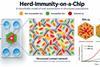
A ‘society on a chip’ reveals how viruses spread
Researchers have built a centimetre-scale ‘society on a chip’ that recreates how viruses spread through structured populations. By changing cell density, susceptibility and movement, the platform can mimic transmission, social distancing and even herd-immunity-like effects in real time.
-
 News
Rapid genomic test identifies fungal bloodstream infections
Researchers have developed a rapid genomic method that can identify fungal bloodstream infections at the species level in about seven hours. By combining host DNA depletion, whole-genome amplification and real-time nanopore sequencing, the approach could help clinicians select appropriate antifungal treatment much earlier.
-
 News
Scientists uncover shared biology behind profound fatigue in five major illnesses
New research identifies a shared biological secret that helps explain chronic exhaustion in conditions including long Covid and PTSD.
-
 News
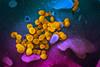
SARS-CoV-2 uses a “scissor” protein to chop influenza virus’s guts up
A new in silico scan of human respiratory viruses demonstrates that a SARS-CoV-2 protein, 3CLpro, cleaves motifs within influenza NP and PA leading to rapid protein degradation and cytoplasmic mislocalization.
-
 News
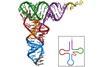
Researchers clear major obstacle in genetic engineering of proteins
An unexpected discovery about tRNAs leads to tool that can drive faster, safer production of new medicines.
-
 News
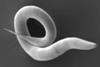
Magnetotactic bacteria show potential for extending healthy lifespan
Recently, new research has demonstrated that the magnetotactic bacterium (MTB) Magnetospirillum magneticum can extended healthy organismal lifespan in a Caenorhabditis elegans model.
-
 News
Simple diet changes help microbes produce higher-quality biomaterials
Feeding bacteria a cheap agricultural by-product enables the production of high-value biomaterials with promising biomedical and industrial applications.
-
 News
Albumin is prevented from crossing the placenta – opening opportunities for design of long-acting biologic medicines
Researchers have uncovered that the placenta distinguishes between antibodies and albumin, a finding that may reshape the future design of biologic medicines with reduced fetal exposure.
-
 News
Cell ‘invisibility cloaks’ could offer side-effect-free diabetes treatment
New research suggests manufacturing cells an “invisibility cloak” out of a jelly-like material known as hydrogel, may offer an easier, less damaging treatment pathway for people with diabetes undergoing cell therapy.
-
 News
Cells use a little-known molecule to protect themselves from iron overload
New research shows that cells rely on an unexpected protector against elevated iron levels: small molecules called polyamines. These small molecules act like storage lockers for iron, safely holding the metal in a non-reactive state until cells need it.
-
 News
Novel AI model accurately detects key gene mutations and predicts biomarkers across 32 cancer types
Researchers have developed a novel AI model capable of predicting cancer subtypes, specific genetic mutations, and survival outcomes across 32 different cancers.
-
 News
Immune molecules play a limited role in ALS progression
New research indicates that immune-related molecules change in motor neurons affected by amyotrophic lateral sclerosis (ALS), but they do not appear to be major drivers of disease progression.
-
 Careers
A week in the life of a Parvovirus researcher
Alejandro Fernández Llorente works as a predoctoral researcher at Centro de Biología Molecular Severo Ochoa (CBM-CSIC), a prestigious biomedical research centre located in Madrid, Spain.
-
 News
Turmeric/ginger extract shows multiple benefits for bone implants
An extract of turmeric and ginger helps bone implants bond strongly while killing bacteria and cancer cells, according to new research with implications for millions of patients with joint replacements and bone cancer.
-
 News
Nature’s 10: Ten people who shaped science in 2025
Microbiologists and scientists tackling infectious diseases are among Nature’s annual list of ten people at the heart of some of the biggest science stories of 2025.
-
 News
Dose of psilocybin, dash of rabies point to treatment for depression
Researchers used a combination of psilocybin and the rabies virus to map how – and where – the psychedelic compound rewires the connections in the brain. Specifically, they showed psilocybin weakens the cortico-cortical feedback loops that can lock people into negative thinking.
-
 News
Deep sea microbes yield up their engineering secrets
A biomatrix of tiny tubes of protein, known as cannulae, link cells of the thermal vent-dwelling archaeon Pyrodictium abyssi together into a highly stable microbial community. A study reveals new details about the elegant design of the cannulae and their method of construction.
-
 News
Cedars-Sinai and Exobiosphere partner to launch biomedical research aboard the Haven-1 Space Station
Cedars-Sinai is partnering with Exobiosphere, a company that has developed scientific hardware to automate biomedical research in space and on Earth, and will send experiments to Haven-1, set to become the world’s first commercial space station.