
In 2026, the All-Party Parliamentary Group (APPG) on Diversity & Inclusion in Science, Technology, Engineering, and Maths (STEM) launched a new project exploring Artificial Intelligence Equity in STEM. This group, like other APPGs, brings together members of parliament across party lines who share a common interest.
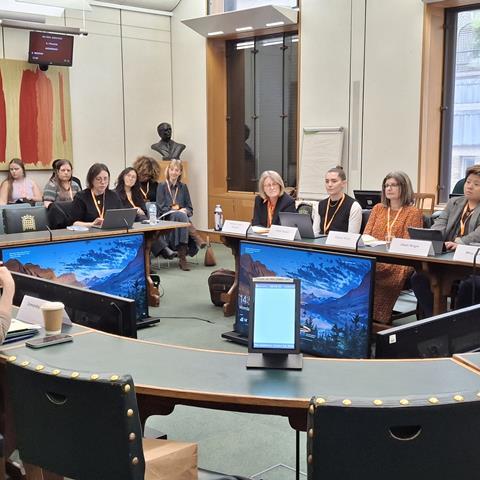
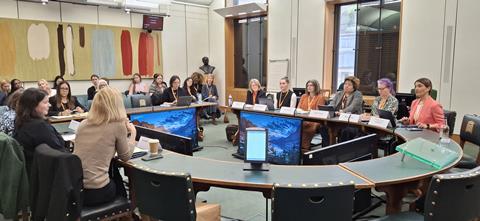
APPGs are not official parliamentary committees, yet their non-partisanship can give them some leverage to influence decision-making. On May 18th, the APPG on D&I in STEM held an evidence session, ‘Inclusion to mitigate risk: Risk, AI and gendered harms’. The session, which I was fortunate to attend on behalf of AMI (who are a sponsor of the APPG), was made up of two panels.
The first, which explored the gendered harms of AI, was made up of:
-
Professor Helen Margetts (Professor of Society and the Internet, University of Oxford)
-
Maeve Walsh (Director, Online Safety Act Network)
-
Annie Poland (Policy Manager, End Violence Against Women)
The second, which focused on mechanisms for change, the failures of current AI development processes and responsibility for regulation, was comprised of:
-
Professor Sana Khareghani (Chief Strategy Officer, Era4)
-
Mivy James (Chief Digital Technology Officer, Ministry of Defence)
-
Steph Wright (Chief Executive, Our AI Collective)
Throughout the session, the six panellists highlighted key issues magnified by AI, including discrimination and abuse, and highlighted the need for systemic regulatory frameworks to address and mitigate these challenges.
AI amplifies pre-existing gendered harms
The event began with reflections from Prof. Helen Margetts, who emphasised that the UK Government has the potential to enforce regulation for good, protecting citizens from harm. The history of technology and its advances has always had an angle through which sexual abuse can permeate, and AI is no different, highlighting the urgent need for regulation. More than 10 years since the advent of social media, its harmful consequences are well known, including increased incidences of abuse, stalking, discrimination and harassment. AI will, according to Prof. Margetts, only turbo-charge these problems. Lack of content moderation and built-in guardrails on Grok, X’s AI platform, has allowed explicit and harmful content to flourish, making up over half of its content.
Over 95% of deepfakes are nonconsensual, and 99% of sexual deepfakes are of women, highlighting the disproportionate level to which women are the victims of crimes associated with the development of this new technology. Beyond these direct harms, which are attributed to the ways humans have used AI, other gendered harms have permeated due to AI’s inherent bias. For example, AI chatbots have been shown to recommend lower salaries to women compared to men with the same credentials.
“These statistics are harming, and will continue to harm women, their safety, and their willingness to engage online.”
These sentiments were echoed by other panellists, who emphasised that these gendered harms are currently being treated as a single issue, void of social and political context. Panellists argued that for appropriate and sufficient action to be taken, these issues must be understood and analysed systemically - considering how the prevalence, the lack of regulation, and the harms of these technologies are intertwined.

The importance of diversity in STEM
Beyond calling out the systemic issues now associated with an increased use of AI, the panellists highlighted the lack of diversity within the STEM sector and AI specifically and cited examples of women leaving STEM due to toxic work environments. Meanwhile, research has shown diverse workforces are more innovative, solve problems more creatively, and impact what questions are asked. Panellists proposed that the lack of women working in AI development has a direct impact on the issues we’re seeing now with AI.
AI, they explained, is very good at doing what it was intended to do: spotting patterns and developing software. This pattern recognition is risky when large language models (LLMs), chatbots like ChatGPT, Claude, and Grok, are trained on various data sources, including books, websites, and articles. As a result, they inherit and amplify human-generated bias.
While it is unreasonable to argue that diverse teams could eradicate the gendered harms of AI, if diversity was accompanied by true inclusion and distribution of power, it could have helped predict and act on potential harms. Panellists emphasised that diversity on its own is insufficient; distributing power is a necessity to enact change.
I also think it’s imperative to note that these discussions were focused on women and did not consider intersectional identities. Comprehensive analysis should also consider the intersection of sexuality, race, class, ethnicity and religion. Should recommendations be formed from this event, care should be taken to highlight this omission, and further conversations are needed around how individuals with intersecting identities are impacted.

The need for regulation
All panellists emphasised the urgent need for governments to regulate AI. While concrete measures were not proposed, there was consensus that a systematic regulatory approach is needed. This entails holding AI developers to account for harms perpetuated on their platforms, while also prosecuting those who use AI to cause harm.
While the Online Safety Act (OSA) - a piece of UK legislation intended to protect children and adults from illegal and harmful online content - is used to regulate social media, it does not extend to AI chatbots. Even if it covered chatbots, panellists were not confident in the legislation’s ability to effectively protect women. Despite evidence that women and girls faced disproportionate harms on social media, this was not made explicit in the OSA for years. New legislation is therefore needed to regulate AI.
Effectively regulating AI companies is a challenge due to their financial power. Research shows that Big Tech has been able to influence policies to benefit themselves, rather than promote innovation, and AI is increasingly used in geopolitics through AI-driven persuasion, such as through the use of deepfakes and misinformation, which has impacted electoral politics. Many people struggle to distinguish AI content, which may amplify the issue, and highlights the need for media literacy. Given the financial and political capital of the most powerful technology companies, including Alphabet, Amazon, Apple, Meta and Microsoft, referred to as Big Tech, it is clear that those designing regulation will not view AI through a neutral lens.
However, it was argued that the ways in which AI has been used for malicious intent by users, and the lack of regulation by developers, should override financial and political gains to ensure the public is protected from harm.
The current regulatory approach was described as piecemeal and driven by the commercial interests of Big Tech, rather than by the goodwill of policymakers to protect citizens.
“Big Tech is interested in financial rewards, which are directly impacted by traffic on their websites and chatbots. They have no financial incentive to self-regulate and therefore won’t do so in a way which is effective.”
Ultimately, panellists argued that a systemic regulatory approach is essential to protect everyone, particularly women and girls, from online abuse, while also recognising the challenge of regulating an industry that some argue is more powerful than governments are.

Concluding remarks
While this session focused on the gendered harms of AI and the need for regulation to prevent harms, I think it’s also important to consider the vast environmental impacts of the rapid development of AI and its use.
Around the world, new data centres are being built to power LLMs and develop AI; however, these are not without consequence. In January 2026, nearly 37% of the world’s data centres were in the US, and nearly 60% of those can be found in 10 states. A mid-sized data centre consumes as much water as a small town, and larger ones can consume as much water as a city of 50,000 people, up to 5 million gallons per day. The number of centres is expected to increase, and with that, water and energy consumption. This is a concern for water-stressed communities, where two-thirds of all data centres have been built since 2022 in the US.
In Scotland, recently announced plans to build one of the world’s biggest data centres, CATO, have caused concern for local citizens. While submitted plans say the centre will be “zero waste and net zero”, local communities remain doubtful. Scotland produces approximately twice the amount of renewable wind energy it needs. To power itself, CATO would consume half of that excess energy. However, this energy supply is intermittent as wind levels are not always consistent. When wind levels, and as a result energy levels, fall, CATO would need to rely on non-renewable sources. Meanwhile, plans say they will “harvest rain” to power the centre, and while Scotland is rainy, it is predicted that CATO will require between 11-19 million litres per day, which Scotland’s rain cannot supply on its own, bringing into question the feasibility of their “zero waste and net zero” claims.
Recent council meetings in Fife – where the centre is set to be built – were packed with over 250 locals expressing concern over the proposed plans. Beyond the vast amount of energy and water needed to power this centre, Rachel Donald emphasised that a handful of men will generate revenue from this development while the financial returns for Fife are not guaranteed.

The impact of data centres on communities is plentiful, and communities bear the brunt. Higher electricity bills, water shortages and constant noise, while few individuals make millions, should be enough reason for the government to step in and protect its citizens.
The impacts of AI are already pervasive: increased abuse, discrimination, perpetuation of bias, misogyny and sexism, with the capacity for harm only expected to grow and unanticipated harms likely still unaccounted for. Many have already been harmed by the government’s inaction, and without further action, it is clear policymakers are already failing to protect future victims.





No comments yet