
All Disease Treatment & Prevention articles – Page 8
-
 News
NewsResearchers link gut microbe to cancer-fighting immune response
A new study is the first to show metabolites produced by certain bacteria in the gut can positively impact the body’s immune response to cancer.
-
 News
NewsAnother tick-borne disease to avoid: anaplasmosis in Canada
Move over, Lyme disease — there’s another tick-borne disease to worry about in Canada. Anaplasmosis, the second most common tick-borne disease in the country, can cause a range of health issues, including myocarditis, as a practice article shows.
-
 News
NewsGut bacteria linked to malnutrition may pass to younger generations
A new study suggests that an intestinal disorder linked to malnutrition and stunted growth may be transmitted from one generation to the next via the small intestinal microbiome.
-
 News
NewsGut bacteria linked to frailty in older women
Researchers have identified clear links between the composition of gut bacteria and frailty in older women. In cases of high frailty, with an increased risk of illness and death, gut bacterial diversity is lower and function is impaired.
-
 News
NewsResearchers use friendly viruses to tackle inflammatory bowel disease
A research team has developed a targeted approach to treating inflammatory bowel disease (IBD) using bacteriophages, viruses that infect specific bacteria, to disarm harmful microbes without disrupting the broader gut ecosystem.
-
 News
NewsTwo companion papers explain immune ‘exhaustion’ - and how we might prevent it
Chronic and viral infections can literally exhaust certain key cells in the immune system from a constant barrage of attacks. But a new pair of papers has now pointed a way to understand how this exhaustion happens at a molecular level.
-
 News
NewsEye problems after COVID-19 can now be explained
Mild COVID-19 can cause severe and long-lasting eye problems, according to a study from Linköping University, Sweden. The study also explains why it has been difficult for sufferers to get help: the abnormal eye behaviour cannot be detected by standard methods. The researchers have developed a diagnostic model to detect ...
-
 News
NewsBrazil, Malaysia, and Thailand set to start global clinical trial to test promising dengue treatment
Following a licensing agreement signed between the Serum Institute of India (SII) and DNDi, a Phase III clinical trial is expected to begin early next year, with the aim of developing a safe, effective, and globally accessible therapeutic for dengue.
-
 News
NewsChikungunya fever: Etiology, pathogenesis, and management, with evidence-based application of traditional Chinese medicine
Traditional Chinese medicine (TCM) offers complementary strategies for acute symptoms and chronic polyarthralgia in Chikungunya infection. A review synthesizes current knowledge on etiology, pathogenesis, clinical features, and management.
-
 News
NewsCommonly used drugs show small benefit for long Covid fatigue
Over-the-counter antihistamines and a prescription anti-inflammatory drug both have a small benefit in reducing long Covid fatigue among people receiving care from specialist long Covid clinics, according to new findings from a large clinical trial.
-
 News
NewsGut microbiota can predict risk of type 2 diabetes years before it develops
The presence of certain bacteria in the gut microbiota, and fluctuations in a person’s metabolism, can be seen in people who go on to develop type 2 diabetes years later, paving the way for identifying people at risk of developing type 2 diabetes at an early stage.
-
 News
NewsA bacterium capable of predicting the course of a disease
A research team made use of the bacterium’s natural capabilities without altering it genetically. Using plasma samples from patients with COVID-19, they were able to distinguish patients likely to develop a mild form of the disease from those at risk of progressing to a severe form.
-
 News
NewsDrug candidate treats severe fatty liver disease by protecting the gut in animal models
Researchers discovered that a potential drug treats severe fatty liver disease by improving gut health. It reversed metabolic dysfunction-associated steatohepatitis (MASH) in animal models by disrupting a disease-driving pathway that links the gut and liver.
-
 News
NewsBronchiectasis and NTM Research Registry data featured in four World Bronchiectasis Conference abstracts
The Bronchiectasis and NTM Association announced that research leveraging data from the Bronchiectasis and NTM Research Registry was featured in four abstracts presented at the World Bronchiectasis Conference.
-
 News
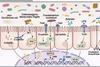
NewsMicrobiome and cancer: From passive bystanders to active players
A special issue reviews how microbiome science and cancer biology can converge as an integrated front for precision oncology. Articles span topics from hepatocellular carcinoma and colorectal cancer to gastric cancer and pancreatic ductal adenocarcinoma.
-
 News
NewsTuberculosis vaccine changes brain’s immune environment and Alzheimer’s biomarkers in older adults
A study shows that BCG vaccines can alter immune responses and amyloid-beta biomarkers in non-Alzheimer’s participants, which may help explain previously observed links to lower disease risk.
-
 News
NewsHow psychological stress alters gut microbes and ages blood stem cells in mice
Psychological stress is recognized as a risk factor for certain health conditions. Researchers describe a mechanism in mice that explains this association: psychological stress speeds up aging-like changes in the body’s blood-forming stem cells in the bone marrow by altering the intestinal microbiota.
-
 News
NewsCOVID’s lingering shadow faded after Omicron — but not for everyone
A long-term study of long Covid has found that whilst lingering symptoms became far less common after the Omicron variant arrived, some people have continued to experience health problems years after infection.
-
 News
NewsGrowing evidence that sugar substitutes disrupt gut health and metabolism
In a new review, researchers noted that artificial and other low-calorie sweeteners, compared to non-caloric controls such as water or placebo, raised fasting insulin and HbA1c, a marker of long-term blood sugar control, and showed a trend toward worsening insulin sensitivity.
-
 News
NewsCommon probiotic ingredient turns immune cells into tumor killers
A probiotic bacterium secretes mannose—that significantly suppresses melanoma growth in mice by activating the body’s own immune defenses. Mannose enters CD8⁺ T cells through glucose transporters and inhibits a key protein called YAP1, which normally restrains T-cell killing power.