
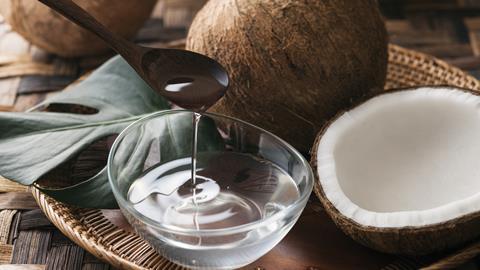

The story of antibiotics began with a battle for microbial survival. For billions of years, microorganisms competed for space and nutrients. Some evolved compounds to suppress rival microbes, while others survived them. This competition shaped the microbial world long before Alexander Fleming discovered penicillin in 1928.
However, nearly a century later, the battle continues. As antimicrobial resistance (AMR) spreads globally, scientists are once again turning to natural compounds like monolaurin from coconut oil to help combat superbugs.
The AMR Challenge
Antimicrobial resistance (AMR) has emerged as one of the greatest threats to modern medicine. As bacteria evolve resistance to existing antibiotics, infections become increasingly difficult to treat. This leads to prolonged illness, treatment failures, and a greater risk of severe disease and death.
The 2025 WHO Global Antibiotic Resistance Surveillance (GLASS) identifies antimicrobial resistance as a critical crisis, with methicillin-resistant S. aureus (MRSA) prevalence reported at approximately 27%. Resistance levels for key Gram-negative pathogens like E. coli and K. pneumoniae exceed 40–70% in many regions, heavily impacting low- and middle-income countries. The WHO calls for improved diagnostics and a target to increase use of “Access” antibiotics such as amoxicillin or penicillin to 70% by 2030.
According to the WHO, bacterial AMR was directly responsible for an estimated 1.27 million deaths worldwide in 2019 and was associated with nearly 5 million deaths. The growing burden of AMR, together with a slowing pipeline of new antibiotics, has intensified the search for novel antimicrobial strategies.
Exploring monolaurin
Among the many naturally occurring antimicrobial compounds investigated by researchers, glycerol monolaurate (GML), more commonly known as monolaurin, has attracted renewed interest because of its broad antimicrobial activity and potential role in addressing antimicrobial resistance (AMR). Monolaurin is a monoglyceride formed when glycerol combines with lauric acid, a 12-carbon medium-chain fatty acid found in coconut oil, palm kernel oil, and human milk.
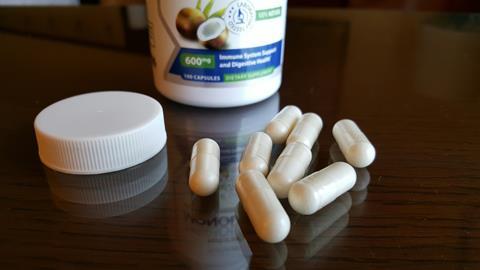
Although it occurs naturally, monolaurin used in research and commercial products is typically produced through controlled synthesis to ensure purity and consistency. The US Food and Drug Administration (FDA) gave it a Generally Recognized As Safe (GRAS) status, and it is currently used as an emulsifier and preservative in the food industry. It is also available as a dietary supplement.
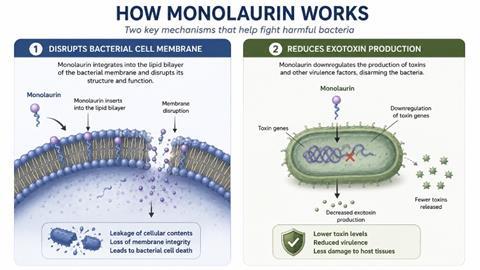
Unlike many conventional antibiotics that target specific bacterial enzymes or metabolic pathways, monolaurin acts primarily by disrupting the cell membrane. Because of its lipophilic nature, it easily integrates directly into the phospholipid bilayer of virus envelopes and bacterial cell membranes. Once it permeates the cell, monolaurin interferes with essential cellular processes, resulting in leakage and complete lysis or death of the bacteria.
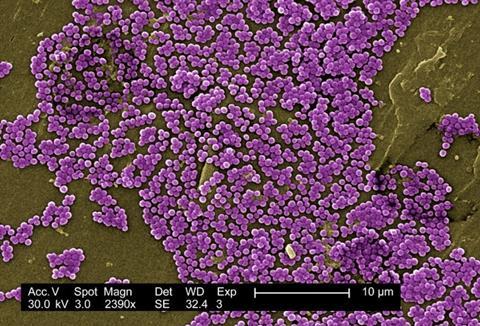
Laboratory studies have shown that monolaurin is particularly active against several Gram-positive bacteria, including Staphylococcus aureus, Streptococcus pyogenes, methicillin-resistant S. aureus (MRSA), some yeasts and fungi. In contrast, its activity against many Gram-negative bacteria is more limited, mainly because their outer membrane acts as an additional protective barrier.
For several years, studies have investigated not only monolaurin’s direct antibacterial activity but also its effects on bacterial virulence, biofilm formation, and interactions with conventional antibiotics. More recently, interest has shifted toward evaluating its potential against antibiotic-resistant pathogens such as methicillin-resistant Staphylococcus aureus (MRSA), one of the priority organisms in the global AMR crisis.
Recent advances in monolaurin research
Early studies on monolaurin laid the scientific foundation for much of today’s research. During the 1970s and 1980s, Dr. Jon J. Kabara and colleagues systematically evaluated fatty acid monoglycerides for antimicrobial activity, identifying glycerol monolaurate (GML) as one of the most active compounds against Gram-positive microorganisms such as Staphylococcus, Streptococcus, and Listeria. Monolaurin functions by inserting into and destabilizing the bacterial lipid membrane, which disrupts vital cellular processes, nutrient uptake, and toxin production without inducing pathogen resistance. While heavily inhibitory toward these Gram-positive bacteria, monolaurin shows minimal effect against Gram-negative species due to differences in their cell wall structures.
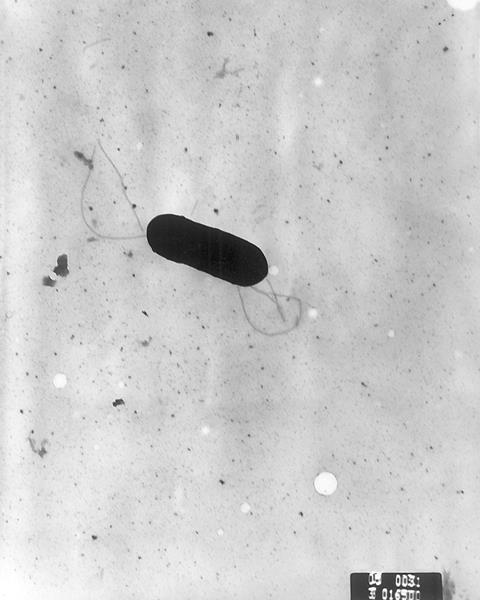
In the early 1990s, Patrick Schlievert and his team explored monolaurin’s effect on microorganisms beyond inhibiting bacterial growth. They used Staphylococcus aureus and other Gram-positive pathogens and demonstrated that GML suppressed the production of disease-causing exotoxins, including toxic shock syndrome toxin-1 (TSST-1), at concentrations that did not inhibit bacterial growth. The findings suggested that monolaurin could reduce bacterial virulence by deactivating microbial toxins rather than simply killing them.
As interest in monolaurin continued to grow, researchers also began investigating its activity against antibiotic-resistant bacteria. In the late 1990s, studies from the Philippines evaluated monolaurin against 96 clinical Staphylococcus aureus isolates, including 50 methicillin-resistant strains, providing additional evidence that the compound retained antimicrobial activity against resistant pathogens. During the same period, another preliminary study examined whether combining monolaurin with penicillin G could influence the development of bacterial resistance. The investigators observed a very low frequency of resistance development to the combination and reported that monolaurin reduced the amount of penicillin required to inhibit bacterial growth. Although preliminary, the findings anticipated today’s growing interest in using monolaurin as an adjunct to conventional antibiotics rather than as a stand-alone antimicrobial.
A recent study published in Scientific Reports extended this evidence by examining Staphylococcus aureus isolates recovered from patients with atopic dermatitis, a chronic skin condition in which repeated antibiotic use can promote the emergence of resistant bacteria. The investigators analyzed isolates obtained from 30 pediatric and 30 adult patients, including strains carrying the mecA, mupA, and fusA resistance genes, which confer resistance to methicillin, mupirocin, and fusidic acid, respectively. Despite these multiple resistance mechanisms, monolaurin inhibited the resistant isolates at low concentrations under laboratory conditions while showing no detectable toxicity toward cultured human epidermal and dermal cells.
The researchers suggested that monolaurin’s continued activity may stem from its mode of action. Unlike many conventional antibiotics that target specific bacterial enzymes or metabolic pathways, monolaurin primarily disrupts the bacterial cell membrane. Computational analyses supported this mechanism, indicating that the genetic mutations responsible for resistance to several commonly used antibiotics were unlikely to interfere with monolaurin’s membrane-targeting activity.
In a 2024 study, El-Gendy and his team evaluated monolaurin against 103 clinical MRSA strains isolated from wound infections and reported inhibition of bacterial growth together with reduced biofilm formation. Biofilms are structured communities of bacteria enclosed in a protective matrix that adhere to surfaces such as medical devices and damaged tissue. These biofilms can shield bacteria from antibiotics and the host immune system, contributing to persistent and recurrent infections. They observed that monolaurin remarkably reduced the expression levels of the icaD gene, which is involved in biofilm development. They also found that monolaurin had a synergistic effect with selected β-lactam antibiotics, raising the possibility that it could complement existing antimicrobial therapies. Although these findings were limited to laboratory testing, they suggest that monolaurin may help target bacterial persistence as well as antimicrobial resistance.
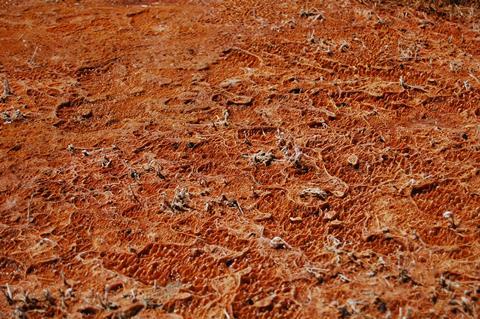
Another recent study further strengthened interest in monolaurin as an adjunct to existing antibiotics. Ghany and colleagues evaluated its activity against 115 clinical Staphylococcus aureus isolates and examined its combination with three β-lactam antibiotics—ampicillin, amoxicillin, and piperacillin. Using time-kill assays and electron microscopy, the researchers observed enhanced antibacterial activity when monolaurin was combined with each antibiotic. They also reported a significant reduction in the expression of the blaZ gene, which encodes β-lactamase, an enzyme responsible for resistance to penicillin and related antibiotics. These findings suggest that monolaurin may not only damage bacterial cells but also help restore the effectiveness of selected β-lactam antibiotics, supporting its potential as an adjuvant therapy against resistant S. aureus.
Although monolaurin is generally more active against Gram-positive bacteria, researchers have continued to explore ways to extend its antimicrobial potential. One promising strategy is combination therapy. In a recent study, Zheng and colleagues investigated glycerol monolaurate in combination with polymyxin B against multidrug-resistant Gram-negative pathogens, including clinical isolates. The combination produced synergistic antibacterial activity in laboratory experiments, resulting in greater bacterial killing than either compound alone. The researchers found that this enhanced activity was associated with disruption of bacterial cell structures, eradication of established biofilms, and increased oxidative stress within bacterial cells, all of which contribute to bacterial cell death.
The findings were further supported in a mouse model of Klebsiella pneumoniae pneumonia, where treatment with the combination effectively reduced bacterial infection and improved survival compared with either agent alone. Although additional studies are needed before such an approach can be translated into clinical practice, the work highlights the growing interest in using monolaurin as an adjunct to existing antibiotics rather than as a replacement for them. By enhancing the activity of established antimicrobial agents, combination strategies such as this may offer new options for combating multidrug-resistant Gram-negative infections.
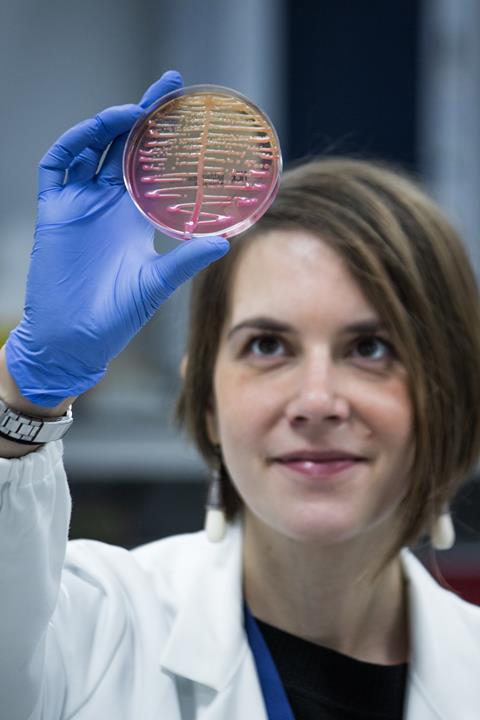
One challenge limiting the therapeutic application of monolaurin is its poor water solubility, which can reduce its stability and bioavailability in aqueous environments. In recent years, researchers have increasingly explored nanoemulsions—stable dispersions of microscopic oil droplets in water—as drug-delivery systems capable of improving the solubility, stability, and delivery of hydrophobic compounds. By increasing the surface area available for interaction with target cells, nanoemulsions can enhance the biological activity of antimicrobial agents while protecting them from degradation.
Building on this approach, Xu and colleagues developed a biodegradable nanoemulsion using tea tree essential oil as the oil phase to encapsulate glycerol monolaurate. The formulation remained stable across a wide range of pH and salt conditions and improved the dispersion of monolaurin in aqueous environments. While free glycerol monolaurate showed limited antibacterial activity against Staphylococcus aureus and Escherichia coli under the experimental conditions, the encapsulated form demonstrated effective antibacterial activity. The study highlights how advances in formulation technology may help overcome one of monolaurin’s principal limitations and support its future development for antimicrobial applications.
Looking ahead
Over the past five decades, research has steadily expanded our understanding of monolaurin. From Kabara’s pioneering studies and Schlievert’s work on bacterial virulence, to more recent investigations of resistant clinical isolates, biofilms, combination therapy, and novel delivery systems, the evidence suggests that this naturally derived lipid possesses several properties that warrant continued investigation in the search for new approaches to antimicrobial resistance.
At the same time, important challenges remain. Most published evidence comes from laboratory and preclinical studies, while robust human clinical trials are still lacking. Questions surrounding pharmacokinetics, optimal dosing, formulation, long-term safety, and clinical efficacy must be addressed before monolaurin can be considered for routine therapeutic use.
As antimicrobial resistance continues to threaten global health, naturally derived compounds such as monolaurin may not replace antibiotics, but they could become valuable additions to the growing arsenal of strategies aimed at preventing and treating resistant infections. Whether this promise ultimately translates into clinical practice will depend on the quality of future research, particularly well-designed clinical trials that determine where monolaurin can make the greatest contribution.
Further Reading
Fatty Acids and Derivatives as Antimicrobial Agents | PMC
Effect of glycerol monolaurate on bacterial growth and toxin production | PMC
Comparative susceptibilities of oxacillin-sensitive and oxacillin-resistant Staphylococcus aureus isolates to monolaurin | Phil. Journal of Coconut Studies, 23(2):10-12
A Preliminary study on the frequency of resistance development of Staphylococcus aureus to Penicillin G in combination with monolaurin | Phil. Journal of Coconut Studies, 23(2):16-20




No comments yet