
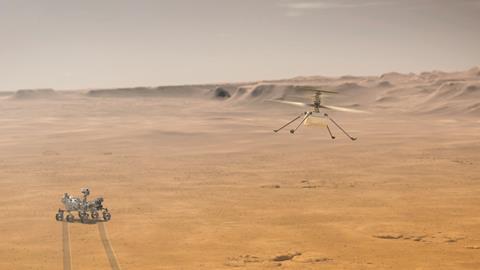
Could life exist on Mars? It sounds impossible, doesn’t it? Mars is an incredibly harsh planet. Its surface is bombarded by intense ultraviolet (UV) radiation, including biologically damaging UV-C wavelengths; its soil contains toxic magnesium perchlorate salts, temperatures are extremely low, and liquid water is almost absent due to ultra-dry conditions. Under such conditions, it seems unimaginable that any form of life could survive.
But here’s the interesting part…
There are places on our own planet where the environmental conditions closely resemble those on Mars. These places, known as terrestrial analogues, have become natural laboratories where scientists study the possibility of extraterrestrial life.
The most surprising part is that these extreme environments are not lifeless. Instead, they are home to extraordinary microorganisms called extremophiles (and polyextremophiles, which can tolerate multiple extreme conditions at once). These tiny microbes don’t just survive; they actually thrive under conditions that would be fatal to most living organisms.
Saudi Arabia: Earth’s “little Marses”
One of the most exciting places for this research is Saudi Arabia. While many people associate the country only with vast deserts, it is actually home to some of the world’s best natural laboratories for astrobiology.
Researchers at King Abdullah University of Science and Technology (KAUST), particularly Prof. Alexandre Soares Rosado and his team, study a wide range of extreme environments that closely resemble conditions found on Mars, and even the icy moons Europa (a moon of Jupiter) and Enceladus (a moon of Saturn).
Deserts and Salt Flats (Sabkhas): Intense heat, extreme dryness, high salinity, and strong UV radiation closely mimic the Martian surface. Here, specialized chemosynthetic bacteria (Actinobacteriota) survive by using trace amounts of hydrogen gas from the atmosphere as an energy source, a strategy that life on Mars might also use.
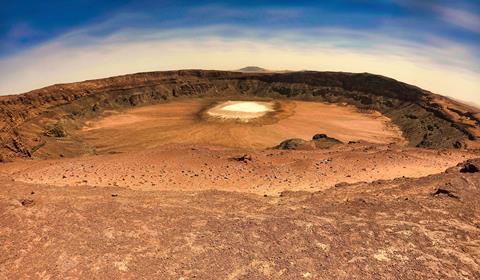
Al Wahbah Volcanic Crater: Its highly alkaline soils (pH 9.0) and seasonal salt deposits rich in sodium phosphate resemble environments that may exist in the subsurface ocean of Enceladus.
Geothermal Hot Springs: These expose microorganisms to high temperatures (37–96°C) and extreme pH, offering clues about ancient Martian hydrothermal life.
Deep-Sea Brine Pools (DHABs): Found over 2,100 meters deep in the Red Sea, these pools contain almost no oxygen, extremely high salt concentrations, and enormous pressure (>21 MPa). They host specialised anammox bacteria (Candidatus Scalindua rubra) that thrive in oxygen-free, extremely salty environments, offering clues about how life might persist in the hidden oceans beneath Europa and Enceladus.
Hatiba Mons Hydrothermal Vents: Microorganisms survive by obtaining energy from minerals instead of sunlight, a process known as chemolithotrophy.
How do scientists study these extremophiles?
Studying these remarkable environments using advanced techniques such as metagenomics, transcriptomics, proteomics, and metabolomics gives scientists a complete picture of how these microbes adapt to extreme environments:
Metagenomics helps identify which microorganisms are present by studying all the DNA in an environmental sample.
Transcriptomics shows which specific stress-response genes become active when the organism faces stress.
Proteomics reveals the protective proteins and enzymes the organism produces to survive.
Metabolomics studies the small molecules and metabolic end-products involved in its survival.
Scientists are discovering how microorganisms survive under multiple extreme stresses. This research not only helps us understand the limits of life on Earth but also helps scientists identify biosignatures, chemical signatures such as specific stable peptides or pigments that future rovers can search for on other planets. At the same time, these discoveries are opening new possibilities in biotechnology, from extremozymes (enzymes that function under extreme conditions) and antioxidants, to bioremediation and future space exploration.
So, how do these tiny organisms survive where almost everything else dies?
Meet the “superhero fungus”
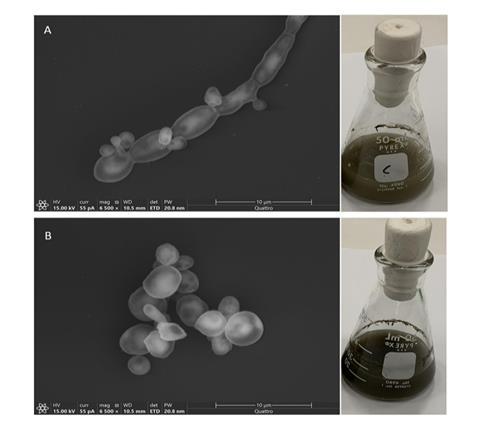
Among the many extremophiles scientists have discovered, one organism stands out: a black fungus called Rhinocladiella similis (specifically strain LaBioMMi 1217). You could actually call it a superhero fungus because of its incredible ability to survive under Mars-like conditions. Scientists wanted to find out whether this fungus could survive conditions similar to those on Mars. To their surprise, it performed much better than many other fungi tested under the same conditions.
To understand why this fungus is so special, we first have to understand what exactly makes Mars so difficult for life at the cellular level. There are two major challenges:
Perchlorates (such as magnesium perchlorate): These toxic salts found in Martian soil pull water out of living cells, causing severe osmotic stress, damaging proteins, and triggering the production of harmful molecules called reactive oxygen species (ROS).
Intense UV-C Radiation: Unlike Earth, Mars has a very thin atmosphere, allowing biologically damaging UV-C radiation to reach its surface. These rays break DNA strands, generate dangerous ROS, and can eventually kill cells.
So how does Rhinocladiella similis survive? The answer lies in a series of remarkable adaptations:
It changes its shape: Normally, it grows as long, thread-like structures called mycelia. Under stressful conditions, however, it undergoes a reversible dimorphic switch into small, single-celled yeast-like cells. These compact cells lose less water and are much better protected from the harsh environment.
It produces DHN melanin: It increases its production of a dark pigment called DHN melanin, which acts like natural body armour. It physically blocks harmful UV radiation, neutralizes ROS, and strengthens its cell wall.
It slows down its metabolism: Instead of growing rapidly, the fungus downregulates energy-intensive cellular processes, conserves energy, and redirects its resources toward essential cell maintenance and survival.
It repairs the damage: It increases the production of DNA repair enzymes (such as endonucleases), antioxidant enzymes like superoxide dismutase (SOD) and catalase, which neutralize harmful reactive oxygen species (ROS), and molecular chaperones called heat shock proteins (HSPs) that help damaged proteins fold correctly and continue functioning under stress.
Why does all this matter?
If humans ever travel to Mars, we won’t be able to survive its extreme environment on our own. The intense UV radiation, toxic perchlorates, freezing temperatures, and lack of liquid water make it one of the most hostile places for life.
So, what if we could learn from these extraordinary microorganisms?
Science has already achieved incredible things. We have travelled to both the Moon and Mars, landing on their surfaces in search of life. By understanding how extremophiles survive these harsh conditions, scientists may one day develop better methods to protect astronauts from radiation, design biological systems to remove toxic perchlorates from Martian soil through bioremediation, build stronger life-support systems, or even use microorganisms to support future long-duration space missions.
Beyond space: benefits here on Earth
Their importance extends far beyond space exploration. The same microorganisms could help scientists develop new medicines, discover powerful natural antioxidants, produce extremozymes, clean polluted environments through bioremediation, and inspire new technologies for space exploration and biotechnology.
”Maybe the greatest lesson these tiny organisms teach us is that strength may help you fight, but adaptation helps you survive.”
For centuries, we believed that life could exist only under conditions similar to those on Earth. But extremophiles have challenged that idea. They have shown us that life can flourish in places once thought to be completely uninhabitable -whether in scorching deserts, deep-sea brine pools, volcanic hot springs, frozen polar regions, or highly acidic and alkaline environments.
Conclusion: the future of astrobiology
Perhaps the key to surviving on another planet is not changing ourselves, but learning from the tiny organisms that have already mastered survival in Earth’s own “little Marses.” Their remarkable adaptations not only deepen our understanding of microbiology and astrobiology but also inspire new possibilities in biotechnology, medicine, environmental science, and future space exploration.
And who knows? The next great discovery about life beyond Earth may not begin on Mars itself, but with a microscopic organism living quietly in one of Earth’s most extraordinary extreme environments.
References:





No comments yet