
It’s hard to imagine Miranda Priestley weighing up the merits of one agar plate against another, but microbes are well on their way to making an unexpected cameo in future iterations of The Devil Wears Prada.
The fashion industry is credited with bringing together creativity, culture and colour to produce visually stunning pieces that promote self expression and connect people across the globe. However, the belly of the same industry has a more sinister side.
The procedures used to create such dazzling pieces can be incredibly damaging to the environment, with the overuse of pesticides and the production of toxic chemicals. Furthermore, with the constant drive to produce new trends, the over-abundance of textile waste is a problem that is mounting year-on-year.
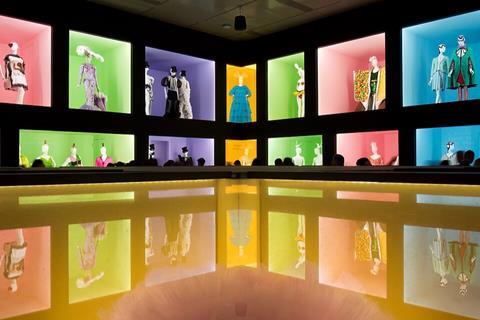
In the face of these issues, the fashion industry is turning its sights on the use of microbes - bringing the future of fashion into a new era. Microbes are being harnessed to produce cruelty-free fur and leather alternatives, to create pigments that will replace toxic dyes and even being used to more sustainably recycle textile waste.
Faux leather
The rise of cruelty-free policies has opened the door for the use of microbes to create less ethically controversial alternatives for leather and fur.
The term ”Biocouture” was coined by Suzanne Lee in 2004 when she pioneered the use of microbes within the fashion industry. Her process involved culturing large vats of bacteria to produce mats of bacterial cellulose which were harvested and treated to create a faux leather fabric.
Using this fabric, Suzanne Lee produced a range of prototype fashion accessories including shoes, skirts and jackets. Since then, the last two decades has seen a boom of biotechnology start ups all with the goal of using microbes to create a new, more sustainable fashion era - and fashion designers are keen to get on board with the new programme.
Fashion showcase
The concept of microbial based fashion is now being exhibited at major fashion events globally. In 2023 Danish designers GANNI revealed their partnership with Modern Synthesis, unveiling GANNI’s iconic Bou Bag made of bacterial faux leather, which was shown at the London Design Festival.
Eager to continue harnessing the potential of bacterial faux leather, GANNI also partnered with Polybion, a collaboration that produced a number of wearable items that featured in GANNI’s Autumn/Winter 2024 and Spring/Summer 2025 collections. These items were also showcased at several international events including The ‘Future, Talent, Fabrics’ exhibition at the Copenhagen Fashion Week 2024, back-to-back seasons of the Paris Fashion week 2025 and even featured in British Vogue 2024.
Polybion again made ripples in the fashion industry with its collaboration with Nous Étudions which produced an entire collection made of bacterial faux leather based garments entitled ”End of the World, Beginning of Everything”. This collection was highly praised and featured in both Vogue Mexico 2025 and Vogue Philippines 2026.
Fungal futures
Bacteria are not the only type of microbe being used to create faux leather. Fungi - or mycelium - based leather substitutes are also making their debut into the industry. This method involves carefully cultivating fungi to grow into ”mycelial mats” that can then be used as a textile.
In 2021, Hermes unveiled a mycelium based version of their classic Victoria travel bag which they produced in collaboration with MycoWorks. The very same year, Stella McCartney - working in collaboration with Bolt Threads - launched the world’s first ever garments made from mycelium-based faux leather: a black bustier and a matching pair of trousers. These were featured in British Vogue 2021. A year later, the same collaboration produced the world’s first commercially available mycelium handbag - the Frayme Mylo.
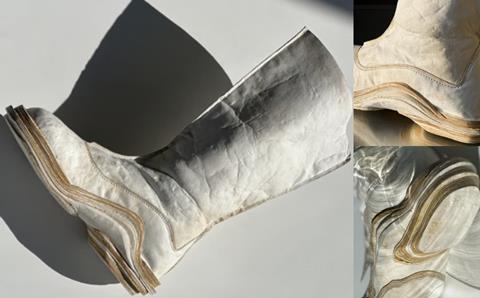
Beyond handbags and clothes, mycelium leather has now also been used to generate prototype shoes. Lars Dittrich of Vrije Universiteit Brussel collaborated with head shoemaker Marie De Ryck at La Monnaie/De Munt to produce a mycelium-based shoe which deputed at the Milan Design week 2026.
Microbial faux fur
Beyond producing faux leather alternatives, microbes are also being harnessed to create faux fur alternatives. Current faux fur materials are criticised for their lack of realism and their inability to mimic the texture of real fur. In addition, they often contain materials such as acrylic and polyester which leach microplastics into the environment.
Microbes may provide an excellent alternative. LVMH’s luxury brand Fendi, who are famous for their ready-to-wear fur and leather goods, have teamed up with Central Saint Martins alongside bioengineering experts at the Imperial College of London to create microbially generated faux fur, as part of the Maison/0 collaboration. This method involves selecting keratin proteins from fox or mink genomes and splicing them into modified yeast. These microbes are then grown in bioreactors where they then produce large amounts of the selected proteins to create substitute hair fibres.
Self dying fabrics
The fashion industry is known for its vibrancy and visual beauty, with bold colours and complex patterns allowing individuals to not only express their own personal identity but also reflect on and honour their culture. Fabric dyes are the key to this self expression - however, these dyes also leach toxins and carcinogens into the Earth’s groundwater when they eventually seep off of those same clothes.
Not willing to compromise on the deep personal meanings that colour can bring to clothing, the textile industry is turning to microbes to provide more sustainable and less damaging ways to produce pigments and dyes.
Biotechnology companies such as the UK based ColoriFix have harnessed the power of using microbes as pigment-producing biological factories. This group searches through the depth of colour already found within nature, be it in plants, animals or microbes.
They then identify the genes that allow for such coloured pigments and engineer them into genetically modified bacteria and yeast. These microbes are then grown within fermenters, where they naturally start producing the pigments they have been given - which can then be harvested and used to dye fabrics.
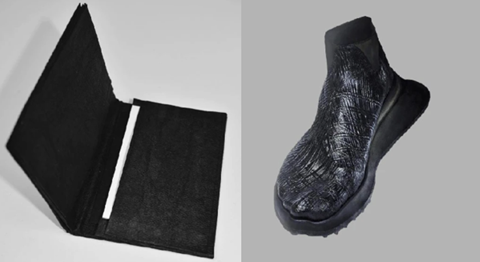
Taking this one step further, new research has emerged that suggests microbes could allow us to tackle the ethical problems associated with fabrics such as leather and fur, and the issues caused by fabric dyes simultaneously - by engineering microbes that will produce their own self-dying textiles.
One research group from Korea harnessed the ability of two separate bacterial species - one engineered to mass produce bacterial cellulose and the other a colour-producing microbe - and co-cultured them, a project which produced a self-dying faux leather.
In an alternative method, the same Imperial researchers working with Fendi to create a microbial faux fur, also teamed up with Modern Synthesis to produce self-dying leather alternatives. Their approach uses a single microbe which produces bacterial cellulose, but has now also been engineered to produce eumelanin which is a dark black pigment. Taking this to the next level via the use of blue light, these researchers could control when the bacteria will produce such pigments, allowing them to project patterns and logos onto the final products. This work has already yielded two functional prototypes - a shoe and a wallet.
Self-repairing living clothes
A culmination of the last two decades worth of microbial usage in fashion has been achieved by Ke Li at the Chinese Academy of Sciences’ Shenzhen Institutes of Advanced Technology. Their team has produced a mycelium based dress which is not only self-colouring but also self-repairing.
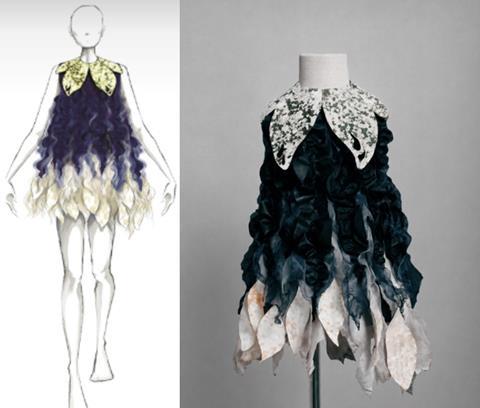
Their prototype dress is produced predominantly from fibres grown from Cordyceps militaris. Incorporating pigment-producing yeast into the material allowed the team to produce hues of pale-blue, red, orange and purple. Most impressively, clothing made from this material can be repaired simply by adding nutrients and fresh fungal material, which grows over holes and tears.
Sustainability
The fashion industry harnessing the power of microbes is exceedingly good news for the planet. Microbially made textiles are all fully biodegradable as well as being cruelty free. A move towards microbially made faux leather and fur, in addition to reducing the exploitation of animals globally, could also reduce the build-up of non-biodegradable textile waste. Instead, the industry may see a pivot towards waste that will degrade over time on its own, leaving Earth relatively unscathed.
Moreover, engineering microbes to create self-colouring textiles will reduce the need for harsh chemicals to bond colour into fabrics. These chemicals are known to leach toxins and carcinogens into the Earth’s groundwater. Self-colouring materials do not pose the same threat and so could be the next step in reducing some of the environmental damage caused by the fashion industry.
Finally, whilst this technology is still in its infancy, the concept of self-repairing clothes could revolutionise the amount of textile waste currently being generated. Clothes that can repair the rips and holes caused by general wear and tear has massive appeal, as whole wardrobes of clothes would remain “good-as-new” indefinitely.




.jpg)
No comments yet