
More News – Page 7
-
 News
NewsDiscovery of severe pneumonia subtypes could lead to tailored treatments for life-threating disease
New research shows that severe pneumonia has three different subtypes, helping explain why some patients in intensive care units (ICUs) recover quickly, while for other patients the disease can be life-threatening.
-
 News
NewsHidden protein linked to severe COVID-19 and lung disease risk
A genetic difference carried by nearly one in three people may increase the risk of severe COVID-19 and lung fibrosis by disrupting the function of a previously unknown protein, according to a new study.
-
 News
NewsVeterinary review warns antibiotic resistance threatens vision in pets
A new review warns sight-threatening antibiotic-resistant eye infections are becoming a significant threat to vision in dogs, cats, and horses with multidrug-resistant bacteria becoming more common in referral veterinary settings.
-
 News
NewsThe early immune clues that determine who develops TB
An early view of the immune response to bacteria in the lungs provides clues as to why some people keep TB in check, while others develop disease, suggesting new ways to intervene earlier and stop TB.
-
 News
NewsNative litter jump-starts microbial recovery in mine soils
By applying litter collected from nearby native woodland to rehabilitated mine land, a study has shown increases in microbial diversity, enrichment of carbon- and nitrogen-cycling microorganisms, and stronger biochemical potential for soil organic matter decomposition and nitrogen mobilization.
-
 News
NewsGut fungi may hold the key to treating asthma worldwide
Two new studies reveal that certain species of fungi in the gut play a key role in the development of immune dysregulation and some pediatric allergic diseases — and may be promising targets for new therapies.
-
 News
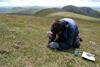
NewsNatural symbiosis: How plants and microbes share vital nutrients in fragile ecosystems
Researchers using stable isotope labelling to investigate how different forms of nitrogen are used by plants and microbes in alpine heath environments found that plants and microbes use distinct strategies to access this critical nutrient.
-
 News
NewsResearch team awarded NIH grant to study congenital CMV transmission during pregnancy
A research team has received a new 5-year, $3.87 million R01 grant from the National Institutes of Health (NIH) to investigate how the immune system protects against congenital cytomegalovirus (CMV) infection.
-
 News
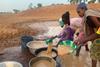
NewsUnsafe water still drives global diarrheal disease burden
A new study, analysing data from the Global Burden of Disease 2021 database, found that deaths and disability-adjusted life years linked to unsafe water have declined sharply over the last three decades. Nevertheless, the burden remains concentrated in low socio-demographic index regions.
-
 News
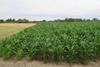
NewsMicrobes reveal how tillage shapes soil carbon storage
A new study on maize fields in Jilin Province, China, found adding organic carbon sources on top of straw had different effects on the organic carbon in the topsoil in comparison to the subsoil.
-
 News
NewsGlobal port microbiomes reveal hidden biosecurity signals
By analyzing more than 16 million 16S rRNA gene sequences from 1,045 port water samples collected in 23 cities across five continents, a study has found clear biogeographic patterns, a core set of dominant bacterial genera, and widespread potential pathogens.
-
 News
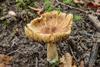
NewsPhylogenetic analysis reveals ten new species of Inocybe mushrooms
New taxonomic and phylogenetic investigation of Inocybe mushrooms reveals ten new species, one newly discovered in the Gaoligong Mountains, China.
-
 News
NewsOrdinary enzyme evolves into a ‘control switch’ revealing a new weak spot in tuberculosis
A protein that acts as a ‘control switch,’ preventing Mycobacterium tuberculosis from accessing the energy sources it needs to survive, has been identified by researchers. The discovery points to a specific vulnerability in the bacterium that could be targeted by new TB treatments.
-
 News
NewsResearchers aim to autonomously eliminate plant-killing bacteria from hydroponic farming systems
Three researchers have received a nearly $600,000 grant from the U.S. Department of Agriculture to develop a system that can autonomously detect and remove crop-killing microbes from hydroponic farms before they cause damage to plants.
-
 News
NewsHow cyanobacteria developed photosynthetic membranes over the course of evolution
New research analyses hundreds of cyanobacterial genomes to understand the origin of thylakoids, the internal membranes involved in photosynthesis.
-
 News
NewsTea’s molecular shield against anthracnose
Researchers investigating inducible immune mechanisms activated by tea plants after pathogen infection said the findings show that tea anthracnose resistance is not simply a matter of possessing a resistance-related gene, but of how strongly and rapidly the plant activates its defense network.
-
 News
NewsResearcher wins $5.6M NIH Avant Garde Award to prevent HIV, Hepatitis C and overdose
An innovative project will use AI-powered “digital twins” to help public health agencies better prevent HIV, hepatitis C and overdose among people who use drugs.
-
 News
NewsWhy do viruses not kill the mosquitoes that transmit them?
A new study reveals the mechanism that allows viruses such as chikungunya or dengue to be harboured in mosquitoes without killing them, thus facilitating their transmission.
-
 News
NewsProtective human antibodies target West Nile and related viruses
New research defines vulnerable sites on West Nile virus that could inform vaccine development, and highlight antibody candidates with prophylactic and therapeutic potential. They may also guide interventions for a wider group of encephalitic orthoflavivirus infections.
-
 News
NewsSoil bacteria reveal hidden arsenic stress in brick kilns
Researchers collected soils from a shut-down brick kiln area. As arsenic levels increased, bacterial richness and diversity declined, while arsenic-tolerant groups became more abundant. The study also found that bacteria strengthened stress-response pathways and upregulated arsenic-resistance genes.