
The increase in mosquito-borne virus infections is a growing public health concern. Diseases traditionally confined to tropical or subtropical regions, like dengue or the West Nile virus, are expanding their geographical scope. Europe is no longer an exception, and autochthonous infections have already been recorded in Spain.
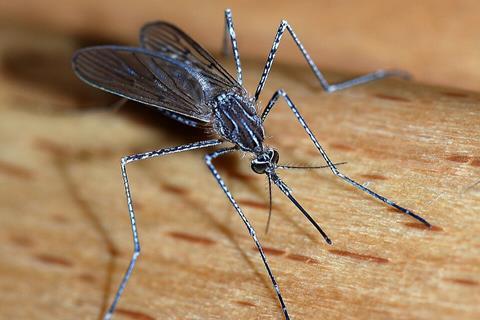
Multiple factors are behind this expansion ranging from climate change to globalization. But there is also a key biological question: how do mosquitoes harbour these viruses throughout their lives without them killing them?
A recent study, published in the journal PLOS Biology, shows that in mosquito cells viruses do not behave as they do in human cells. Instead of taking total control of the cellular machinery to produce large amounts of viral proteins —a strategy that ends up destroying the cell in humans— the viruses take a more moderate approach in mosquitoes.
Mosquito vectors
When a mosquito bites an infected person, it acquires the virus. It is then infected for life and can transmit the disease with each new bite. However, unlike in humans, where infection can damage or destroy cells and cause severe symptoms, in mosquitoes the virus establishes a far more discreet relationship. Although the virus remains active, there are no clear signs of disease. It is precisely this equilibrium that makes transmission so efficient.
The team at Pompeu Fabra University led by Juana Díez has observed that although the genetic material of the virus accumulates in cells, viral protein production is limited in mosquitoes. “It’s as if the virus lowered the volume of its own activity,” explains Marc Talló, joint first author of the study together with Mireia Puig. This phenomenon, known as translational repression, allows the virus to continue replicating without overloading or damaging the host cell.
Therefore, a subtle balance is at play. The fact is that the virus needs to produce sufficient particles to ensure its transmission without its activity being overly intense. That would end up killing the mosquito and thus its propagation vector.
According to the study, funded by the “la Caixa” Foundation, this subtle adjustment is enabled in mosquitoes because unlike what occurs in humans, the virus fails to fully optimize the use of the cellular machinery. This evolutionary strategy allows achieving a sufficient level of virus for its effective transmission without significantly affecting the biology of the insect.
Curbing Transmission
Understanding how viruses regulate their activity in mosquitoes could open up new avenues to curb their transmission. “If we manage to alter this balance, forcing the virus to replicate uncontrollably or, on the contrary, blocking its ability to persist, we could stop mosquitoes from acting as transmission vectors,” explains Juana Díez, coordinator of the study and director of the UPF Molecular Virology Group.
However, “we are still a long way from modifying these insects’ viral load,” says Gemma Vilaró, who also contributes to the authorship of the study along with Sol Ribó, both molecular virology researchers.
This study has been conducted in cellular models and to progress towards future pharmacological applications, the results will need confirming in more real conditions, including studies in infected mosquitoes after feeding on infected blood.
“In a context in which mosquito-borne viruses are heading towards new regions, understanding the mechanisms that regulate their survival and transmissibility is no longer a purely academic issue,” Marc Talló comments. And Mireia Puig adds: “This type of research is increasingly an essential part of the response to an emerging threat.”
Topics
- Chikungunya
- climate change
- dengue
- Disease Treatment & Prevention
- Epidemiology
- Gemma Vilaró
- Infection Prevention & Control
- Infectious Disease
- Juana Díez
- Marc Talló
- Medical Microbiology
- Mireia Puig
- mosquito
- mosquito borne-illness
- One Health
- Research News
- Sol Ribó
- UK & Rest of Europe
- vector control
- vector-borne disease
- Virology
- Viruses
- West Nile virus







No comments yet